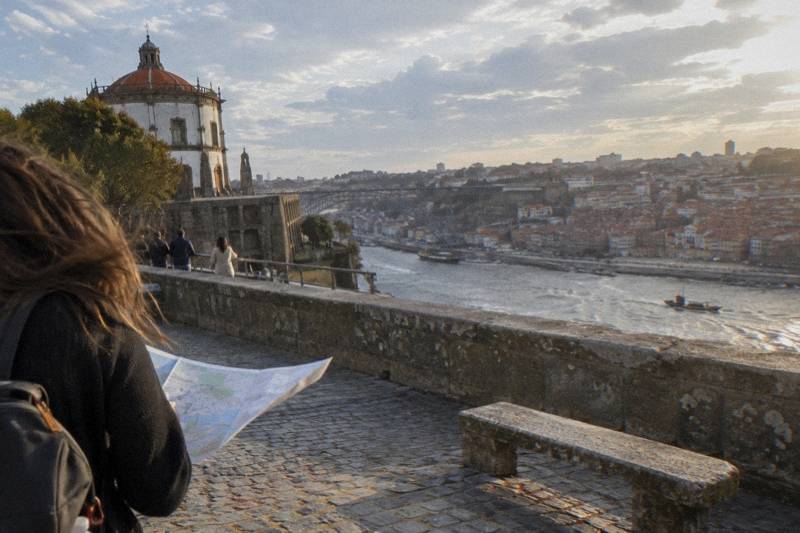
Dom Luis I Bridge Walking: Crossing Free And The Views On Each Side
Both decks of the Dom Luis I bridge can be crossed on foot at no cost, day or night, and the free views on each side are the reason to take your time.
In Short
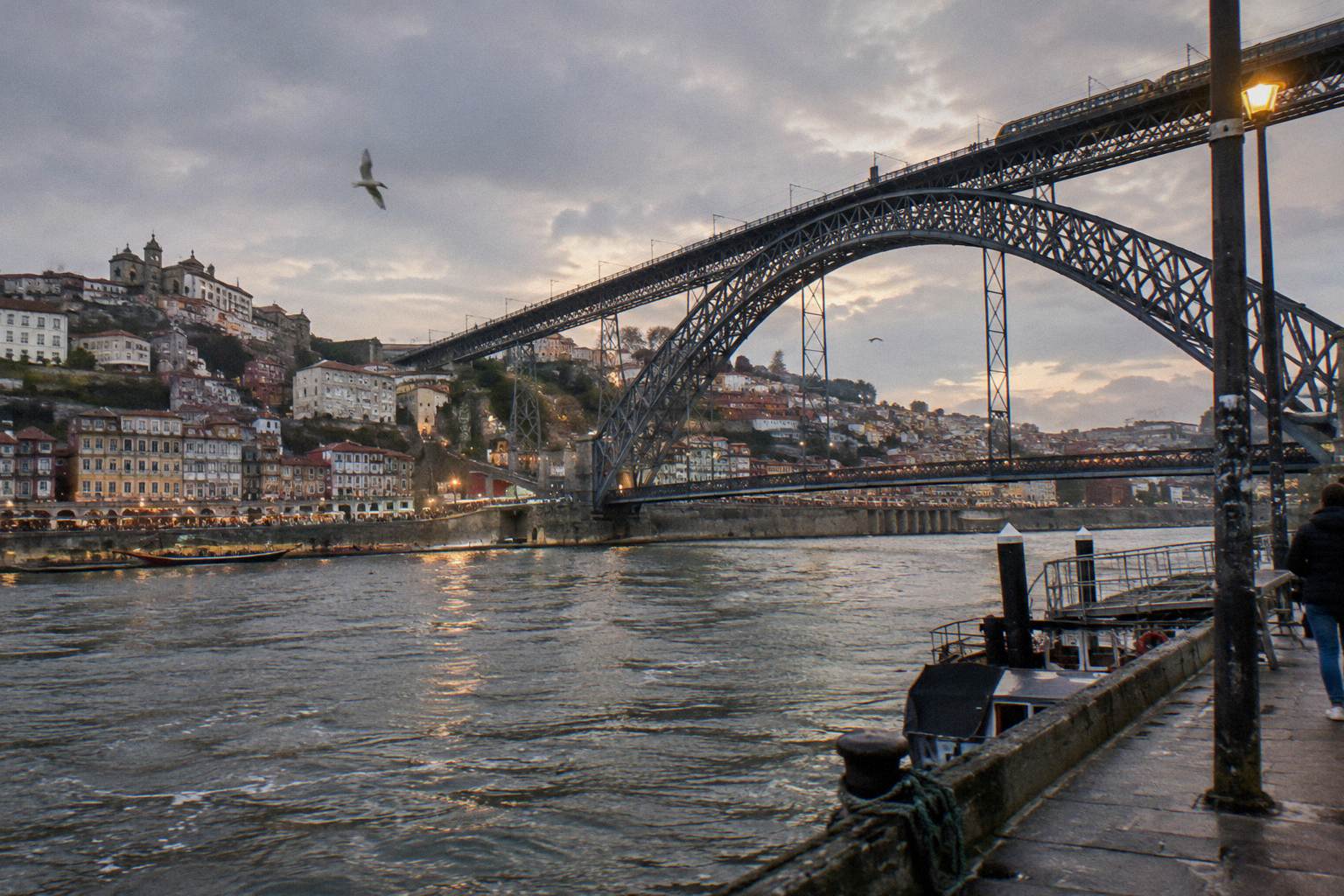
Yes, you can walk across the Dom Luis I bridge for free on either deck, at any hour. The upper deck is shared with Metro line D, the lower deck carries road traffic and a pavement at river level. Free viewpoints sit on both banks, including Jardim do Morro and the Serra do Pilar terrace in Gaia, and free GuruWalk walking tours on both sides cross or meet near the bridge.
Part of the Porto guides on free things to do, this page covers one crossing: the Dom Luis I bridge, known in Portuguese as the Ponte Luís I, the iron arch that carries walkers between the Ribeira and Vila Nova de Gaia without a ticket.
Quick Facts
| Question | Answer |
|---|---|
| Can you walk across the Dom Luis I bridge? | Yes, free, on both decks, day or night |
| Upper deck | Shared with Metro line D, footways on the sides |
| Lower deck | Road traffic and pavement at river level |
| Cost to cross | Free, no ticket of any kind |
| Free viewpoints near the bridge | Jardim do Morro, Serra do Pilar terrace, Miradouro da Vitória |
| Paid parts nearby | Serra do Pilar monastery exhibition EUR 2, dome EUR 4; Gaia cable car; port cellar tastings |
| Free tours that meet near the crossing | 17 English-language free walks on GuruWalk across the city |
Can You Walk Across Dom Luis I Bridge?
Yes, both decks of the Dom Luis I bridge are open to walkers at no cost, day or night, and no ticket, pass or card is involved. The upper deck is shared with Metro line D, so you walk beside the tracks rather than on them. The lower deck is road and pavement at river level, linking the Ribeira quay directly to the Gaia waterfront. Nothing about crossing costs money, and nothing on either deck is a paid attraction.
The bridge is the busiest free crossing in the city, and the reason is simple: it is the shortest way on foot between two of Porto's best free quarters, the Ribeira on the north bank and the Gaia waterfront on the south. The Ribeira is an open riverside quarter, streets and quay included, free to wander with no gate or ticket anywhere. On the far side, the Gaia waterfront is where the port wine cellars sit, and while the cellar tastings are paid with no verified free tasting on record, the quayside itself, the river views and the walk up to the monastery terrace are all open public space.
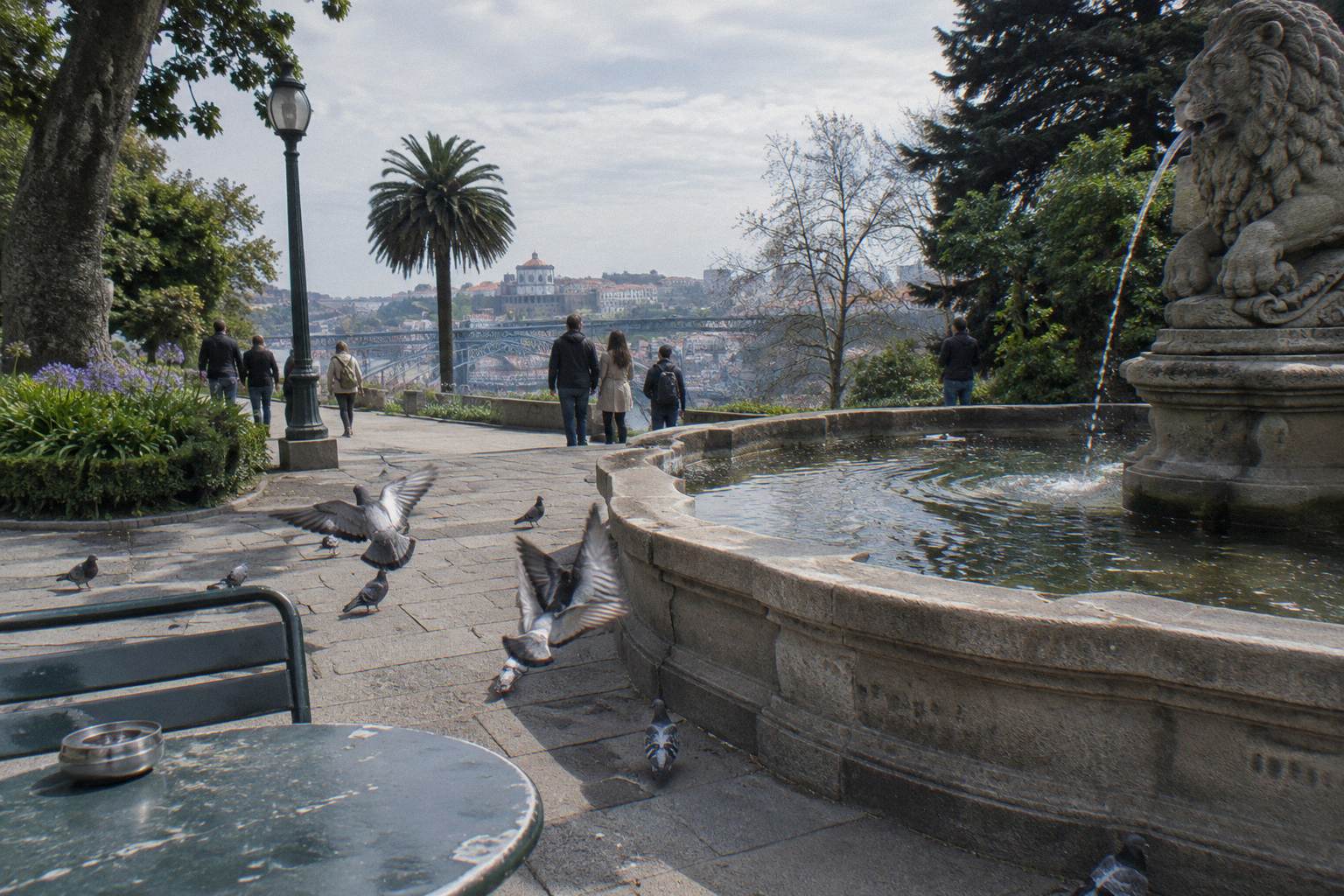
Walking the bridge takes minutes in each direction, but most people cross it several times, because the two decks serve different purposes. The lower deck puts you at river level, at the heart of the Ribeira on one side and the Gaia cellar doors on the other. The upper deck lifts you over the whole scene, and it is the one that ends at Jardim do Morro, the open public garden whose river-and-Ribeira view is one of the best free sights in the city. There is no gate at the garden, and no fee has ever applied to the crossing itself.
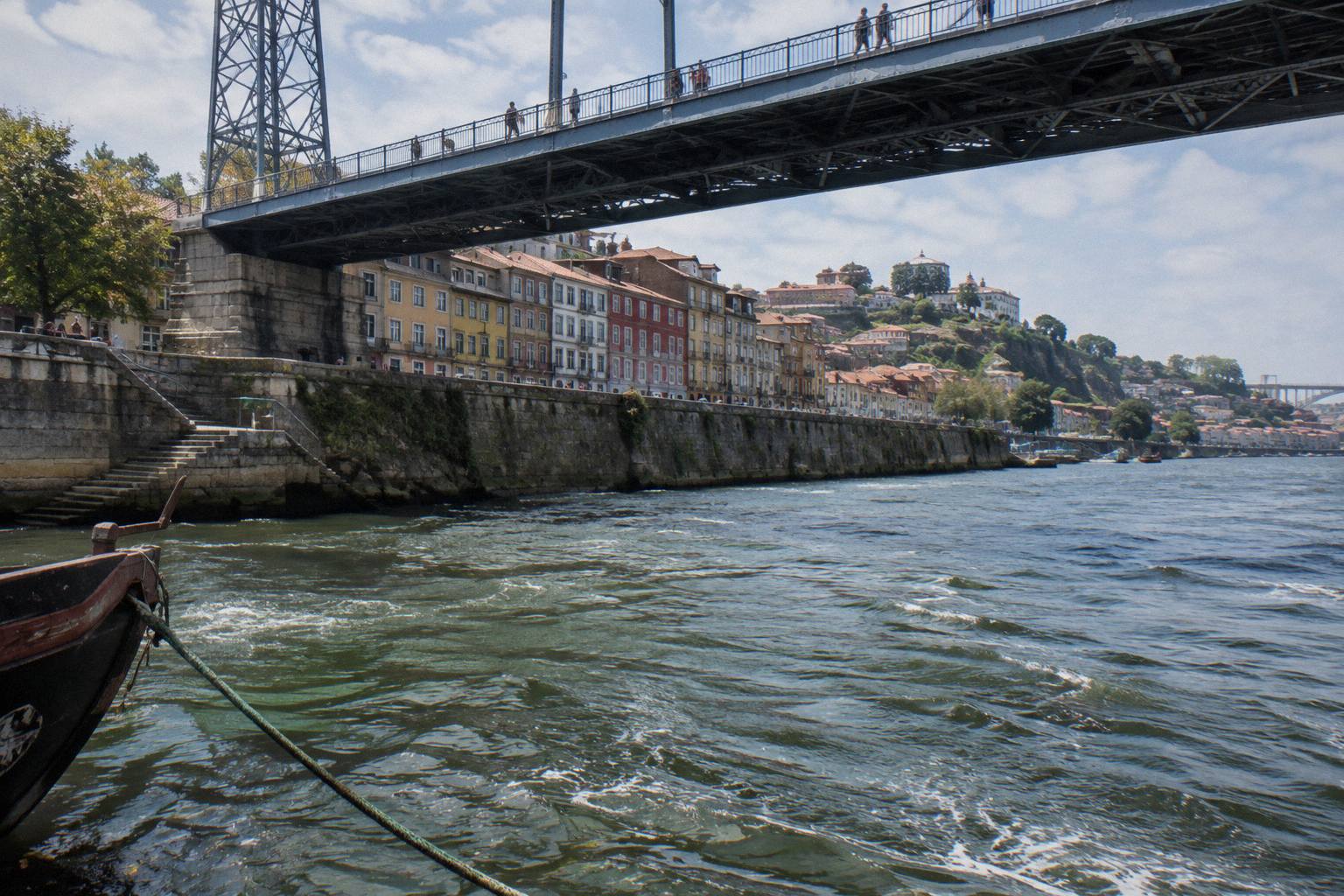
Two practical points are worth stating plainly. First, the upper deck is a working Metro line D alignment, so trains cross at the same level as the footways: stay on the walkway side and treat the tracks as live rail. Second, the bridge is a piece of street infrastructure, not a managed attraction. There are no opening hours because there is nothing to open, and there is no lift or alternative step-free route written on any record here, so anyone with mobility concerns should plan around the deck choice carefully.
| Crossing fact | Detail |
|---|---|
| Cost | Free on both decks |
| Hours | No restriction recorded, crossable day or night |
| Upper deck traffic | Metro line D plus footways |
| Lower deck traffic | Road vehicles plus pavement |
| North bank arrival | The Ribeira, open riverside quarter |
| South bank arrival | Gaia waterfront and cellar quarter |
The bridge also anchors a string of free sights that need no planning at all. On the Porto side, the Ribeira streets, Miradouro da Vitória, an open viewpoint with no ticket, and the Muralha Fernandina, surviving stretches of the fourteenth-century wall that are open public streets and steps, all sit within the same riverside slope. On the Gaia side, the walk up from the waterfront to the Serra do Pilar terrace passes through ordinary streets, and the terrace and gardens in front of the monastery are open public space. A full circuit, crossing one way on the upper deck and returning on the lower, costs nothing and strings together the densest cluster of free views in the city. The riverside walk along the Douro covers the north-bank half of that circuit in detail.
Which Deck Is Better?
The upper deck is better for the view, the lower deck is better for the arrival. The upper deck crosses at Metro height, above the rooftops of the Ribeira, and lands at Jardim do Morro on the Gaia side. The lower deck runs at river level between the two quays, minutes from the Ribeira's streets on one end and the port cellar doors on the other. Crossing one way on each deck is the way most walkers settle the question.
The choice is not really about comfort, it is about what you want at each end. If your destination is the Ribeira, the lower deck drops you directly onto the quay. If your destination is the viewpoints of Gaia, the upper deck ends at the garden, and from there the climb to the Serra do Pilar terrace continues on public streets. Doing the full loop, upper one way and lower the other, means you never repeat the same perspective, and the two decks frame the river completely differently: from above you read the whole sweep of both banks, from below you are inside the stack of houses and cellar signs.
| Deck | What it is | Where it lands | Best for |
|---|---|---|---|
| Upper deck | Footways beside Metro line D | Jardim do Morro, Gaia | The panorama and the viewpoints |
| Lower deck | Road and pavement at river level | Ribeira quay and Gaia waterfront | Reaching the riverside quarters |
The upper deck is the one that earns the bridge its reputation. Looking north from the top, the whole of the Ribeira stacks down to the water, with the Sé do Porto cathedral above the rooftops. Looking south, the Gaia cellars line the opposite bank under the monastery. The terrace in front of the Serra do Pilar monastery, free and open to all, frames the bridge and the city together, and it is the single most photographed free vantage point on either bank. The monastery itself is a separate matter: its exhibition costs EUR 2 and the dome EUR 4, paid parts that a tower-terrace pair keeps distinct. The free viewpoints and sunset spots walk builds a full route out of these terraces.
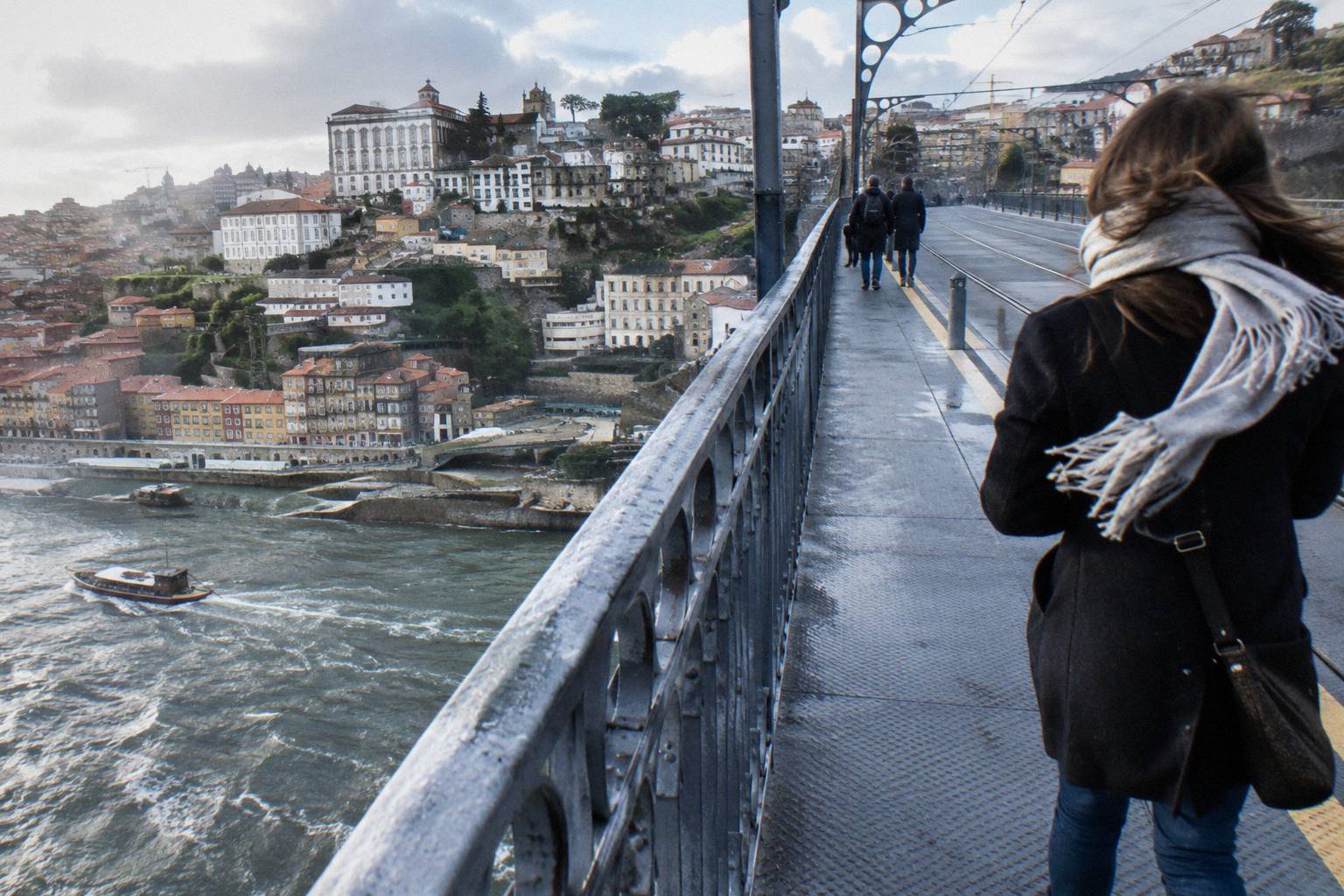
The lower deck, by contrast, is a working street, and that is its charm. You cross at the level of the boats and the quay walls, close enough to the water to hear it, and you arrive in the middle of things rather than above them. It is also the deck that connects most naturally to the paid parts of the Gaia bank: the cable car and the cellar tastings, both paid with no free tasting verified on record. Neither is needed to enjoy the crossing, and both sit beside free riverside walking that runs for the length of the waterfront.
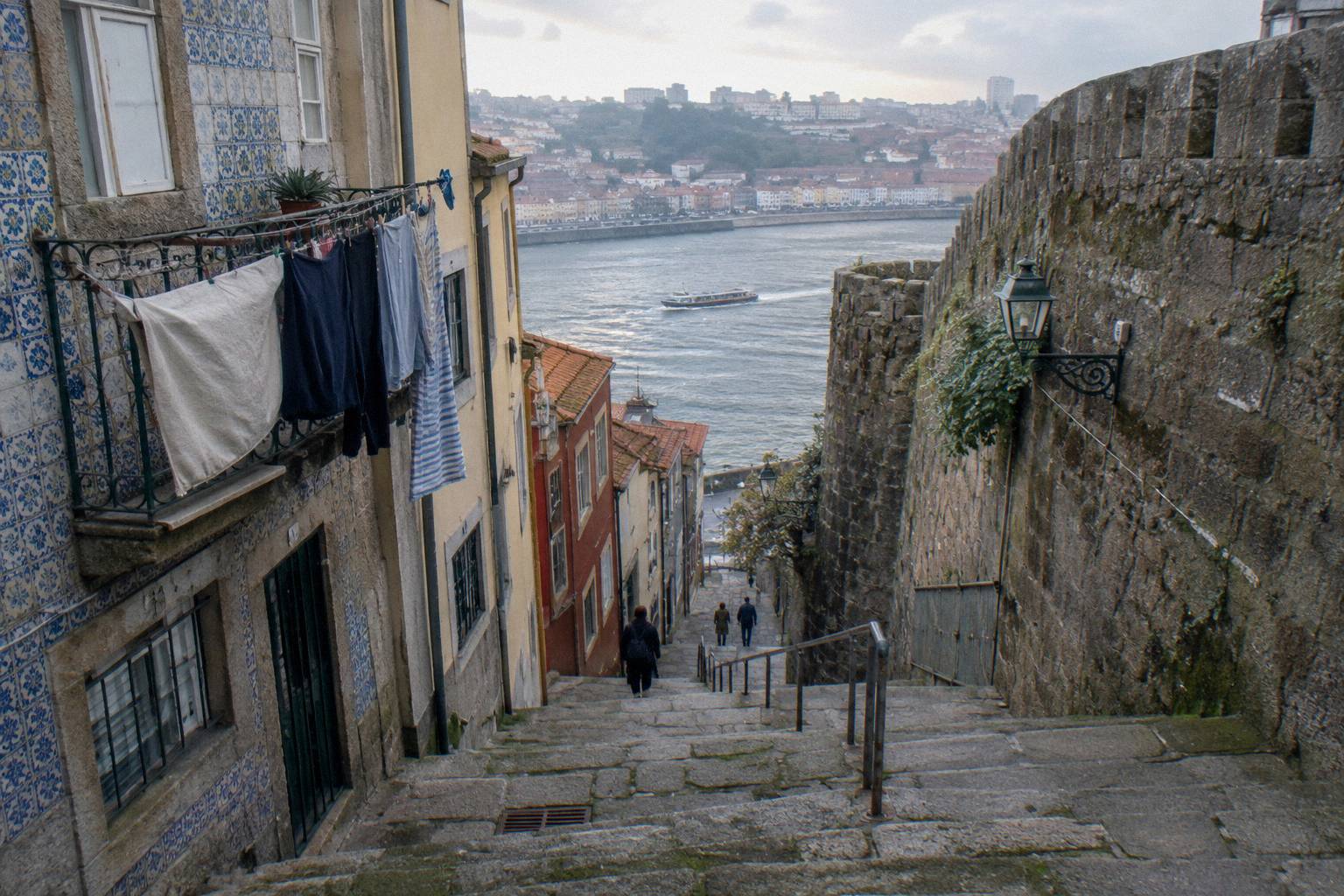
For a structured version of this loop, free guided walks cover both banks. The Porto to Gaia free walking tour, run by InsighTours on GuruWalk, runs 2 hours in English, Spanish, Italian, Portuguese, Russian and Ukrainian from Trindade Church, Praça da Trindade, rated 4.65 out of 5 across 183 GuruWalk reviews. Paired with a city-centre walk, it turns the crossing into a guided arc rather than a commute, and the guide handles the timing of the two banks so the walker only has to keep walking.
Where Are The Best Free Views?
The best free views around the bridge are Jardim do Morro and the Serra do Pilar terrace on the Gaia side, and Miradouro da Vitória on the Porto side. All are open public space with no gate, ticket or fee. Jardim do Morro sits at the foot of the upper deck itself. The Serra do Pilar terrace looks back at the bridge and city together. Miradouro da Vitória frames the bridge from above the Ribeira rooftops.
Jardim do Morro is the easiest of the three: step off the upper deck and you are in it. The garden is an open public space with the river-and-Ribeira view, no gate and no fee, and it works at any hour since the crossing itself has no restrictions recorded. From the garden, public streets climb to the Serra do Pilar terrace in front of the monastery, where the view widens to take in the full bridge, both banks and the river's run toward the Atlantic. The terrace and gardens are free; the monastery's exhibition and dome are the paid parts behind it, and they never inherit the terrace's free status.
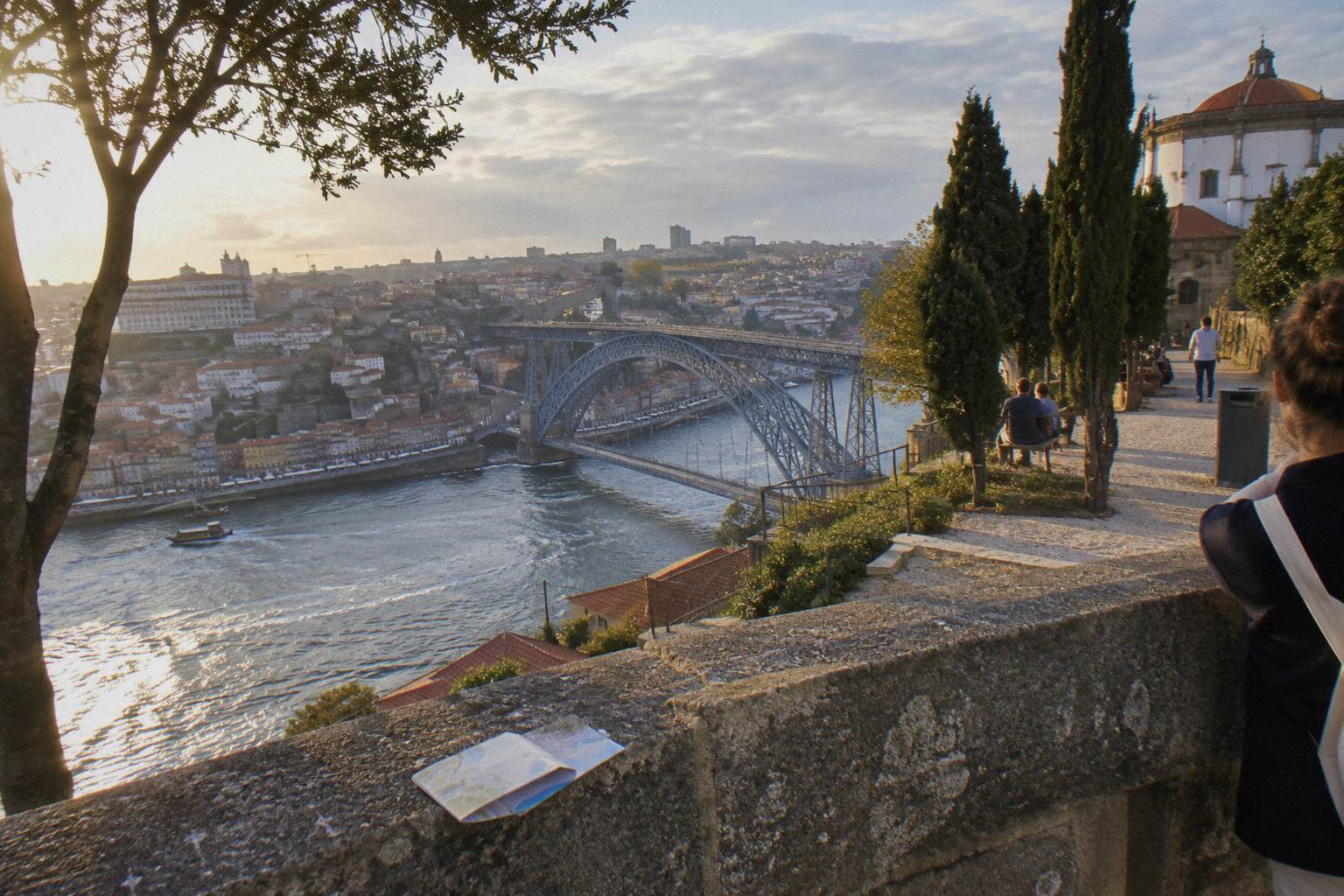
On the Porto bank, Miradouro da Vitória is an open viewpoint with no ticket, set above the Ribeira so the bridge reads as a skyline rather than a crossing. Below it, the Ribeira's own streets give a third, lower perspective, and the riverside quay a fourth. None of these involves money, and none involves more planning than walking. The official culture portal page on the Serra do Pilar monastery, at culturaportugal.gov.pt, is the primary source for the monastery's paid parts, and the municipal environment pages at ambiente.cm-porto.pt cover the city's open gardens.
| Free viewpoint | Bank | What it shows | Access |
|---|---|---|---|
| Jardim do Morro | Gaia | River and Ribeira from the garden | At the foot of the upper deck, no gate |
| Serra do Pilar terrace | Gaia | Bridge, both banks and river together | Open public space, free |
| Miradouro da Vitória | Porto | Bridge above the Ribeira rooftops | Open viewpoint, no ticket |
| Ribeira quay | Porto | The bridge at water level | Open riverside quarter |
| Upper deck footway | On the bridge | Both banks from Metro height | Free crossing, day or night |
The Gaia side rewards the most walking. Beyond the terrace, the Serra do Pilar streets connect down toward the waterfront, and the whole slope between garden and quay is ordinary public city, free to walk. The Vila Nova de Gaia free walking tour, run by Revolutours on GuruWalk, covers this ground with a guide: it meets at the Calçada de Vandoma, Vímara Peres statue, runs 2 hours in English and Spanish, and is rated 4.85 out of 5 across 1,309 GuruWalk reviews. It is free to join, pay what you want, reserved on GuruWalk.
Between the two banks, one paid neighbour is worth knowing about so it does not surprise you: the Gaia cable car is a paid ride, and no free crossing or ride exists anywhere on the river here. The bridge does the same job of linking the two banks for nothing, on foot, at any hour. The Foz do Douro seafront walk continues the free riverside story where the river meets the ocean, and the same free logic applies end to end.
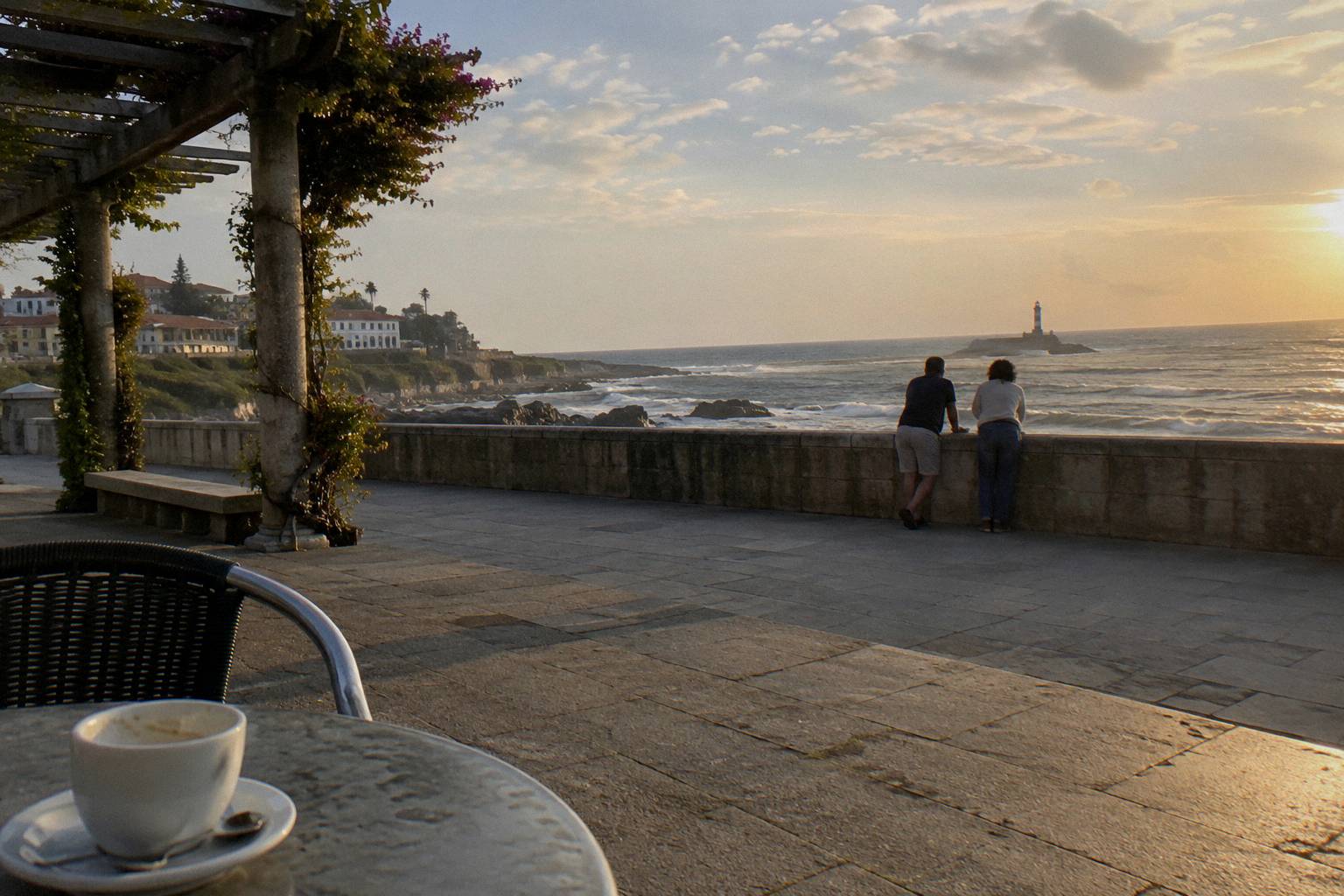
A simple walking loop ties the free viewpoints together without spending anything. Start on the Porto side at Miradouro da Vitória for the view over the Ribeira rooftops, then drop through the Ribeira's streets to the quay for the water-level angle. Cross the lower deck's pavement at river level to the Gaia bank, arrive directly into Jardim do Morro at the base of the upper deck, and climb the public streets to the Serra do Pilar terrace for the widest frame of bridge, both banks and river. Return over the upper deck footway beside Metro line D, which sets you back at Metro height with both banks below. Every stage is public space, and the only ticket decisions anywhere on the route sit inside the monastery itself.
For a short visit, the highest-return stop is Jardim do Morro: leave the upper deck and the view is already there, with no detour, no stairs and no opening hours to check. Photographers after the full bridge should budget the extra climb to Serra do Pilar, where both banks and the river sit in one frame. Anyone staying in the Ribeira gets two free perspectives within minutes: the rooftop frame from Miradouro da Vitória above and the water-level frame from the quay below. Since both decks are free to cross on foot, day or night, the crossing itself doubles as a moving viewpoint, and the garden, terrace, viewpoint and quay simply extend it on either bank.
How Does It Fit On A Walking Tour?
The bridge sits at the junction of the city's free walking tour ground: the Ribeira and Gaia walks meet or end beside it, and the old town walks stand on the slopes above it. The GuruWalk walks that touch this riverbank include Free Tour of the Old Town (Ribeira of Porto), Porto Ribeira and Old Town Free Tour, and Vila Nova de Gaia free tour. All are free to join, pay what you want, reserved on GuruWalk.
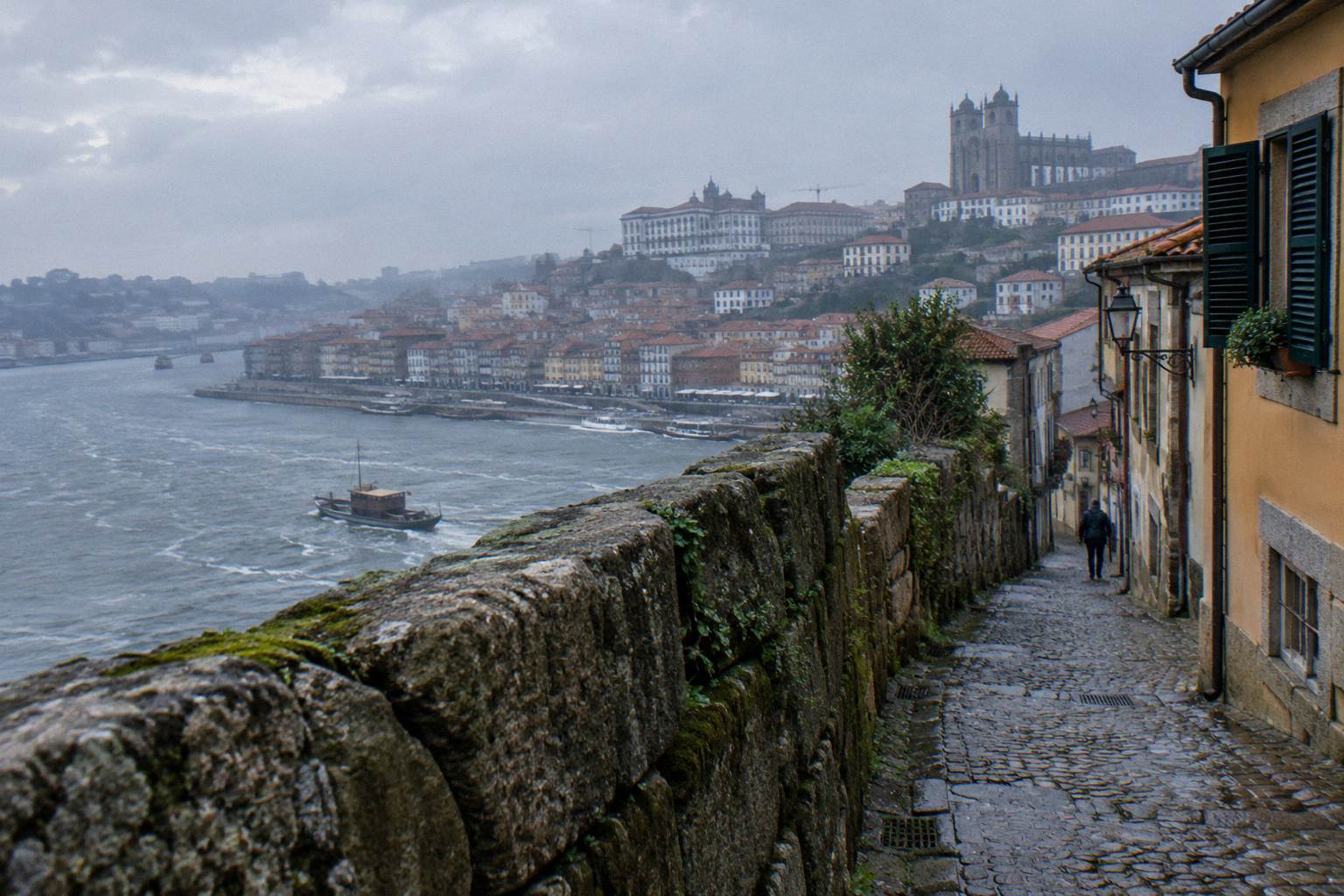
Because the crossing is free and central, it works as a hinge between two guided halves of a day. The Revolutours Free Tour of the Old Town (Ribeira of Porto) meets at Largo Amor de Perdição, runs 2 hours in English and Spanish, and is rated 4.87 out of 5 across 2,060 GuruWalk reviews. The Take-run Porto Ribeira and Old Town Free Tour starts from Terreiro da Sé, beside the Cathedral, runs 2 hours 30 minutes in English, Spanish and Italian, and carries a 4.74 out of 5 rating across 430 GuruWalk reviews. Both put walkers on the slopes that fall toward the bridge, and both are free to join, pay what you want, reserved on GuruWalk.
The natural pairing is one walk on each bank, with the bridge as the link. A morning old town walk above the Ribeira, a crossing on the upper deck, then the Gaia side's garden and terrace in the afternoon, uses nothing but free ground. Walkers who want a single longer arc can look at the old town walking tour routes page, which lays out how the city's walkable districts connect. The one day in Porto itinerary does the same for a tighter schedule.
| Walk | Guide | Meets at | Duration | Languages | Rating |
|---|---|---|---|---|---|
| Free Tour of the Old Town (Ribeira of Porto) | Revolutours | Largo Amor de Perdição | 2 hours | English and Spanish | 4.87 out of 5, 2,060 reviews |
| Porto Ribeira and Old Town Free Tour | Take | Terreiro da Sé, beside the Cathedral | 2 hours 30 minutes | English, Spanish and Italian | 4.74 out of 5, 430 reviews |
| Vila Nova de Gaia free tour | Revolutours | Calçada de Vandoma, Vímara Peres statue | 2 hours | English and Spanish | 4.85 out of 5, 1,309 reviews |
| Porto to Gaia free tour | InsighTours | Trindade Church, Praça da Trindade | 2 hours | Six languages including English | 4.65 out of 5, 183 reviews |
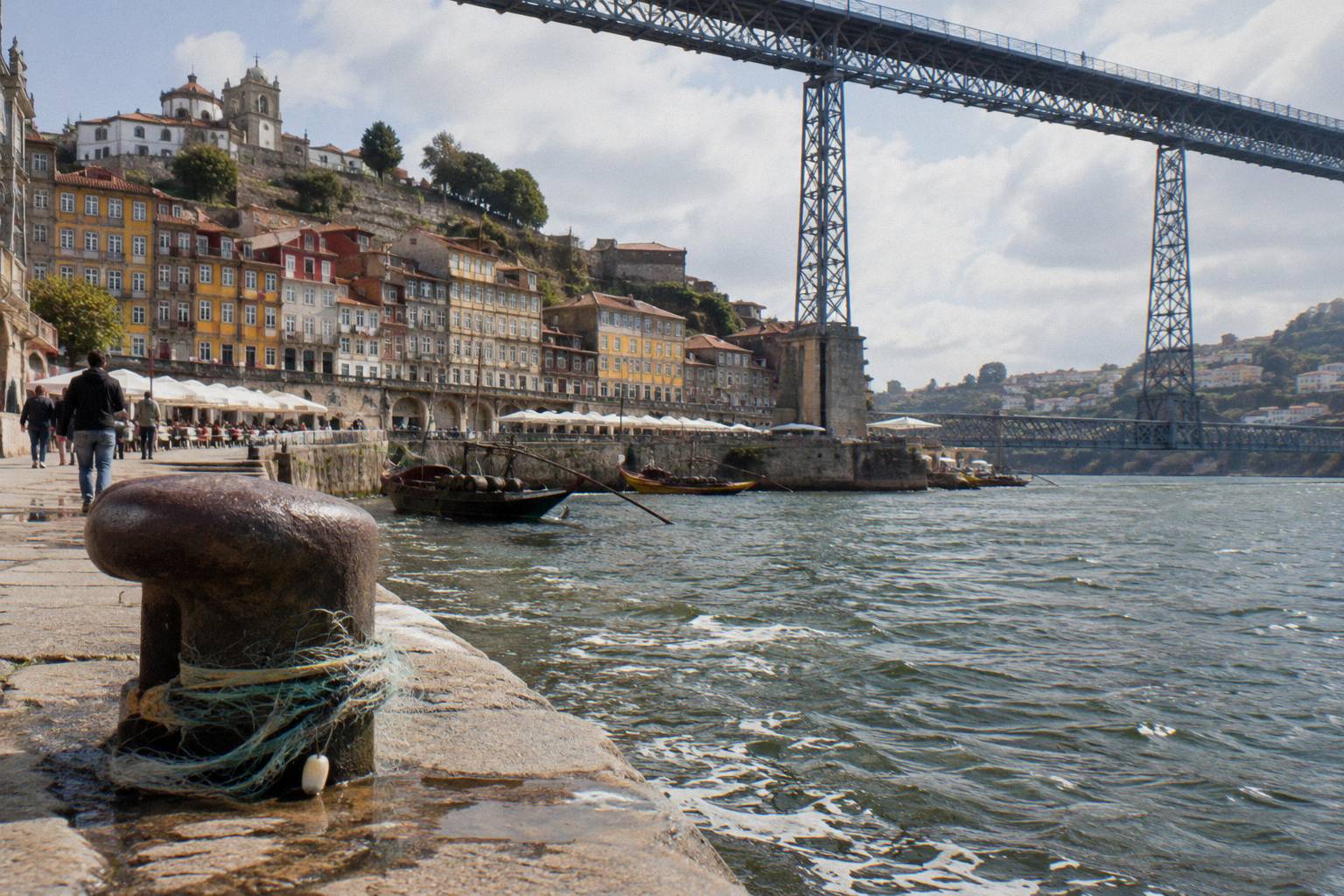
For walkers who want the biggest-review option, the Free Tour Fundamental, run by Revolutours and rated 4.94 out of 5 across 26,054 GuruWalk reviews, meets at Largo Amor de Perdição and runs 2 hours 30 minutes in English and Spanish. The old town walks in general are the city's most-reviewed free ground, and this site's Free Things To Do In Porto hub collects them alongside every free sight on this page. Every reservation for every walk named here happens on GuruWalk, and every walk is free to join, with the amount left entirely to the walker. Language matters too when pairing two walks in one day: the English and Spanish language guide explains how the bilingual walks differ from the English-only ones on this bank.
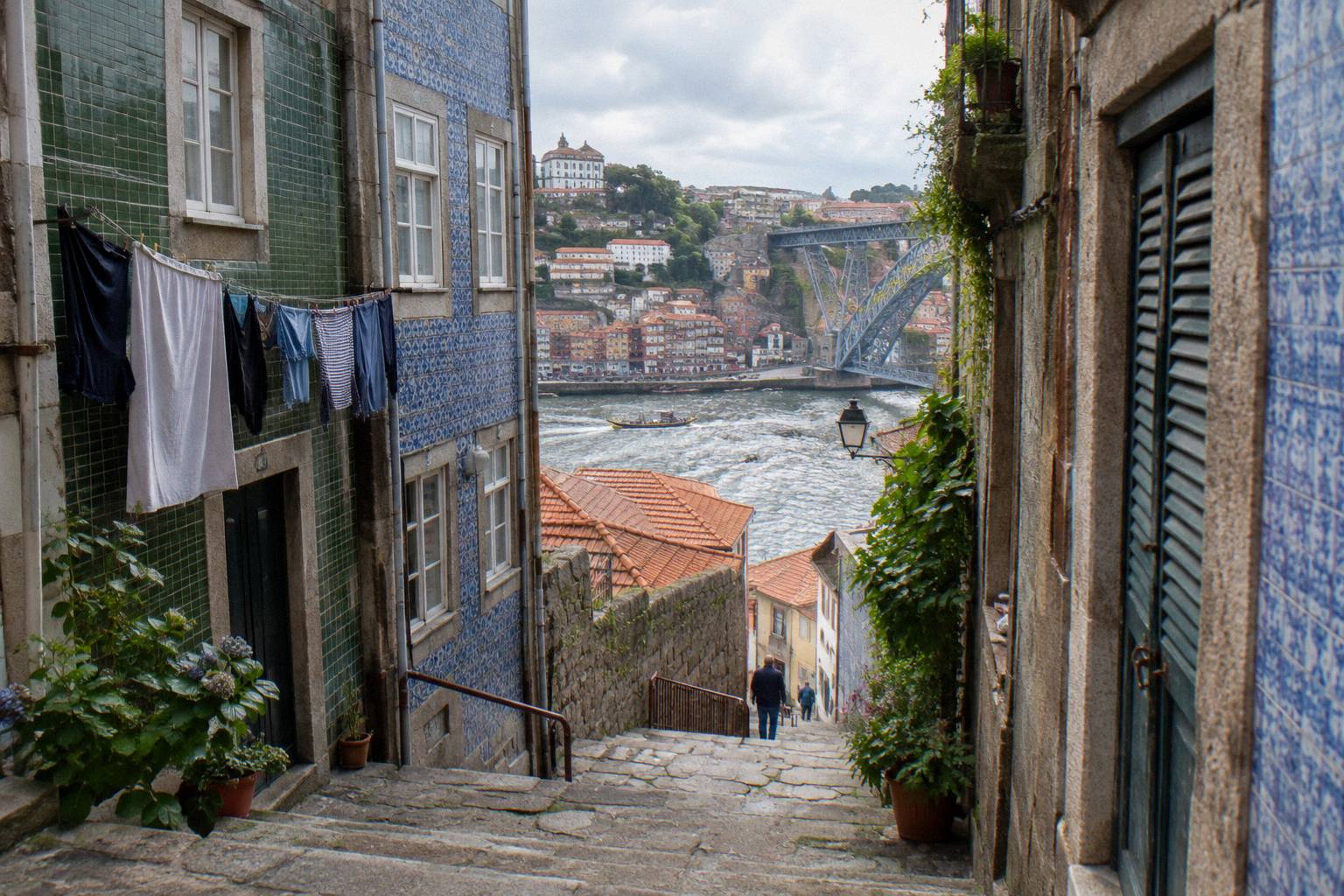
Mistakes That Trip People Up At The Dom Luis I Bridge
The common mistakes are treating paid neighbours as free, expecting a managed attraction, and assuming the two decks are interchangeable. The Gaia cable car, the port cellar tastings, and the Serra do Pilar exhibition and dome all cost money, while the crossing, the garden and the terrace cost nothing. The upper deck also carries live Metro tracks beside the footway. Getting the free-versus-paid split right is the whole game here.
The first mistake is mixing up the terrace with the monastery. Walkers regularly report assuming the whole hilltop is free, then meeting a ticket desk. The split is clean if you remember the rule: a terrace never inherits the monastery's status, and the monastery never inherits the terrace's.
The second is assuming the port cellars on the Gaia bank come free with the visit. They do not: cellar tastings in Gaia are paid, and no free tasting or free cellar entry is verified on record. The waterfront walk between them, the quayside and the views, are the free part. The port wine cellars guide sets out that split in full.
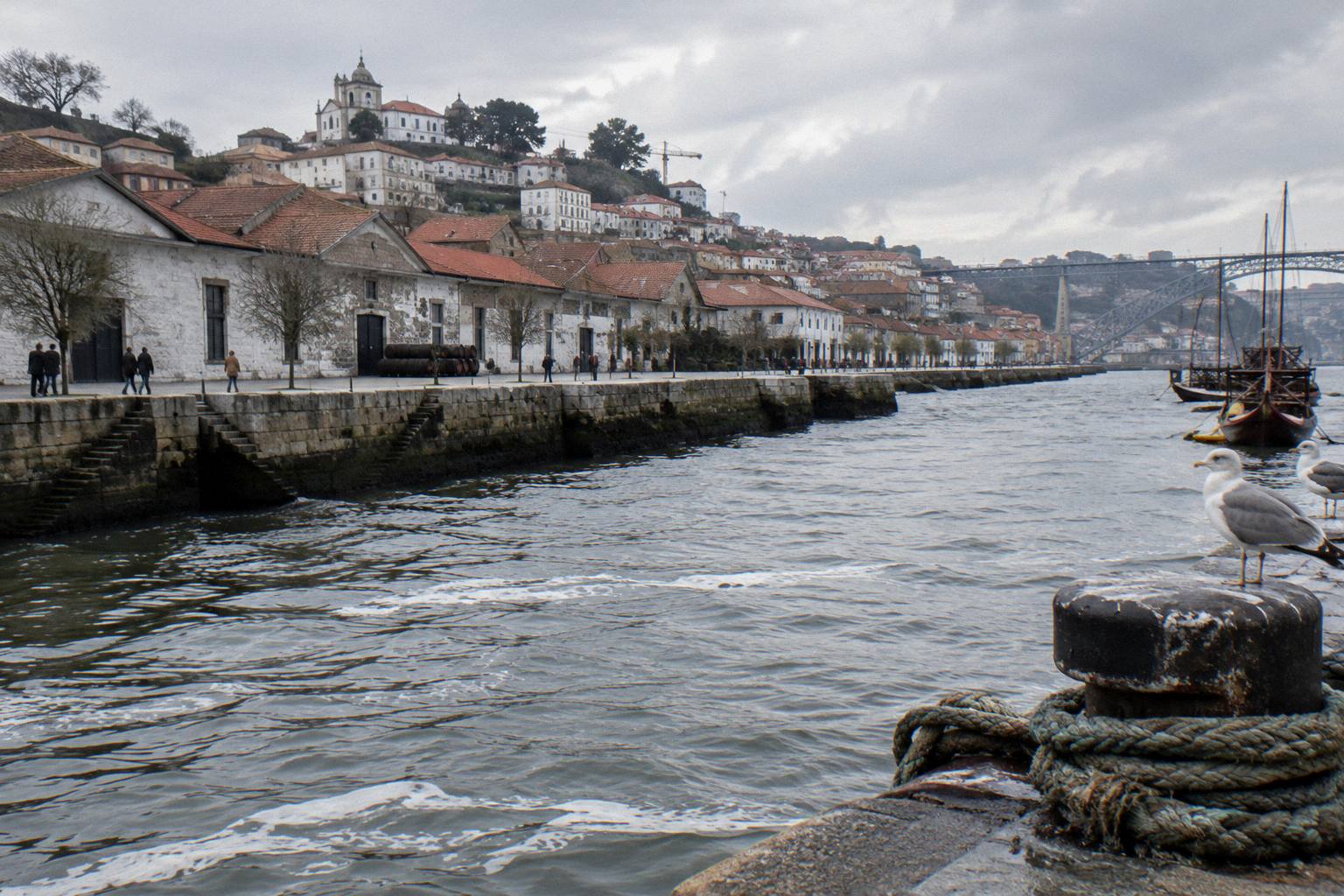
The third is treating the bridge as an attraction with services. There are no opening hours to check because there is nothing to open, but there are also no facilities tied to a ticket, and the upper deck shares its alignment with Metro line D. Walk the footway side, cross day or night as the record allows, and expect a street crossing rather than a sightseeing product. The fourth is forgetting the river level entirely: walkers who cross only on the upper deck miss the lower deck's arrival inside the Ribeira, and walkers who cross only below never see the panorama. The loop, up one way and down the other, is the free fix.
| Mistake | The reality |
|---|---|
| Assuming the monastery is free | Terrace free, exhibition EUR 2, dome EUR 4 |
| Expecting free port tastings | Cellar tastings paid, no free entry verified |
| Treating the bridge as ticketed | Free crossing, both decks, no hours |
| Walking only one deck | Upper for the view, lower for the arrival |
| Ignoring the Metro alignment | Upper deck footways run beside live line D tracks |
Common Questions About The Dom Luis I Bridge
Is It Free To Walk Across The Dom Luis I Bridge?
Yes. Both decks are open to walkers at no cost, day or night, with no ticket, pass or card involved. The upper deck shares its alignment with Metro line D and the lower deck is road and pavement at river level, but neither charges a crossing fee.
Which Deck Should You Walk On The Ponte Luís I?
Walk the upper deck for the panorama, since it crosses above the rooftops and lands at Jardim do Morro in Gaia. Walk the lower deck for the arrival, since it drops you onto the Ribeira quay and the Gaia waterfront. Crossing one way on each deck gives you both.
Where Is The Best Free View Of The Bridge?
The Serra do Pilar terrace in Gaia frames the bridge, both banks and the river together, and it is open public space. Jardim do Morro at the foot of the upper deck and Miradouro da Vitória above the Ribeira are also free, with no gate or ticket at any of them.
Do Any Free Walking Tours Cross The Bridge?
Yes. GuruWalk walks cover both banks, including Vila Nova de Gaia free tour on the south side and Free Tour of the Old Town (Ribeira of Porto) on the north side, all free to join, pay what you want. There are 17 English-language free walks on GuruWalk in the city in total.
Is The Gaia Cable Car Free?
No. The Gaia cable car is a paid ride, and no free crossing or ride exists on this stretch of the river. The Dom Luis I bridge does the same job of linking the two banks on foot, for nothing, at any hour.
Is The Serra do Pilar Monastery Free?
The viewpoint terrace and gardens in front of the monastery are free open public space. The monastery's exhibition costs EUR 2 and the dome EUR 4, paid separately. A conditionally free sight carries its condition, and this one splits cleanly at the monastery door.