What Is Porto Best Known For? A Free Walking Tour Shows It
Porto is known for the Ribeira riverside, the Dom Luís I bridge, port wine across the Douro in Gaia, and the azulejo hall of São Bento station, and a free walking tour in English puts them in one line of sight.
In Short
Porto is best known for the Ribeira riverside quarter, the Dom Luís I bridge over the Douro, the port wine lodges of Vila Nova de Gaia, and the azulejo-tiled hall of São Bento station. The city is also famous for Livraria Lello, which every visitor pays a Ticket-Voucher to enter. A free walking tour on GuruWalk, pay what you want, strings the free sights together in one walk.
This question sits inside the Free Things To Do In Porto guides, and it connects most directly to the riverside walk along the Douro guide.
Quick Facts
| Fact | Detail |
|---|---|
| What is free | Ribeira streets and quay, Ponte Luís I on foot on both decks, São Bento station hall, Serra do Pilar terrace, Jardim do Morro |
| What costs money | Livraria Lello Ticket-Voucher EUR 15.95, Clérigos tower EUR 5, Palácio da Bolsa guided tour EUR 14 |
| Conditional free | Soares dos Reis free only for Portuguese nationals or residents, visitors EUR 10 |
| Free walks | 17 English-language free walks on GuruWalk, all pay what you want |
| Market day note | Mercado do Bolhão entry is free, closed Sundays |
| Bridge | Both decks of Ponte Luís I can be crossed on foot, free, day or night |
What Is Porto Best Known For? A Free Walking Tour Shows It
Porto is best known for four things standing within sight of one another: the Ribeira riverside quarter on the Douro, the double-deck iron span of the Ponte Luís I, the port wine lodges of Vila Nova de Gaia, and the azulejo-tiled hall of São Bento station. A free walking tour on GuruWalk covers this core on foot, and 17 English-language free walks run across the city.
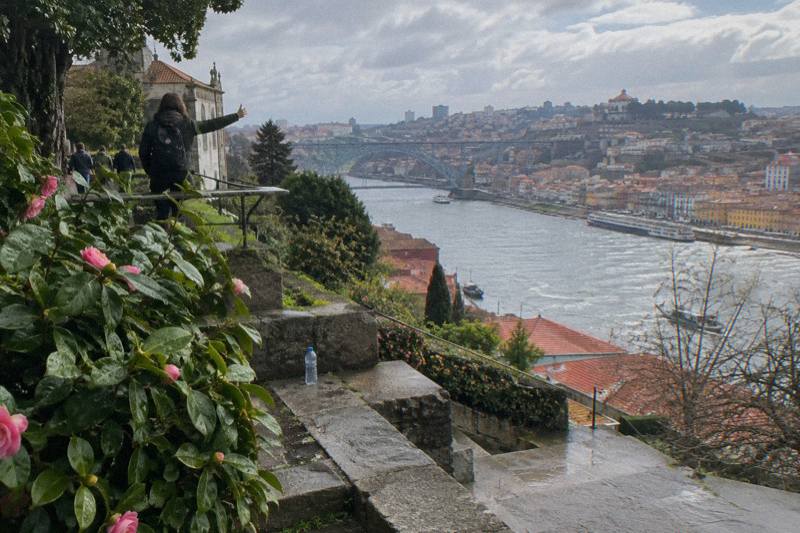
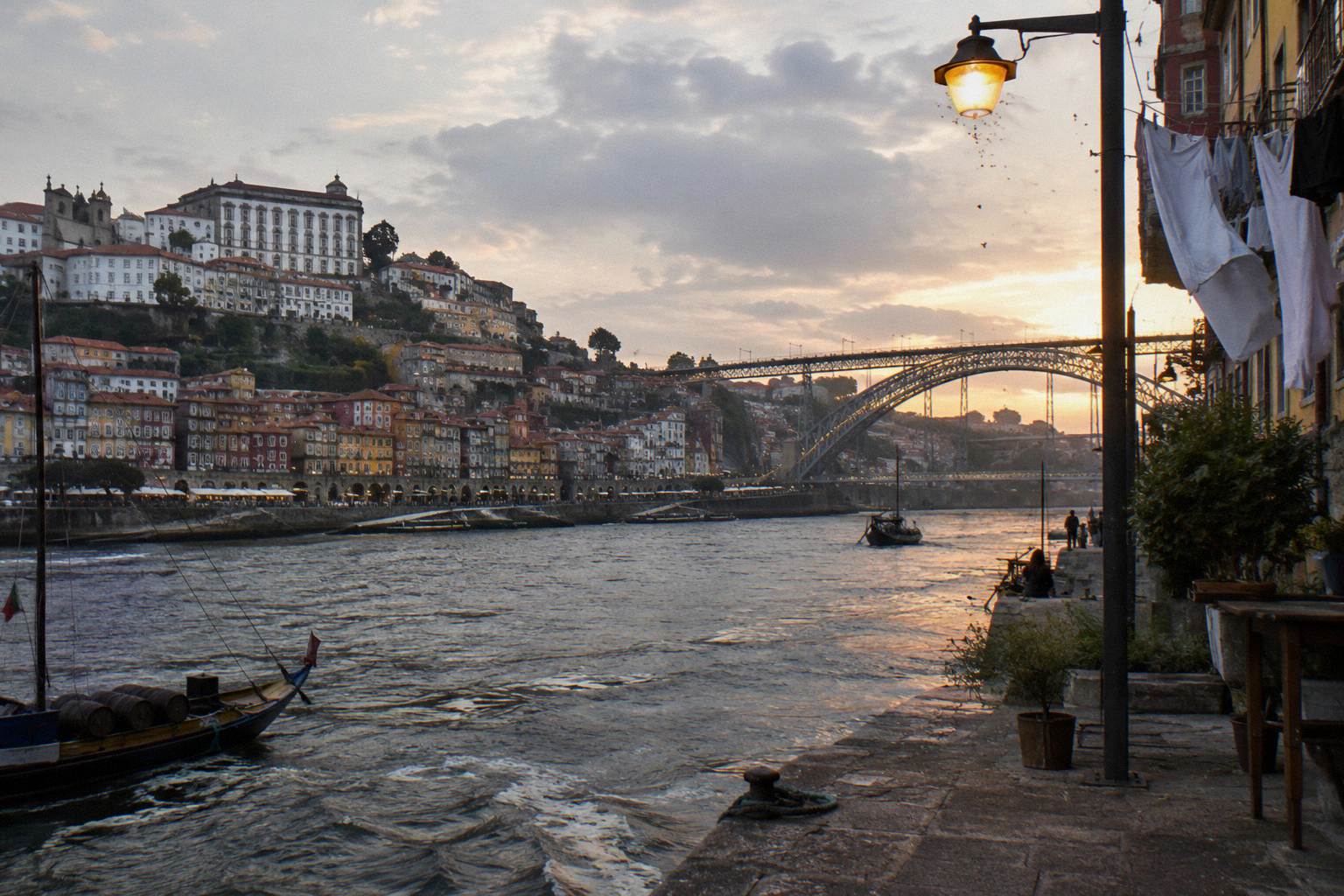
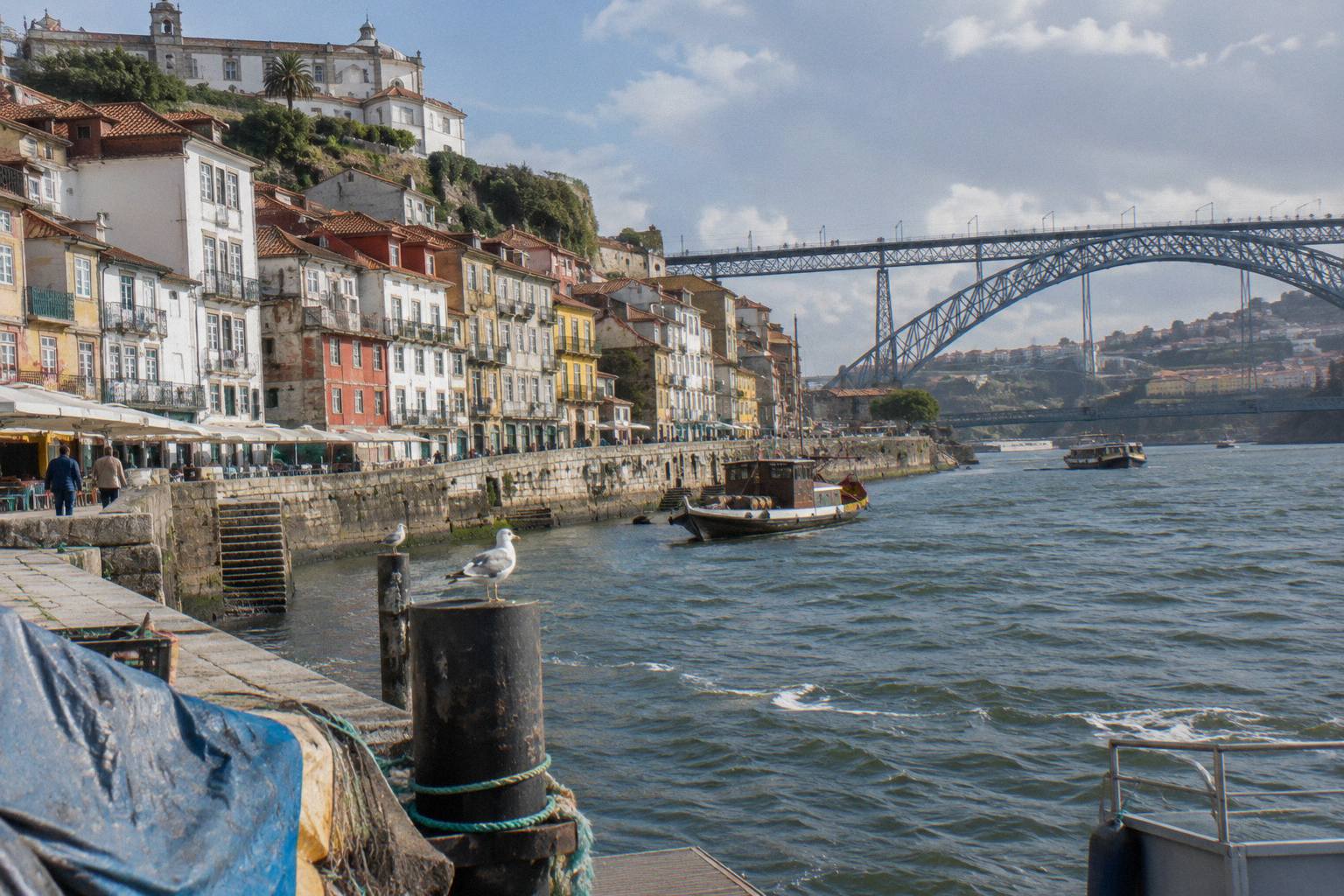
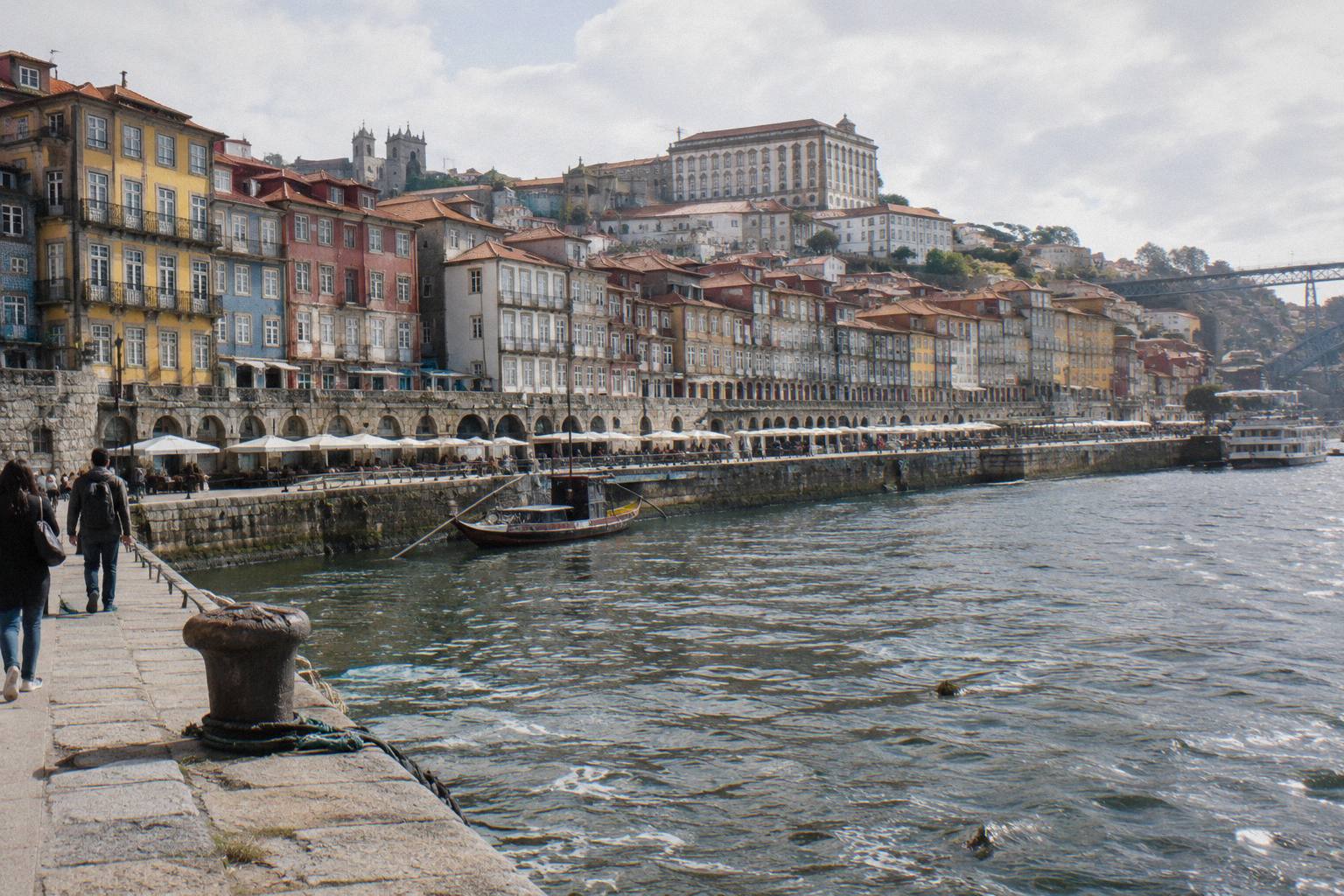
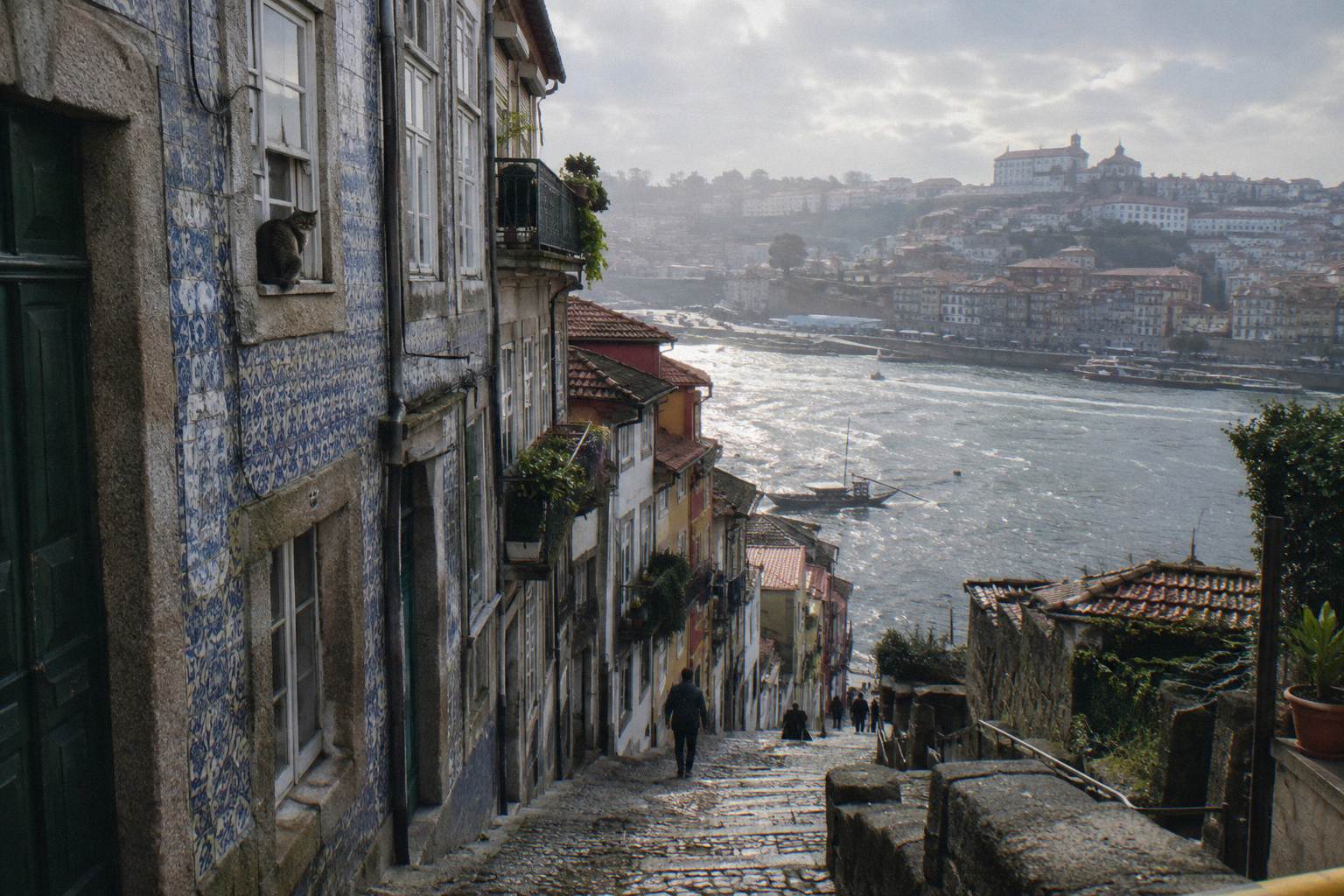
The reason a walking tour shows Porto so well is geography. The sights people picture when they picture this city sit close together on a slope that runs from the Avenida dos Aliados down to the river. The Ribeira is an open riverside quarter, streets and quay, free to wander at any hour. From its waterfront you look straight across the Douro at Gaia, where the port wine names sit above the waterline, and the Ponte Luís I frames the whole view. Both decks of the bridge can be crossed on foot, free, day or night, so the famous view is not something you buy a ticket for, it is something you walk into.
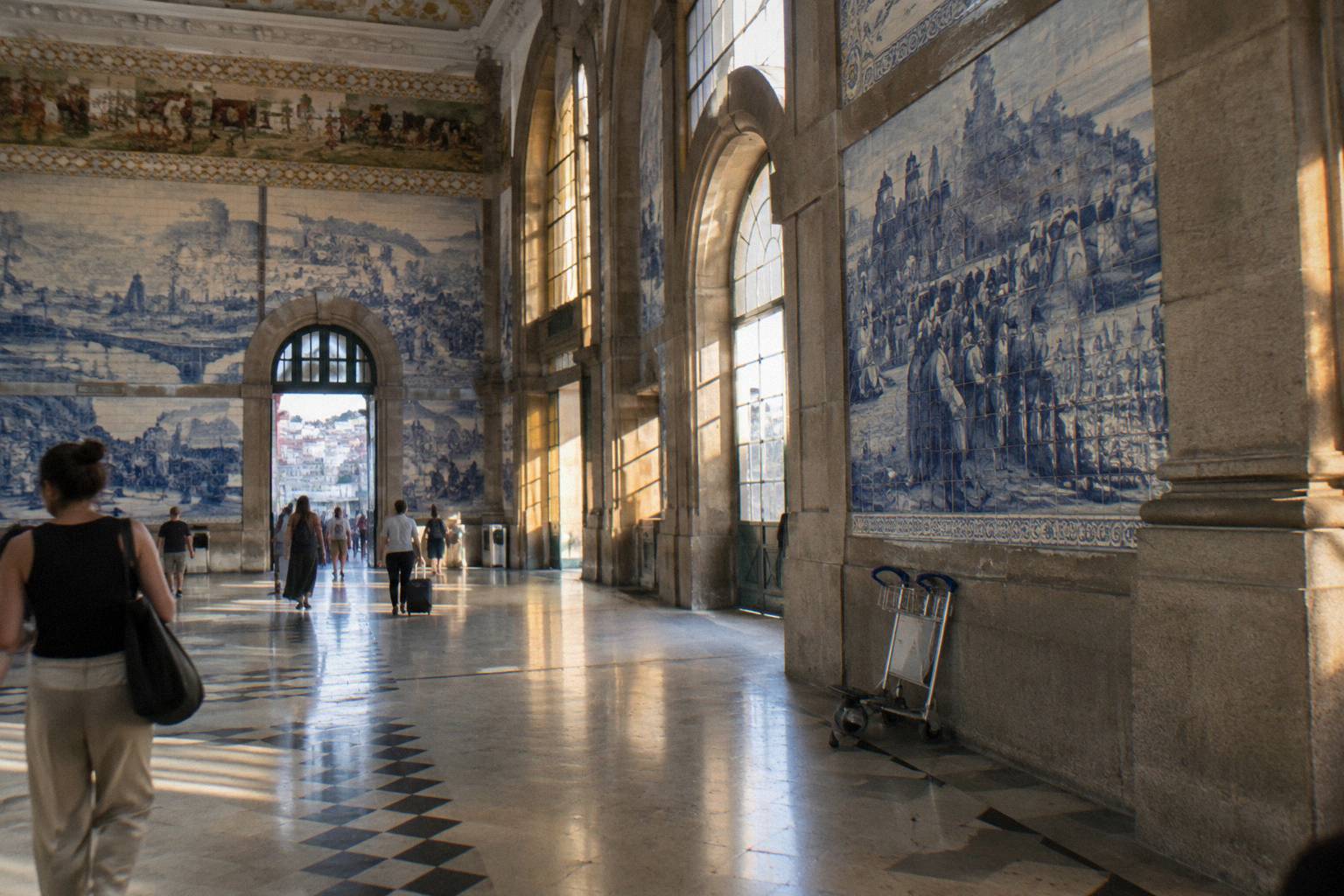
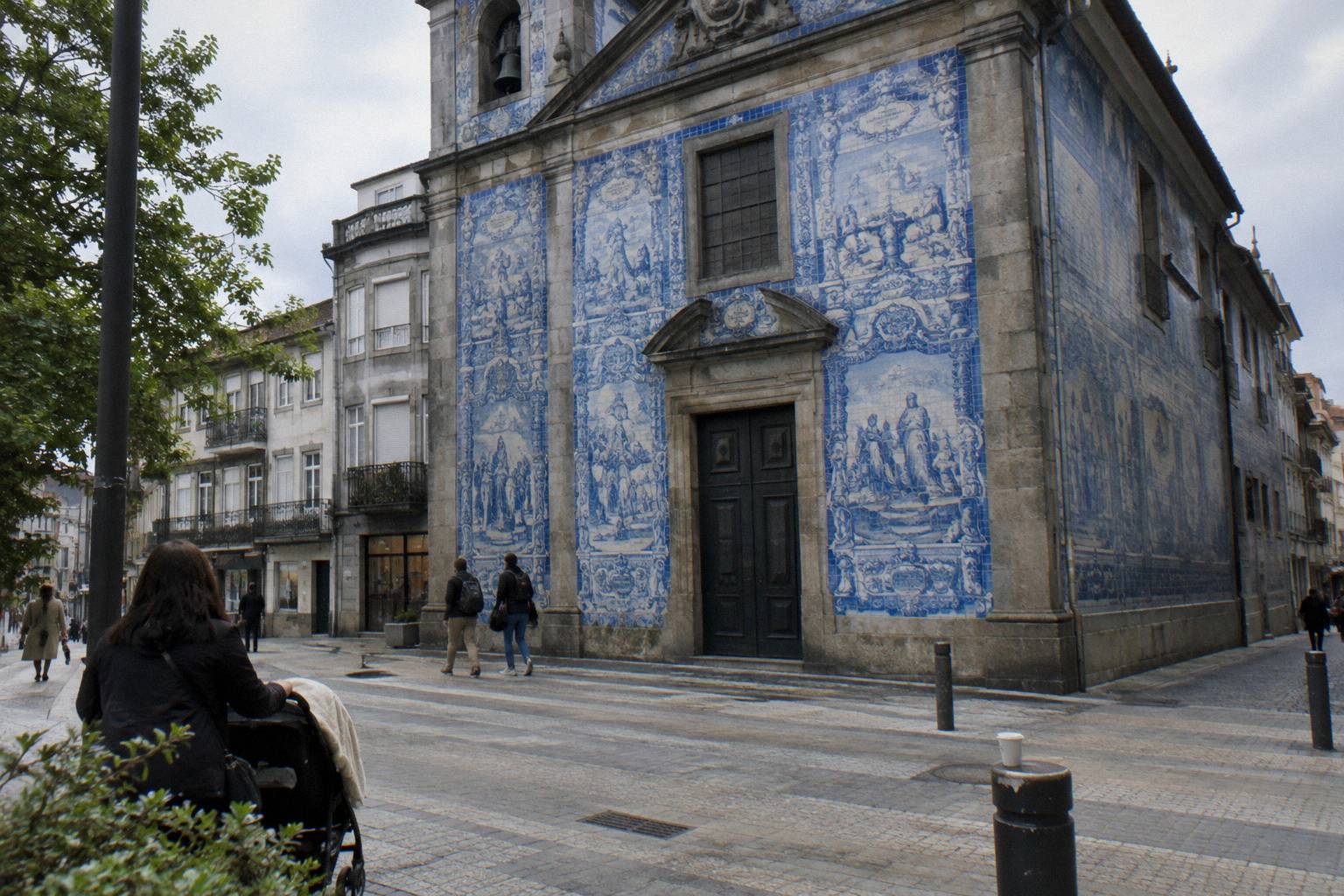
The second layer of the city's fame is ceramic and literary. The Capela das Almas facade on Rua de Santa Catarina carries 16,000 azulejos visible from the street at no cost, and São Bento station puts its tiled hall to work as a public concourse of a working railway station, free to walk into. Livraria Lello belongs on the famous list too, but with an honest condition: every visitor needs a Ticket-Voucher, priced EUR 15.95 on the bookshop's own FAQ page, even to buy books, and the voucher value is deducted only if you buy a Livraria Lello Editions title. Selected events in the shop's cultural auditorium are the one free Lello item, marked free entry on the official site.
A free walk makes sense here precisely because the famous and the free overlap so heavily. The Ribeira, the bridge, the tiled station frontage, the Serra do Pilar terrace across the river in Gaia and the Jardim do Morro garden beside it are all open public space, and the 17 English-language free walks on GuruWalk are run by independent local guides who meet at fixed points around exactly these quarters. The walks are free to join, pay what you want, and reserved on GuruWalk. If you want the famous core with a guide beside you, the early selection below is a fair starting shortlist, each walk free, each with its own meeting point.
What Is The Short Answer?
The short answer: Porto is known for its riverside and river crossings, for port wine, for azulejo tilework readable off public walls, and for a steep, compact old town best seen on foot. The famous sights split into free public space, like the Ribeira, the bridge and the Serra do Pilar terrace, and paid interiors, like the Lello voucher or the Clérigos tower. Free walking tours on GuruWalk cover the free layer in English.
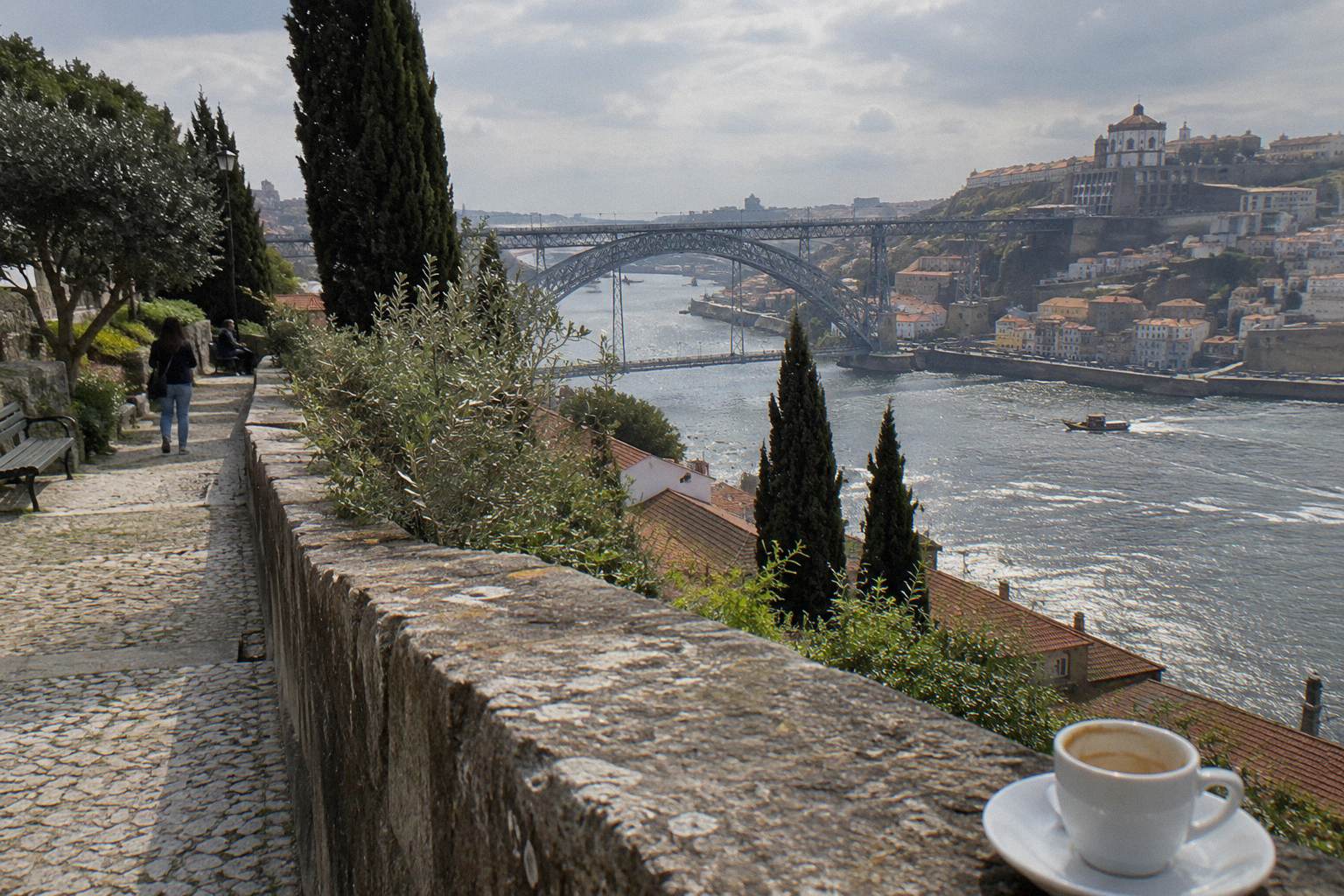
Start with the river, because everything famous in Porto arranges itself around it. The Ribeira quarter is a UNESCO-listed riverside of streets and quay, open and free. Opposite, Vila Nova de Gaia holds the port wine lodges; tastings there are paid, with no verified free tasting or free cellar entry, but the Serra do Pilar viewpoint terrace and gardens in front of the monastery are open public space, and the monastery exhibition at EUR 2 and dome at EUR 4 are separate paid parts. A terrace never inherits the monastery's ticket, and the monastery never inherits the terrace's freedom.
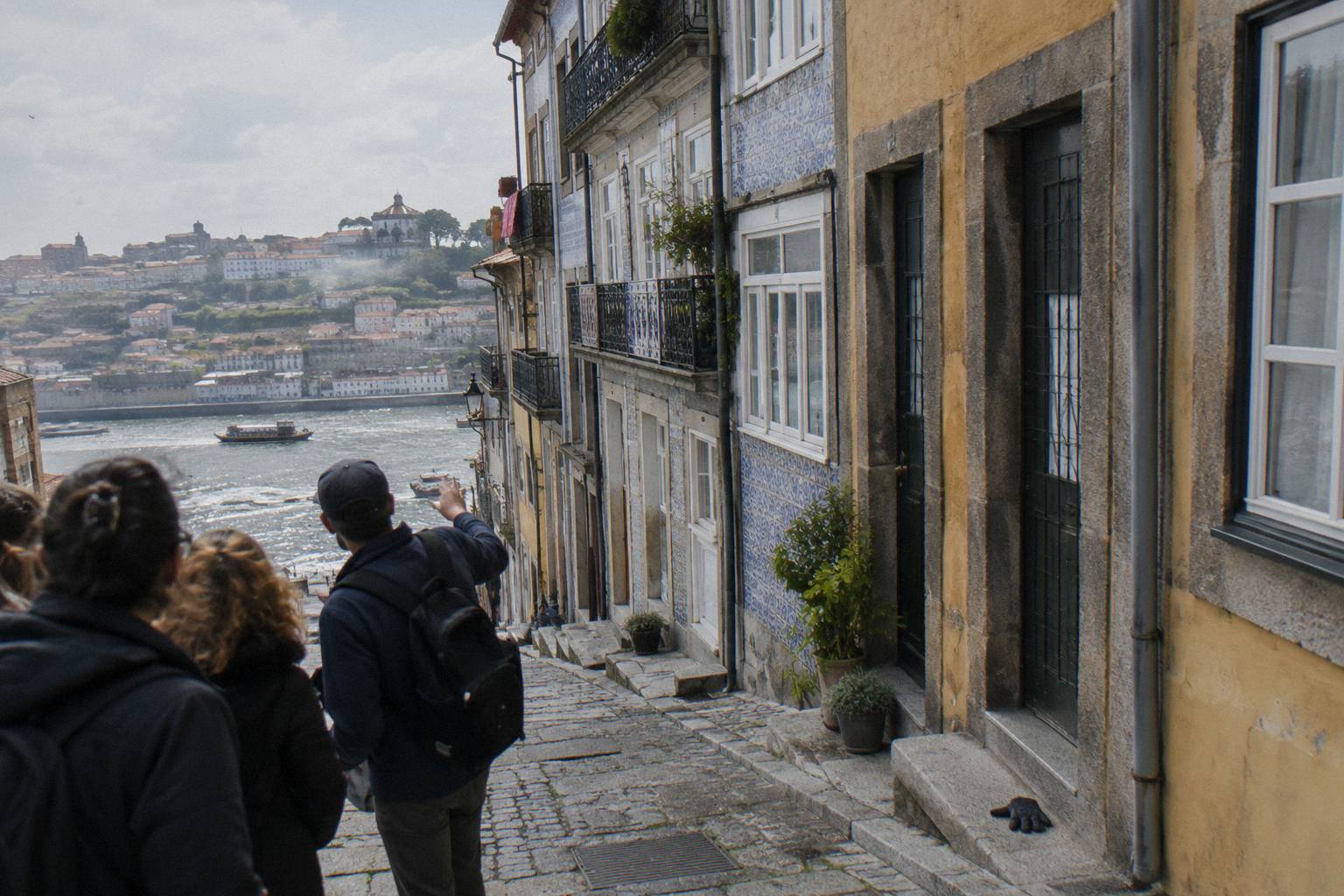
Then the streets above the water. Rua das Flores and Rua de Santa Catarina are pedestrian streets, free by definition, and the tiled Capela das Almas facade fronts the second of them. The Sé do Porto, the cathedral, sits at the top of the old town with its square, Terreiro da Sé, working as a meeting point for one of the free Ribeira walks. What the cathedral's own interior costs is not stated on the diocese page, so say nothing about it and enjoy the square and the slope down to the river, which cost nothing.
The paid famous sights are few enough to list plainly. Livraria Lello's voucher is EUR 15.95, the Clérigos tower ticket is EUR 5 with the tower and museum pack, the Palácio da Bolsa is a guided tour only at EUR 14, and the Casa da Música guided tour is EUR 12. The Centro Português de Fotografia, in the former prison and Relação court building, is free admission on its official page, and the city-museum group is reported free on Sundays, a single-source claim worth treating as reported rather than promised. The famous city, in short, is mostly a free city with a handful of ticketed interiors, and a walk ties the two layers together in one loop.
What Should You Know Before You Go?
Know the free-versus-paid split before you plan, because Porto's famous sights mix open public space with ticketed interiors and residents-only free entry. The Ribeira, Ponte Luís I, São Bento's hall, the Serra do Pilar terrace, the Palácio de Cristal gardens and Jardim das Virtudes are free; Lello, Clérigos tower, Palácio da Bolsa and Soares dos Reis charge. Mercado do Bolhão is free but closed Sundays.
A few honest traps are worth naming before arrival. The Museu Nacional Soares dos Reis is free, up to 52 entries a year, only for Portuguese nationals or residents showing a Cartão de Cidadão and NIF; visitors pay EUR 10, and the official page names no free-Sunday scheme. Serralves runs first-Sunday free entry only for holders of a Portuguese Citizen Card or Resident Card at the box office, so it is not a tourist free day. The Porto Card, meanwhile, is reported by porto.info to have sales suspended since early July, with no return date, so no current advice can rest on it. Free-Sunday entry at the five city-museum venues is reported, single-sourced, and best written exactly that way.
The open spaces carry hours worth knowing. The Jardins do Palácio de Cristal are "Acesso Livre" on the municipal page, April to September 08:00-21:00 and October to March 08:00-19:00. Jardim das Virtudes and the Passeio das Virtudes run 08:00-20:00 daily per the regional tourism board page. Mercado do Bolhão is free to enter, Monday to Friday 08:00-19:00 and Saturday 08:00-18:00, closed Sunday. Café Majestic on Rua de Santa Catarina has no entry fee, but it is a working café, open Monday to Saturday 09:00-23:00 per its own site: you order to sit, and queues are reported.
For the walks themselves, the practical facts are simple. Every walk in this city's free catalogue is a real listing on GuruWalk run by an independent local guide, free to join and pay what you want, reserved on GuruWalk in advance. Each has a fixed meeting point, a stated duration and stated languages, and nothing about a route beyond that, so choose by neighbourhood, language and length rather than by promises of specific stops. The table below compares the walks that meet on the famous ground described above.
| Walk | Guide | Rating on GuruWalk | Duration | Languages | Meets at |
|---|---|---|---|---|---|
| Free Tour Fundamental. The #1 in Porto. | Revolutours | 4.94 out of 5 across 26,054 reviews | 2 hours 30 minutes | English and Spanish | Largo Amor de Perdição |
| Free Tour Porto Essential | 1·2·Tours | 4.8 out of 5 across 6,888 reviews | 2 hours 15 minutes | English and Spanish | Calçada de Vandoma, by the old city wall |
| Free Tour of the Old Town (Ribeira of Porto) | Revolutours | 4.87 out of 5 across 2,060 reviews | 2 hours | English and Spanish | Largo Amor de Perdição |
| Free tour of Vila Nova de Gaia | Revolutours | 4.85 out of 5 across 1,309 reviews | 2 hours | English and Spanish | Calçada de Vandoma, Vímara Peres statue |
| Women Who Shaped Porto | Andreia | 5 out of 5 across 43 reviews | 2 hours 45 minutes | English and Spanish | Museu Nacional Soares dos Reis |
This site is Free Things To Do In Porto, and its whole premise is that the famous city and the free city are largely the same city; the free viewpoints and sunset spots walk guide is a good companion piece if the miradouro angle is what drew you here.
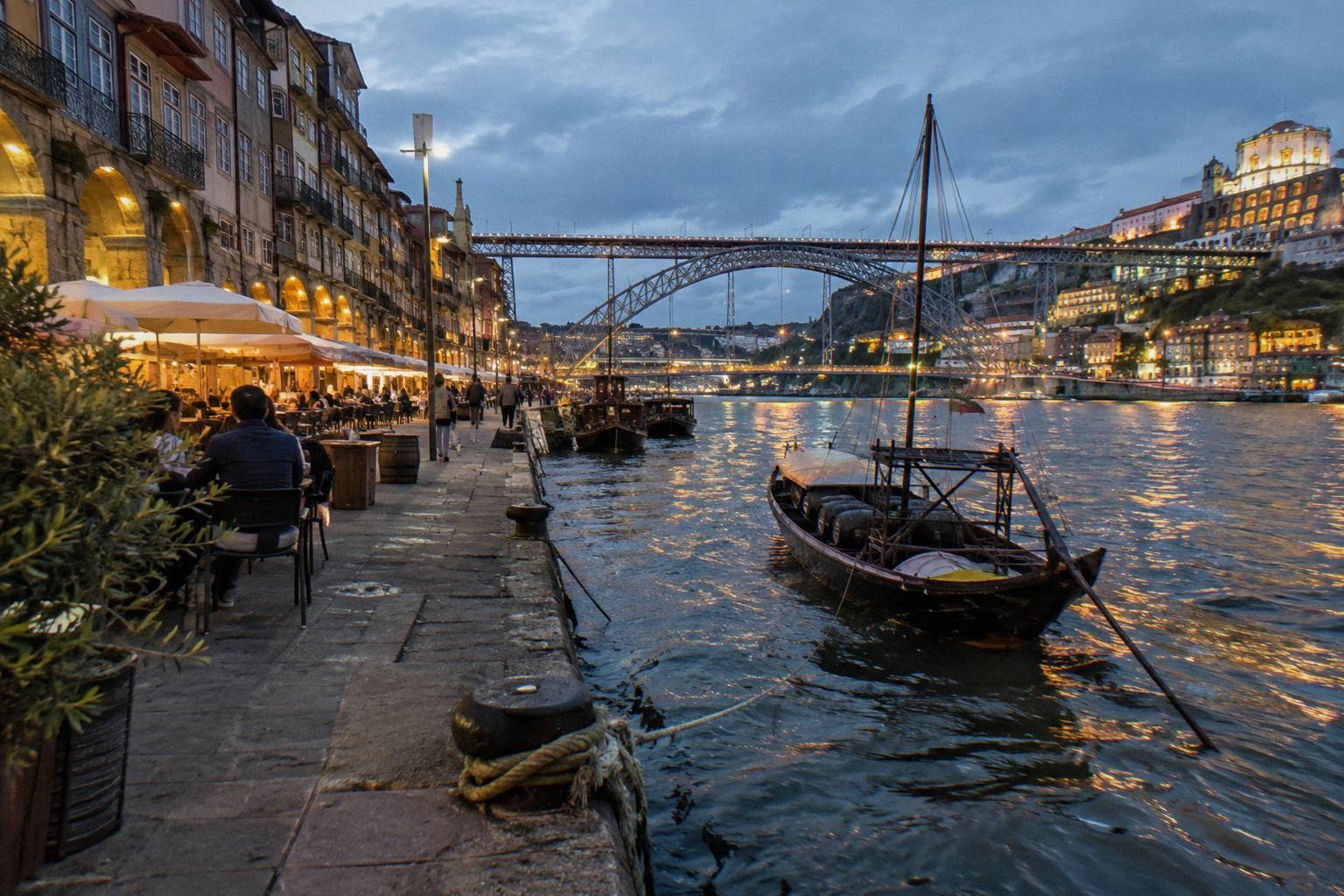
Which Free Walking Tours Cover This?
The famous core is covered by free walks across the three neighbourhood families: old town highlights walks meeting at points like Largo Amor de Perdição and the Lion Fountain, Ribeira and Gaia walks meeting at the river, and themed walks covering dark stories, the Bolhão market and the city's women. All are free to join, pay what you want, reserved on GuruWalk, and each states its own meeting point, duration and languages on its GuruWalk page.
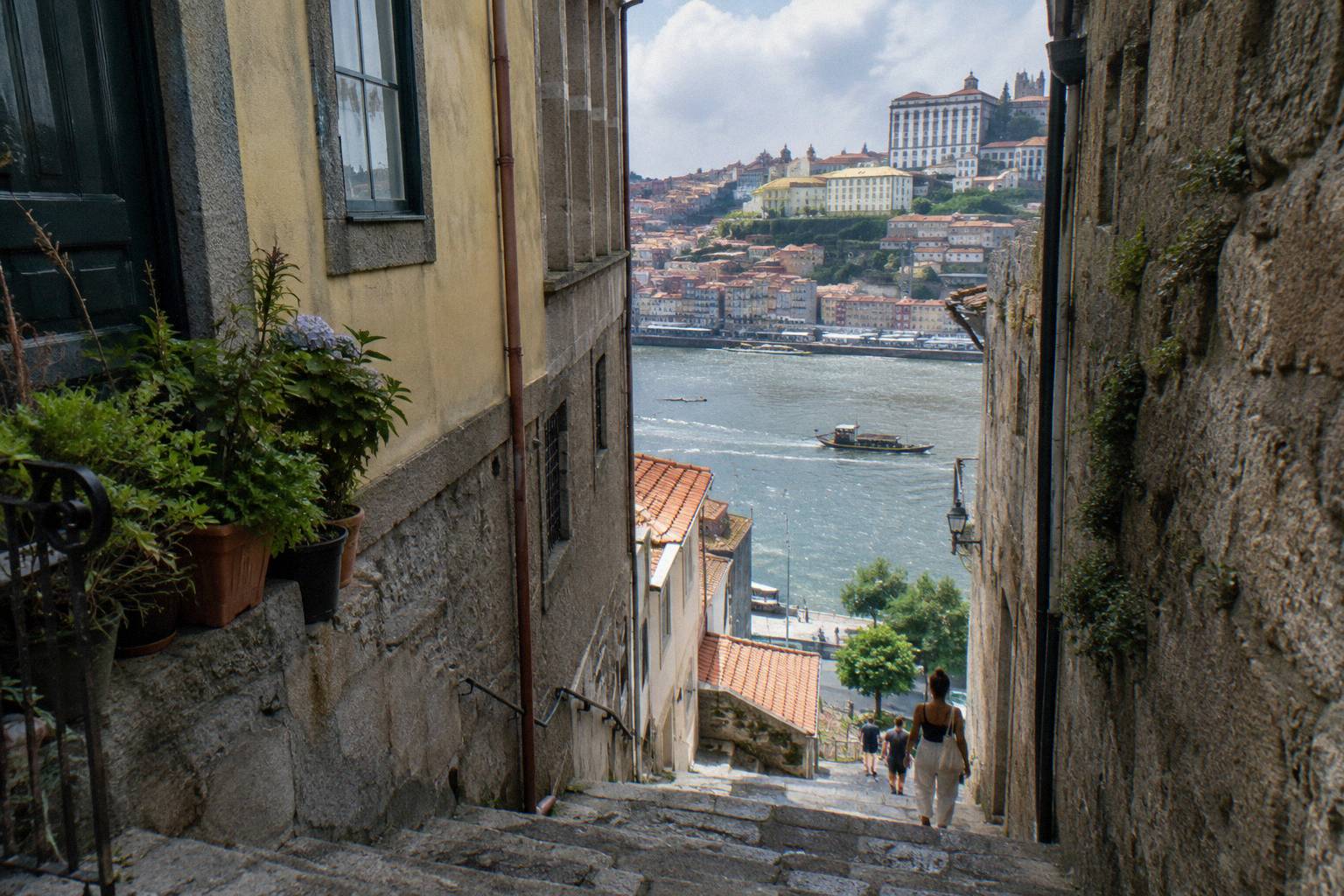
The walk with the deepest review pool is Free Tour Fundamental. The #1 in Porto., run by Revolutours, rated 4.94 out of 5 across 26,054 GuruWalk reviews. It meets at Largo Amor de Perdição, runs 2 hours 30 minutes in English and Spanish, and is the natural first walk for the question in this article's title: the famous old town, introduced by a guide, with the price left to the walker. Its own page on this site carries the meeting point and reserve link, and the walk is free to join with pay-what-you-want pricing.
A second old-town option meets by the old city wall: Free Tour Porto Essential, run by 1·2·Tours, rated 4.8 out of 5 across 6,888 GuruWalk reviews, 2 hours 15 minutes in English and Spanish, meeting at Calçada de Vandoma. The same guide team runs Free Tour Dark Porto: Mysteries, legends and crimes from the same meeting point, rated 4.79 out of 5 across 2,061 reviews, which covers the city's darker stories rather than its postcard layer. Between them, the two walks frame the old town from its daylight and its shadow side, and both leave the payment entirely to the walker.
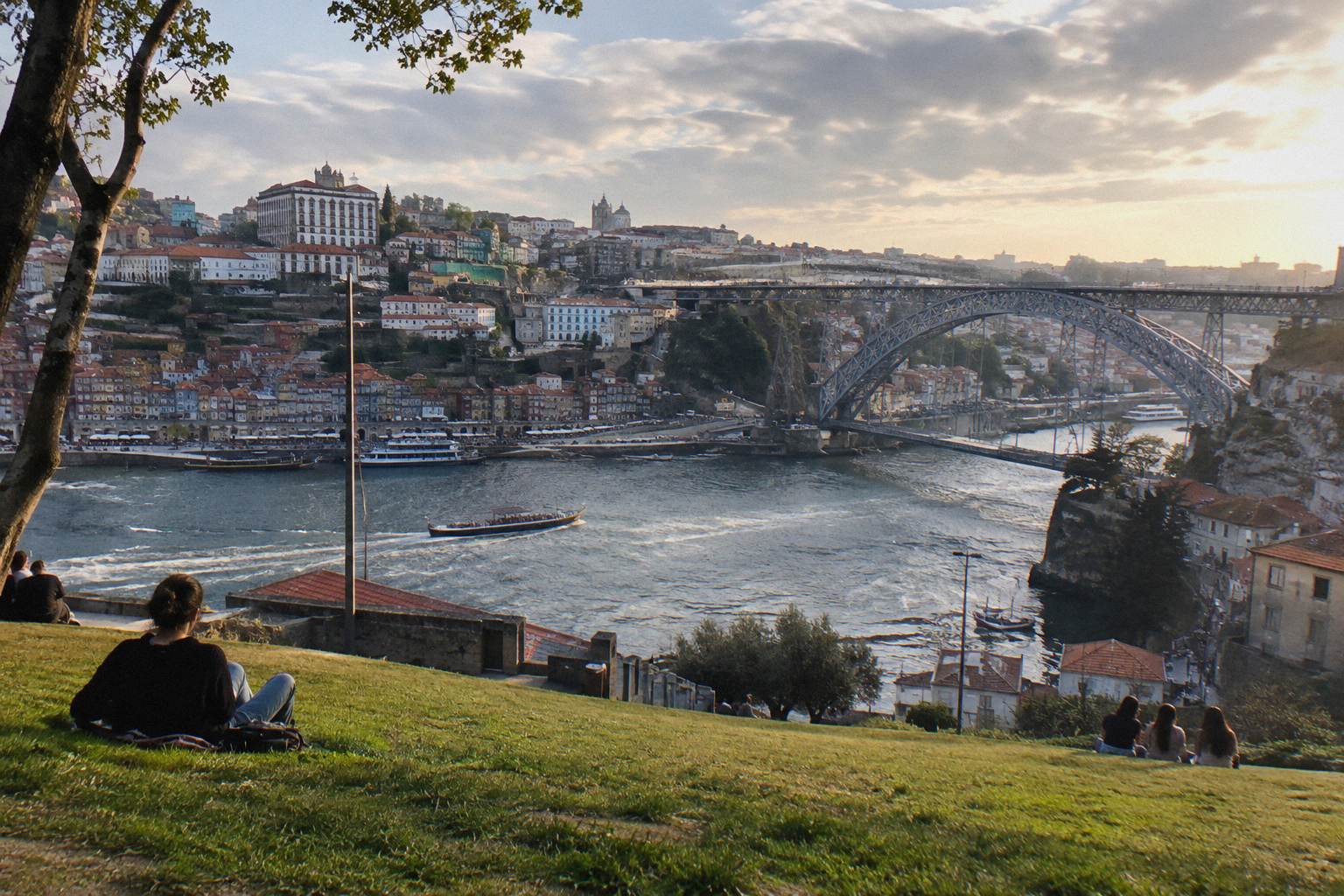
The riverside family covers the Ribeira and Gaia ground. Free Tour of the Old Town (Ribeira of Porto), another Revolutours walk, is rated 4.87 out of 5 across 2,060 reviews and meets at Largo Amor de Perdição for 2 hours in English and Spanish. Porto Ribeira & Old Town Free Tour: the Soul of the City, by Take, meets at Terreiro da Sé beside the Cathedral and runs 2 hours 30 minutes in English, Spanish and Italian, rated 4.74 out of 5 across 430 reviews. Across the bridge, Free tour of Vila Nova de Gaia meets at the Vímara Peres statue on Calçada de Vandoma and gives the port-lodge bank its own walk, rated 4.85 out of 5 across 1,309 reviews.
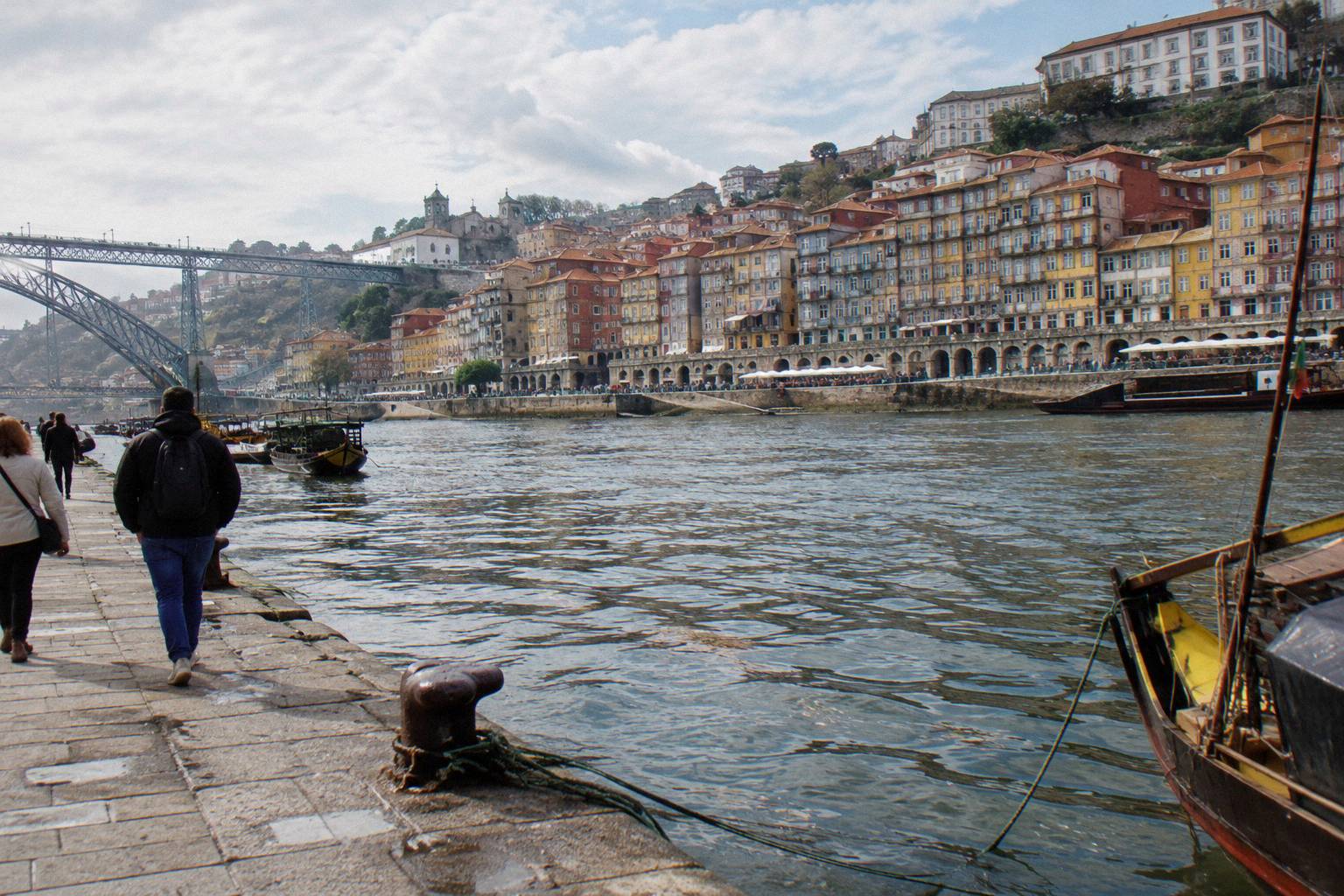
The themed family adds texture. Women Who Shaped Porto, run by Andreia, is rated 5 out of 5 across 43 GuruWalk reviews, meets at the Museu Nacional Soares dos Reis and runs 2 hours 45 minutes in English and Spanish. Porto Bites and Banter in Bolhão Market, run by Sean, rated 4.98 out of 5 across 92 reviews, meets on Rua Formosa by Mercado do Bolhão; it is free to join, but GuruWalk's page for this walk flags possible extra costs such as food, so it is never described as entirely free. For a broader look at how these categories differ, the free versus paid walking tours comparison sets out the trade-offs.
Mistakes That Trip People Up At Porto's Famous Sights
The most common mistakes are treating paid interiors as free sights and conditional free entry as universal. Livraria Lello is not free: every visitor pays the Ticket-Voucher. The Clérigos tower and museum are ticketed even though the streets around them are free. Soares dos Reis and Serralves free entry are residents-only categories. And the market, the Porto Card and the bridge each carry conditions worth checking first.
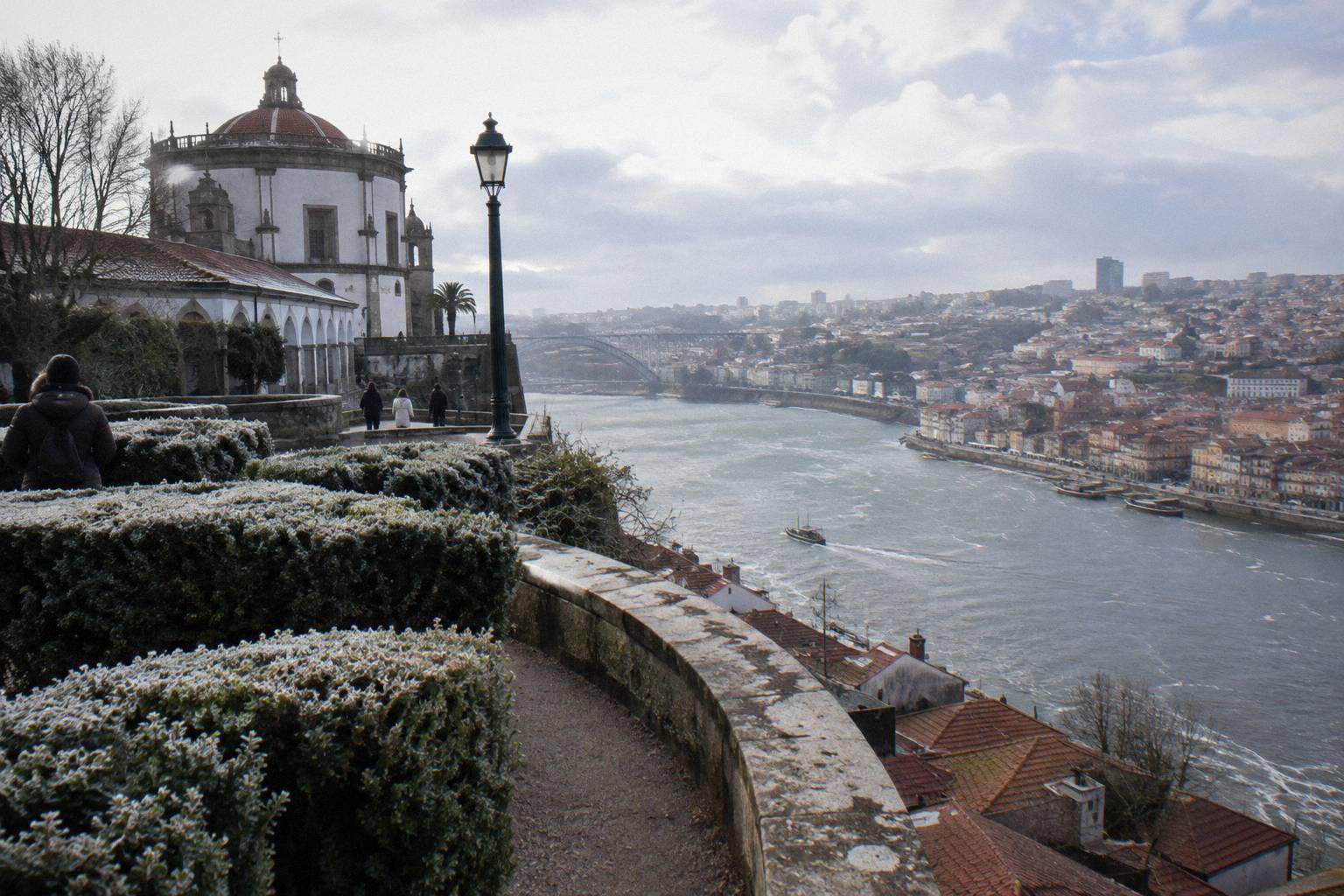
The first mistake is the Lello voucher. Visitors sometimes assume a bookshop can be entered like a shop; here it cannot, the voucher is a ticket, sold on the bookshop's own ticketing site, and lookalike reseller domains sell it at a markup. The second is the terrace-versus-monastery split at Serra do Pilar: the viewpoint terrace and gardens in front are free public space, while the monastery exhibition at EUR 2 and the dome at EUR 4 are separate paid parts.
The third mistake is Sunday planning. Mercado do Bolhão, free to enter on every other day, is closed Sundays, so a weekend itinerary built around it needs a weekday slot. The reported free-Sunday rule at the city museums is single-sourced and belongs in your plans as a "reported" fact, not a promise. The fourth is the Porto Card: with sales reported suspended since early July and no return date, no itinerary should depend on it. The fifth is the bridge at rush of confidence: both decks of Ponte Luís I are free to cross on foot day or night, but the upper deck is shared with Metro line D, a fact worth knowing before you step out onto it with a camera and no attention.
The last mistake is skipping the reservation. Free walks still need a spot reserved on GuruWalk, and choosing by neighbourhood, language and duration, using each walk's stated meeting point, beats choosing by a promise of specific stops that no walk's page makes. If the question in the title is what brought you here, the walks below, all free to join with pay-what-you-want pricing, cover the famous city in English from three different starting points.
Common Questions
What Is Porto Best Known For?
Porto is best known for the Ribeira riverside quarter, the Ponte Luís I bridge, the port wine lodges of Vila Nova de Gaia, the azulejo hall of São Bento station and Livraria Lello. Most of the famous layer is free public space; Lello's Ticket-Voucher costs EUR 15.95 and the Clérigos tower EUR 5.
Can A Free Walking Tour Show Me The Famous Sights?
Yes. Free walks on GuruWalk meet at fixed points around the old town, the Ribeira and Gaia, in English, and are free to join with pay-what-you-want pricing. Free Tour Fundamental is rated 4.94 out of 5 across 26,054 GuruWalk reviews and runs 2 hours 30 minutes.
Is Livraria Lello Free To Visit?
No. Every visitor needs a Ticket-Voucher, priced EUR 15.95 on the official FAQ, even to buy books, and the voucher value is deducted only from Livraria Lello Editions purchases. Selected events in the cultural auditorium are the only Lello item listed as free entry.
Is Walking Across The Dom Luís I Bridge Free?
Yes. Both decks can be crossed on foot at no cost, day or night. The upper deck is shared with Metro line D and the lower deck carries road traffic at river level, so the free crossing comes with real traffic to respect.
Where Can I See Azulejos For Free In Porto?
The São Bento station hall is a public concourse of a working station, free to enter, and the Capela das Almas facade on Rua de Santa Catarina carries 16,000 azulejos visible from the street at no cost. Interior opening hours at the chapel are not verified, so the facade is the reliable free view.
Do The Free Walking Tours In Porto Cost Anything?
No payment is required to join. Every walk is free, pay what you want, reserved on GuruWalk, and the amount, if any, is the walker's own choice. One exception in character: the Bolhão market food walk is free to join, but GuruWalk's page for it flags possible extra costs such as food.