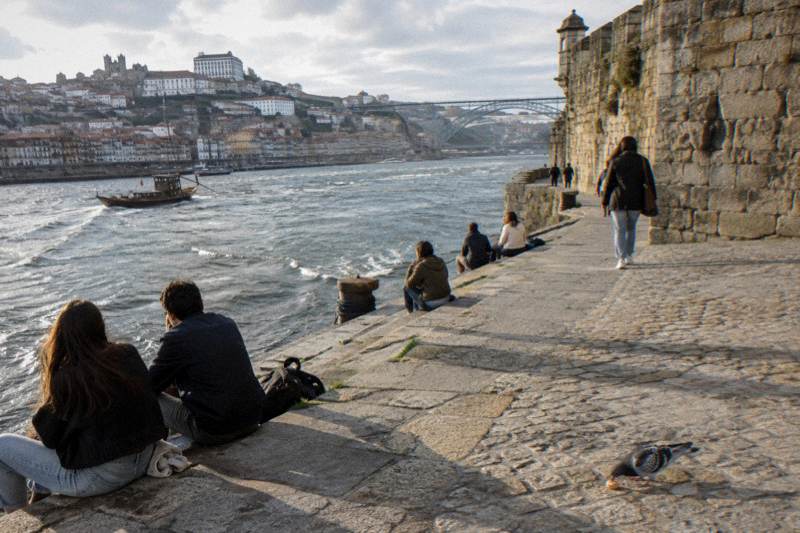
Is Porto A Walkable City? Seeing It On A Free Walking Tour
Porto on foot: which parts of the city you can walk for free, where the paid tickets sit, and how the 17 free GuruWalk walking tours cover the ground.
In Short
Yes, in the sense that matters: the old town, the Ribeira riverside, the Ponte Luís I bridge decks, the Serra do Pilar terrace and the Palácio de Cristal gardens are all open public space you reach on foot. What is not free are the interiors, from the Livraria Lello Ticket-Voucher of EUR 15.95 to the Clérigos tower at EUR 5. There are 17 English-language free walks on GuruWalk, and they cover the walkable city end to end.
This question sits inside the Porto walking routes and free guides guide.
Quick Facts
| Question | The answer on the ground |
|---|---|
| Is the city centre walkable? | The old town, Ribeira, Rua das Flores and Rua de Santa Catarina are pedestrian or open streets, free to walk |
| Does anything inside cost money? | Livraria Lello needs a Ticket-Voucher from every visitor; the Clérigos tower is EUR 5 and the tower-and-museum pack EUR 10 |
| What about viewpoints? | Miradouro da Vitória, Jardim do Morro and the Serra do Pilar terrace are open public space with no ticket |
| Can you cross to Gaia on foot? | Both decks of the Ponte Luís I can be crossed on foot at no cost, day or night |
| Are there free guided walks? | 17 English-language free walks on GuruWalk, every one free to join, pay what you want |
| Any closing days? | Mercado do Bolhão is closed Sundays |
Is Porto A Walkable City? Seeing It On A Free Walking Tour
Yes, and the geography explains why. The historic centre stacks its main quarters, the Avenida dos Aliados, the Sé, the Ribeira quay and the bridge, into a connected strip you cover on foot, with Gaia's terrace directly across the river. Walking is not a compromise here, it is how the streets themselves are built: Rua das Flores and Rua de Santa Catarina are pedestrian streets, and the riverside quarter is an open network of lanes and stairways.
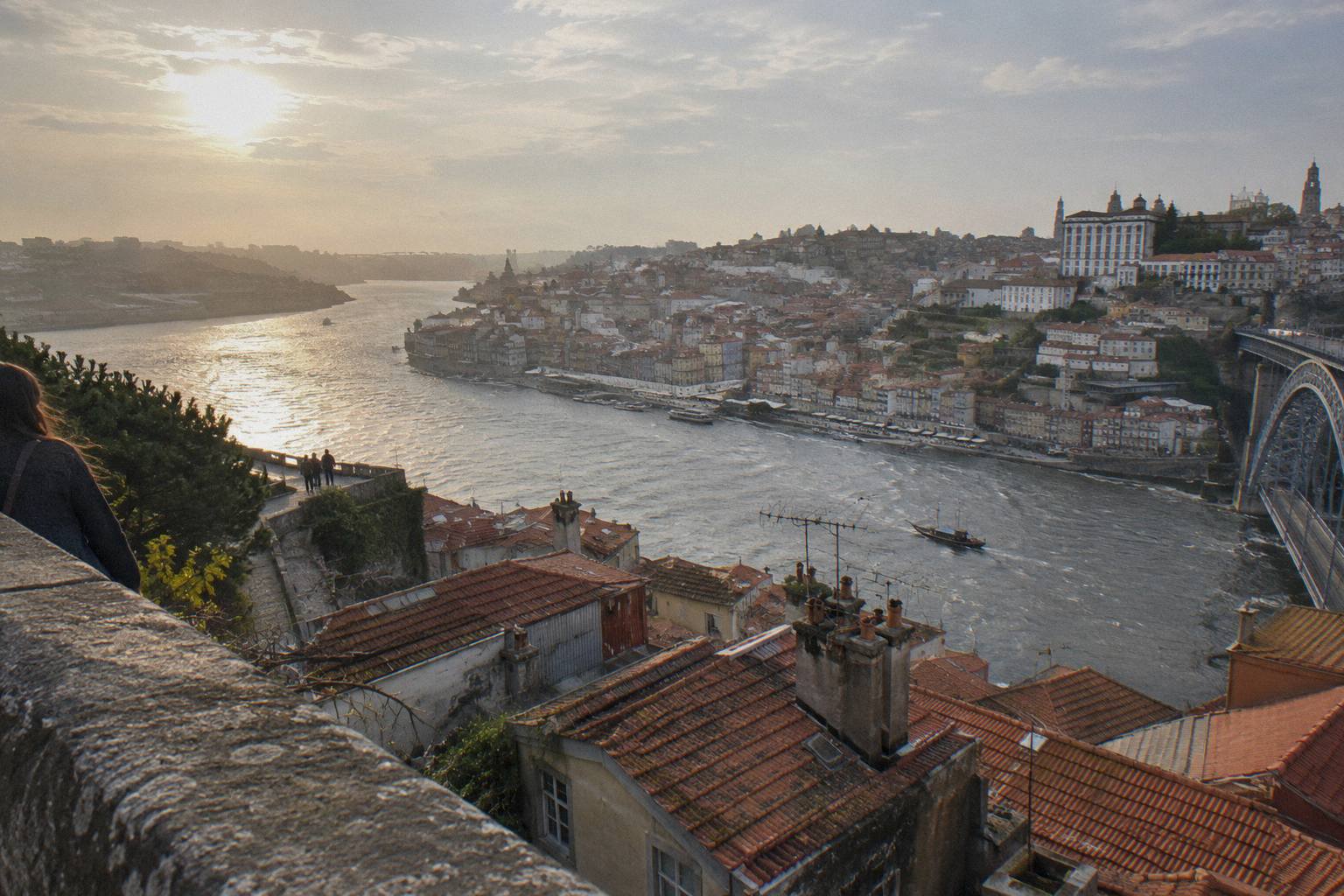
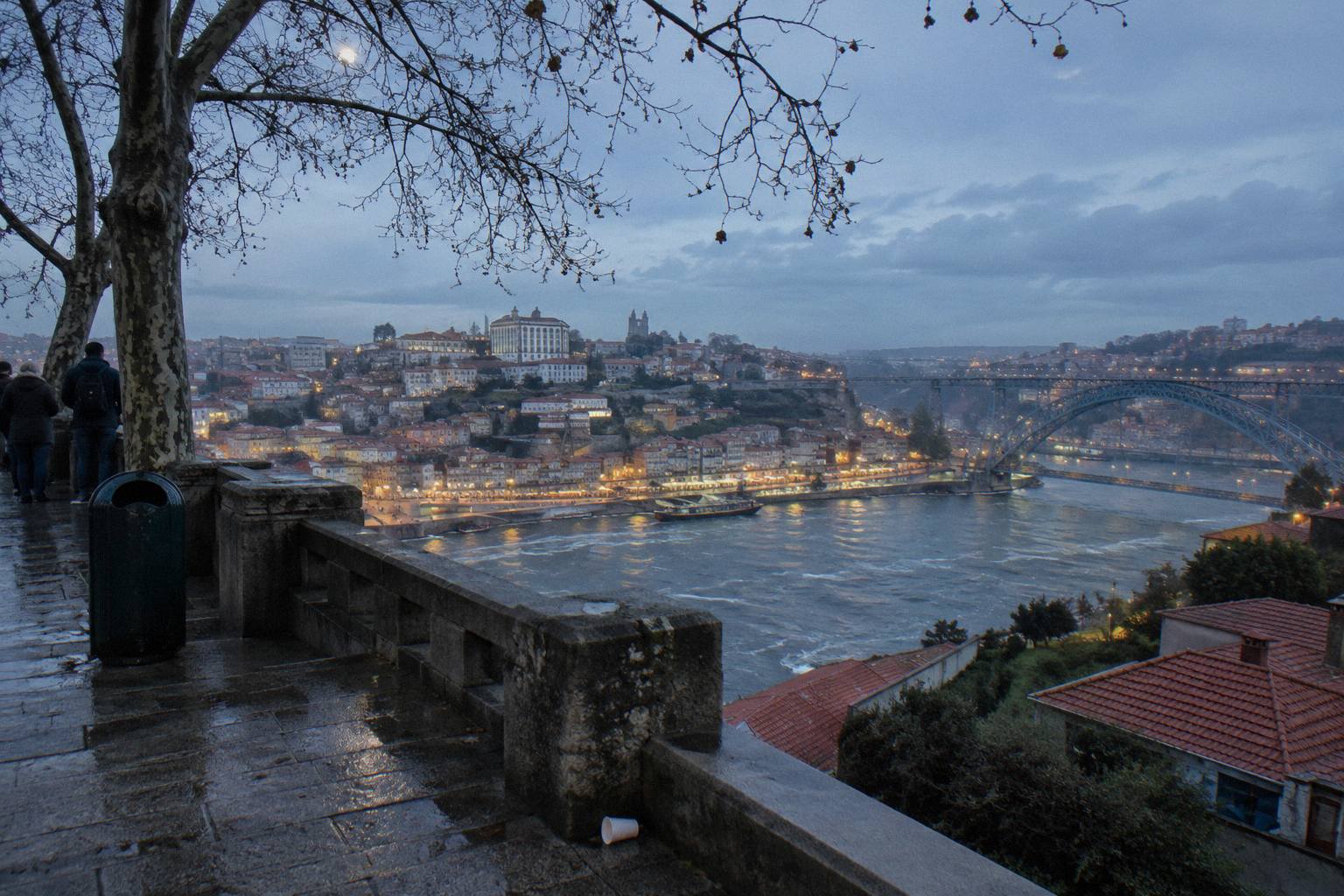
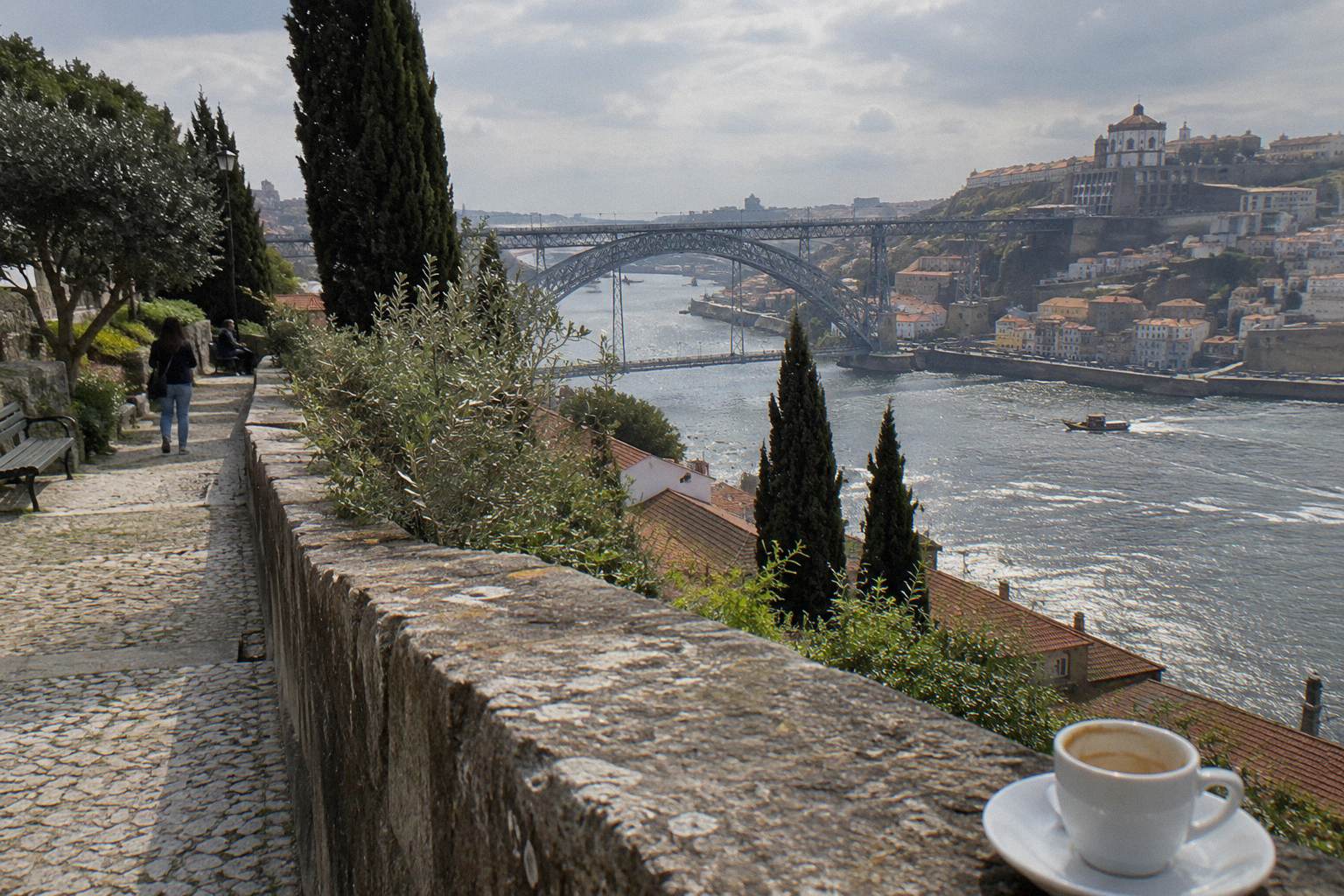
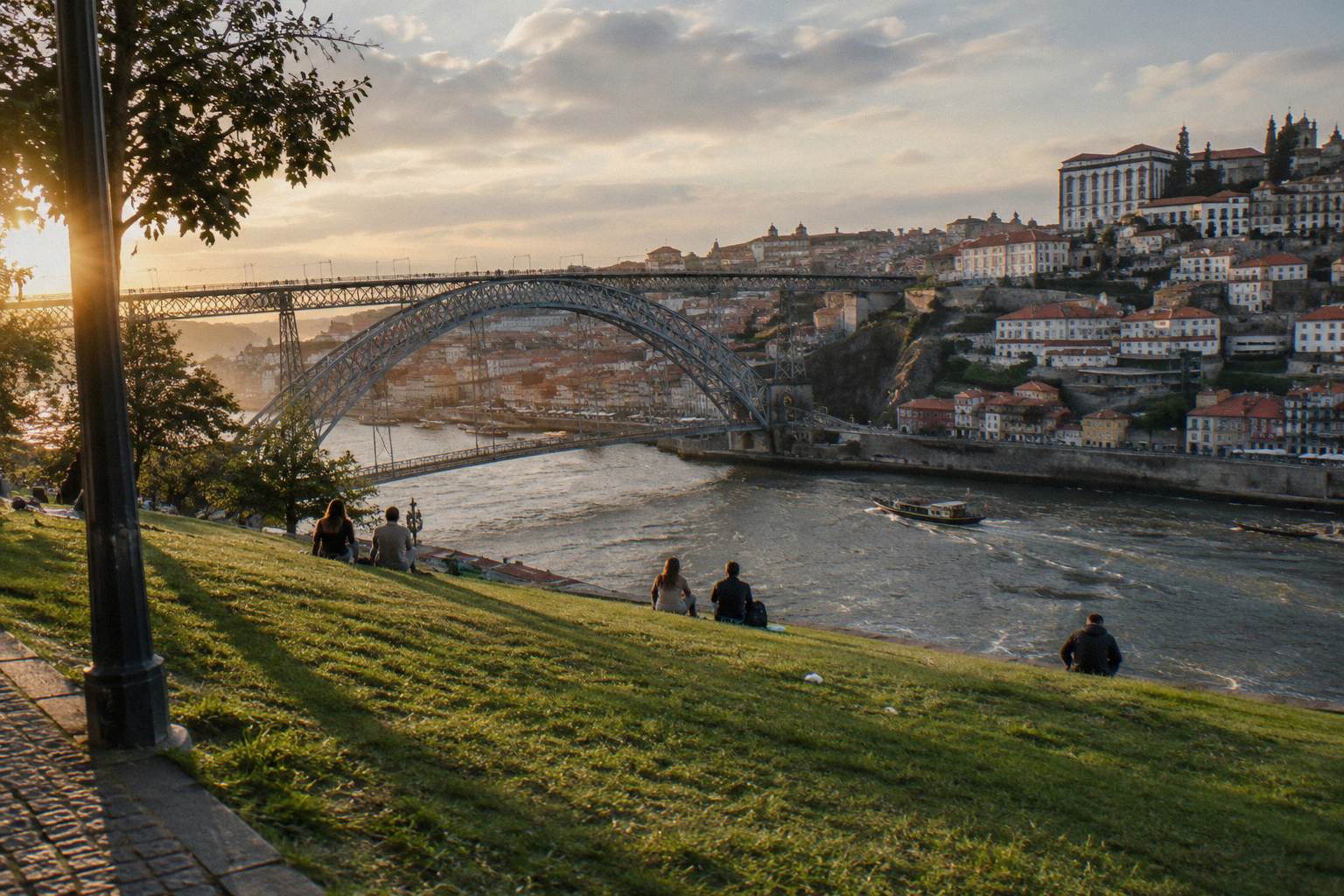
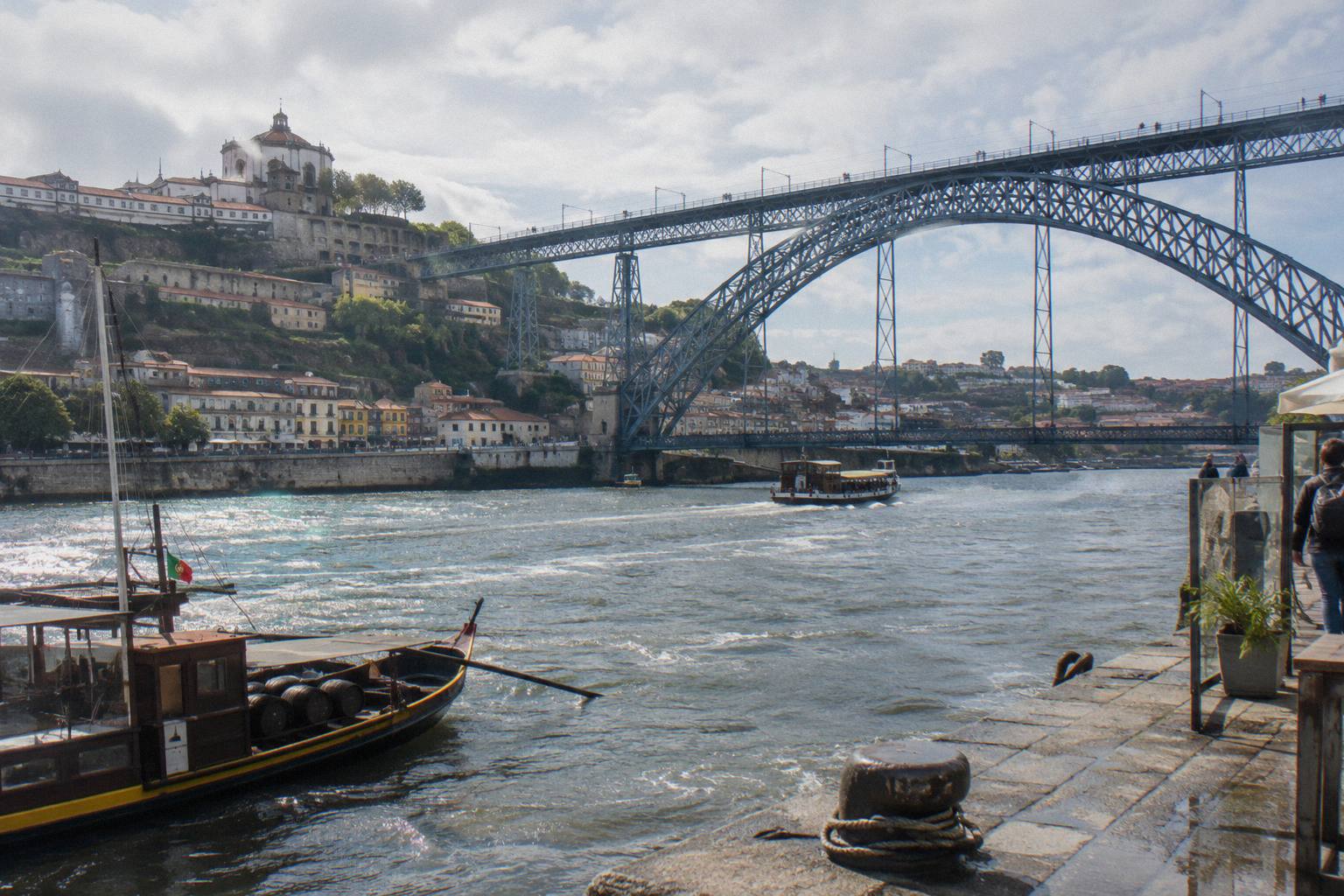
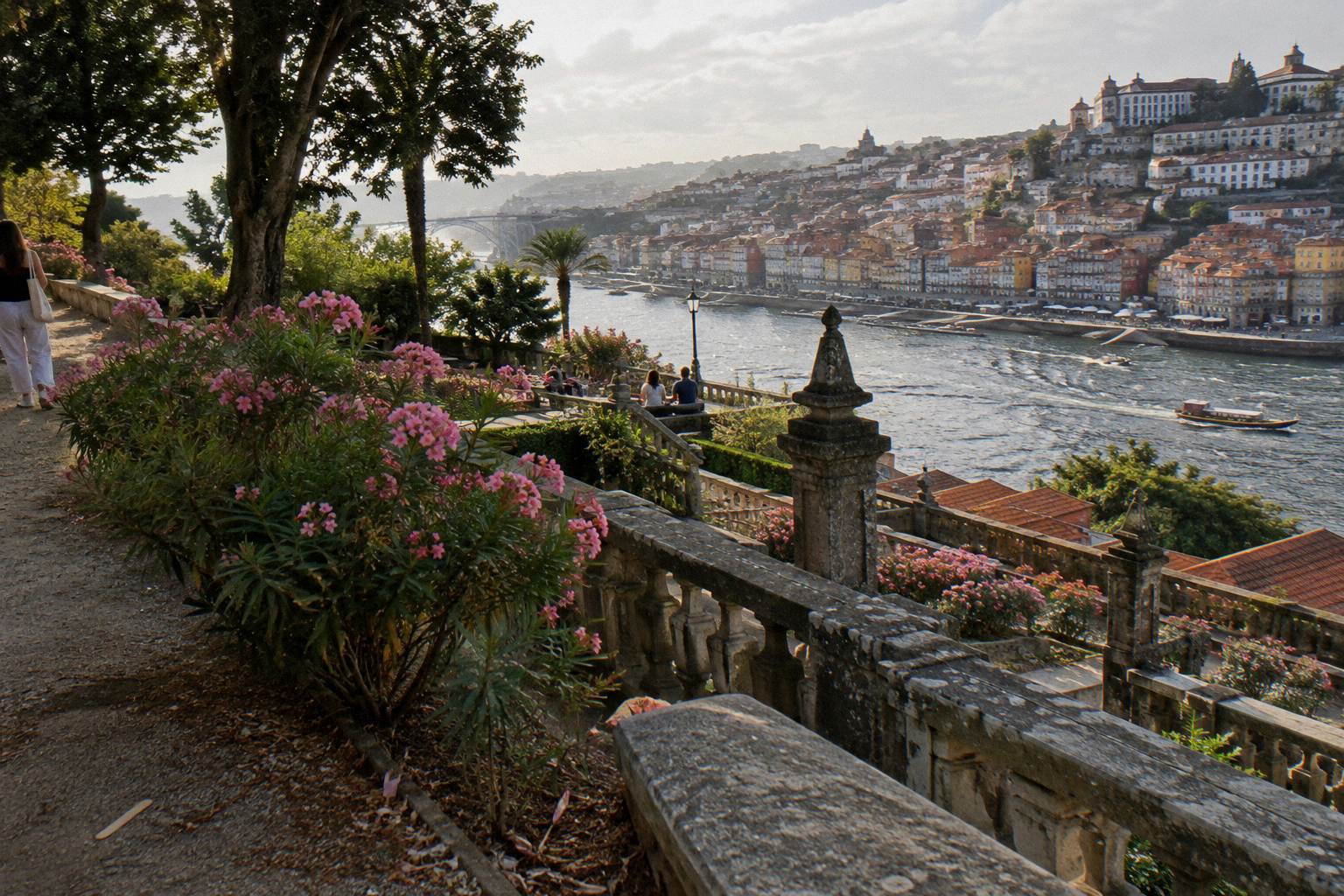
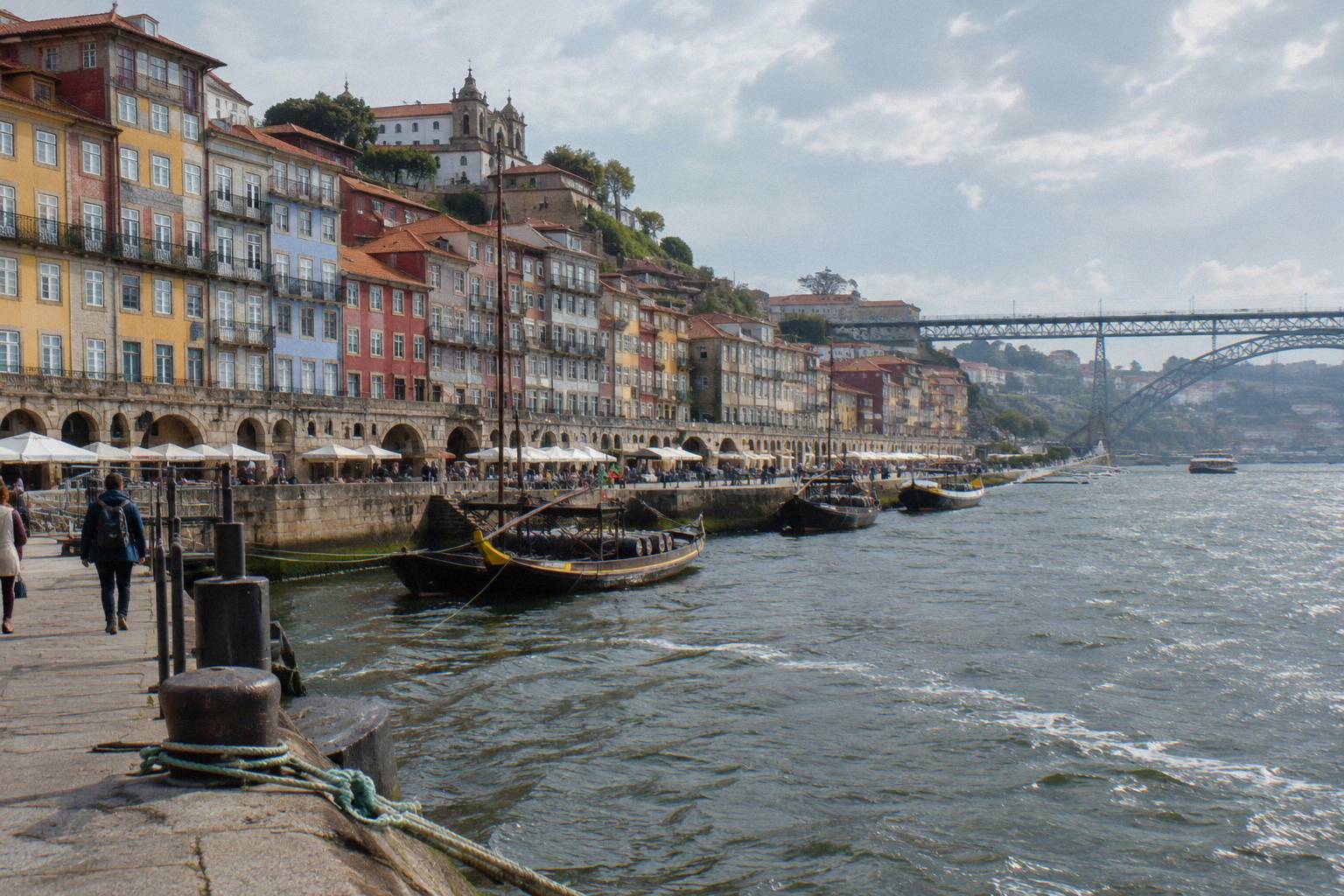
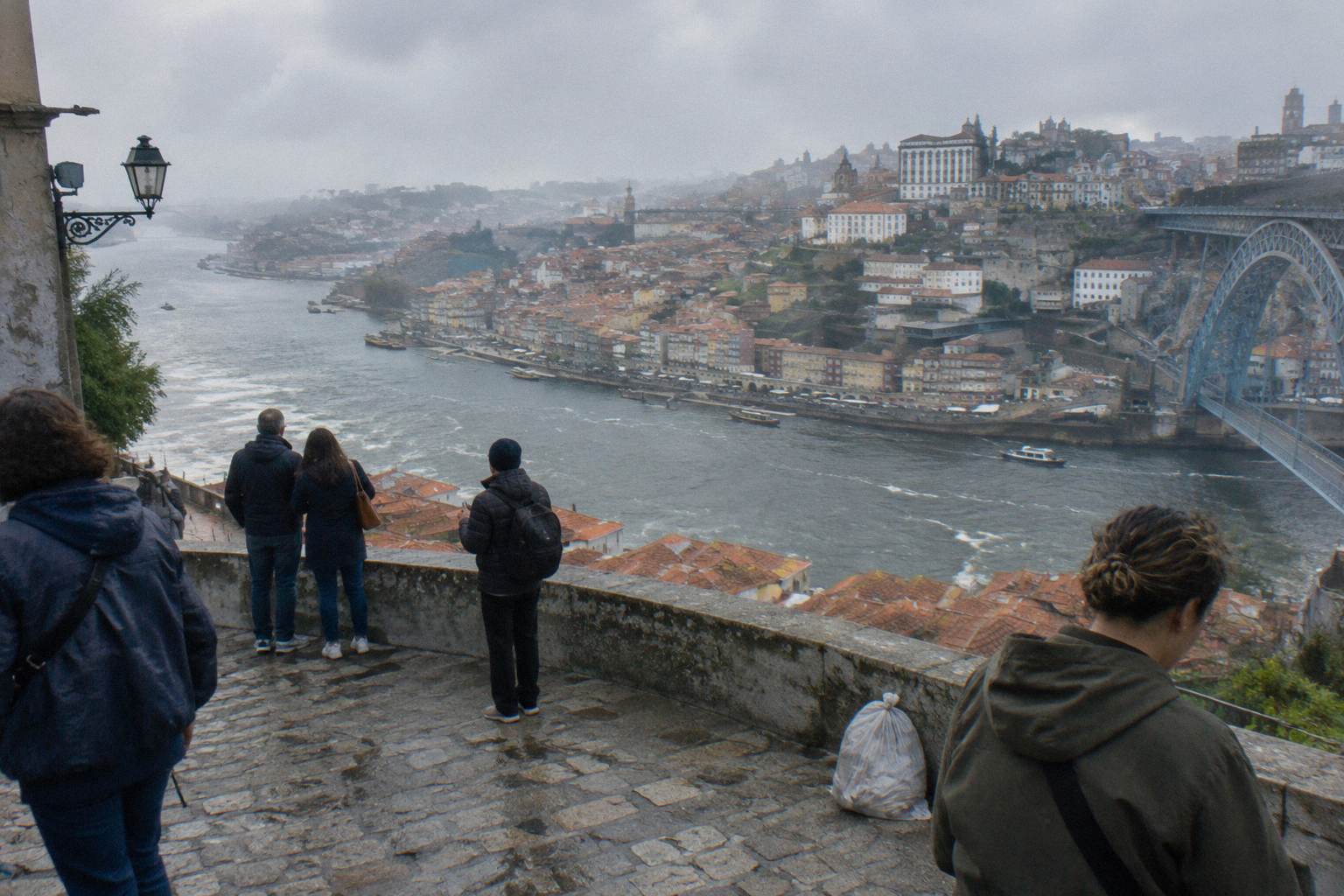
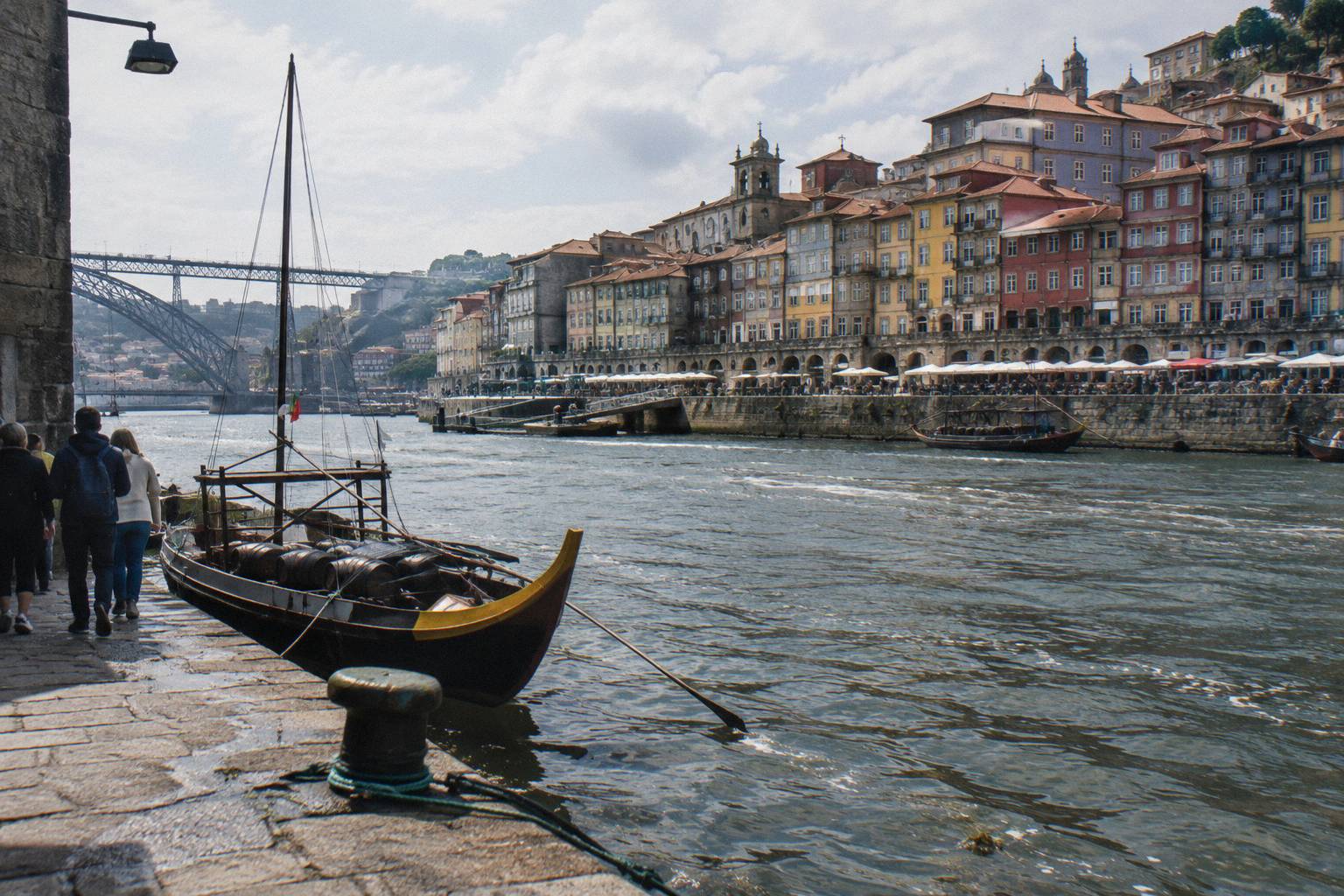
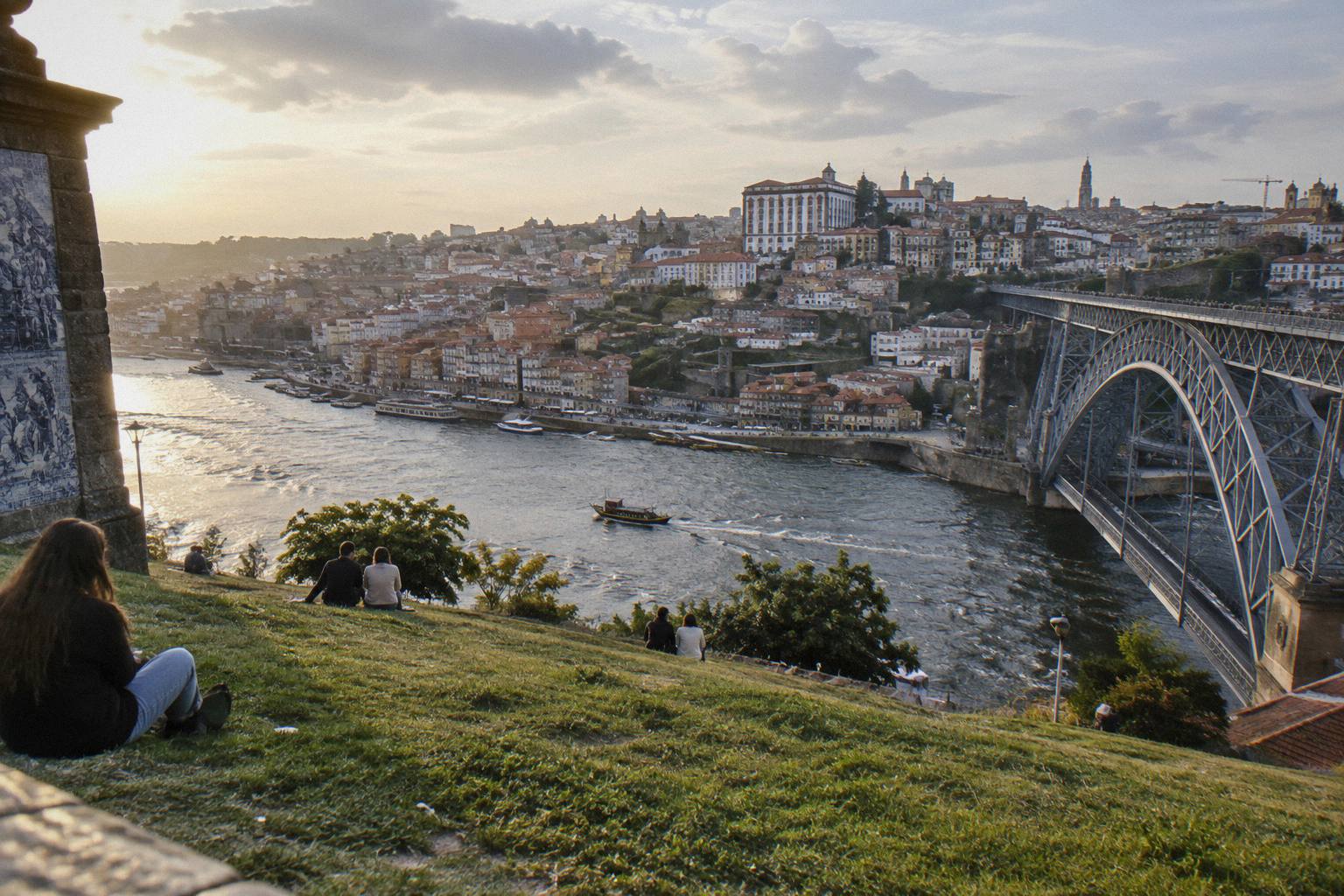
Start with what walkable means in practice. The Ribeira is an open riverside quarter whose streets and quay cost nothing to wander, and it connects at river level to the lower deck of the Ponte Luís I, a road and pavement crossing you can walk free, day or night. The upper deck is shared with the Metro line D and can also be crossed on foot at no cost. On the far bank, the Jardim do Morro is an open public garden with the river-and-Ribeira view and no gate, and the Serra do Pilar viewpoint terrace and gardens in front of the monastery are open public space too.
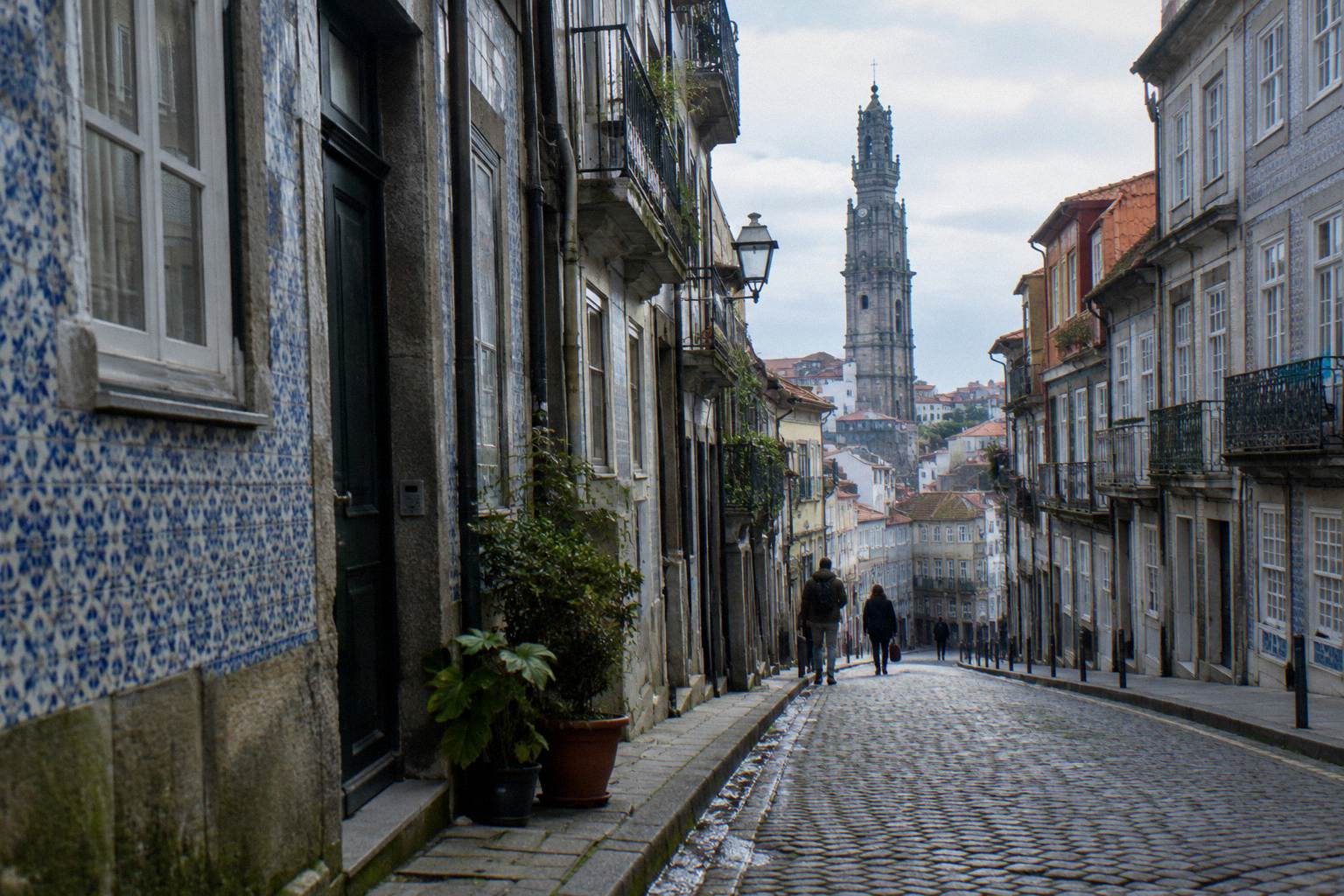
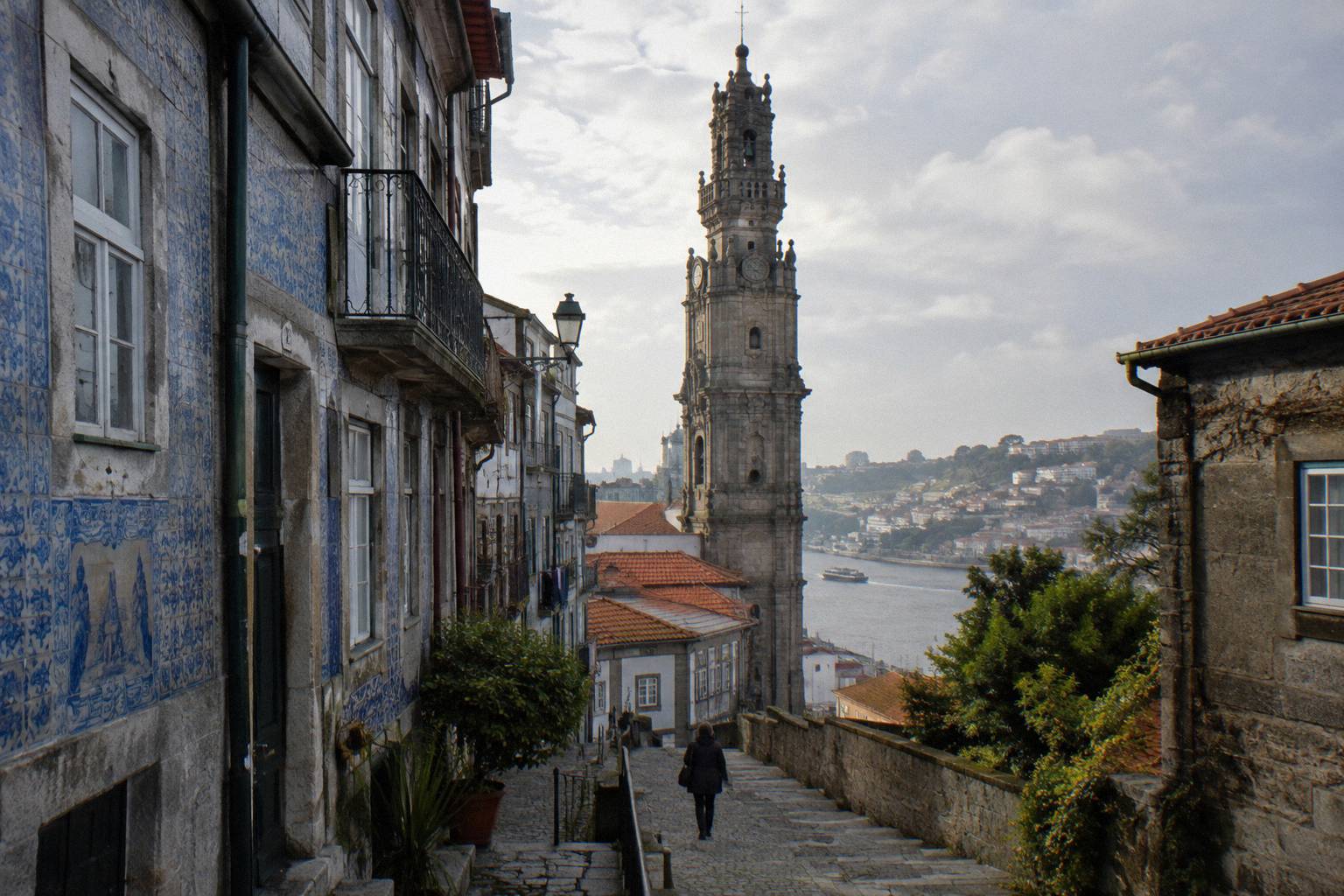
Above the river the old town climbs through streets that are themselves the sight. Rua das Flores is a pedestrian street. Rua de Santa Catarina is a pedestrian shopping street whose Capela das Almas facade, 16,000 azulejos, is visible from the street at no cost. São Bento station's azulejo hall is a public concourse in a working railway station. None of these carry a ticket, a gate or a queue, and they sit inside the same walkable fabric.
The Palácio de Cristal gardens carry "Acesso Livre", open April to September 08:00-21:00 and October to March 08:00-19:00, on the municipal environment page that manages them, and the municipal gardens authority lists them as open access. Jardim das Virtudes and the Passeio das Virtudes are an open terraced garden and walkway, 08:00-20:00 daily. Miradouro da Vitória is an open viewpoint with no ticket. In other words, the walkable city is not a handful of tolerated pavements: the municipal authorities run a set of gardens, viewpoints and riverside spaces specifically as free open access.
That is the half of the answer a map gives you. The other half is that a walkable city is easier to read with someone who knows the streets, and this is where the free walking tours come in. Every walk in the city's English-language roster is a GuruWalk page: a real listing run by an independent local guide, free to join, pay what you want, reserved on GuruWalk. This site neither operates the walks nor is affiliated with GuruWalk; it points to them because they match the free geography described above, meeting at named points like Largo Amor de Perdição, the Lion Fountain at Praça de Gomes Teixeira, and Calçada de Vandoma by the old city wall.
If the plan is to anchor the day on one of these walks, three fit a first visit to the walkable centre well:
Each of those three is a GuruWalk walk with its own meeting point in the walkable core: the Best of Porto walk meets English-speaking groups at the Lion Fountain, Praça de Gomes Teixeira, for 2 hours 30 minutes; the Lello-to-the-Cathedral walk meets at Porto City Hall, top of Avenida dos Aliados, in English, Spanish, French and Italian over 2 hours 45 minutes; and Porto's Secrets meets at the same Lion Fountain for 2 hours 30 minutes in English. The trio gives you a choice of angle on the same streets, all free to join.
What Is The Short Answer?
Yes, the city is walkable, with one honest caveat: walkable does not mean flat. The compact centre links its free spaces, streets, quays, bridge decks and terraces, without a ticket, but this riverside city sits on a hill, so moving between the Ribeira at water level and the Sé or Batalha above means slopes and steps, and a free walking tour of 2 to 3 hours covers the core comfortably.
The practical shape of a walkable day is simple to describe because the free spaces do the organising. A walk can begin at Avenida dos Aliados, where one GuruWalk meeting point sits at the top of the avenue by Porto City Hall, then run down through the old town's pedestrian streets to the Ribeira quay, cross the lower or upper deck of the Ponte Luís I on foot at no cost, and finish on the Gaia side at the Jardim do Morro or the Serra do Pilar terrace, both open public space. Every link in that chain is free, and none of it needs transport.
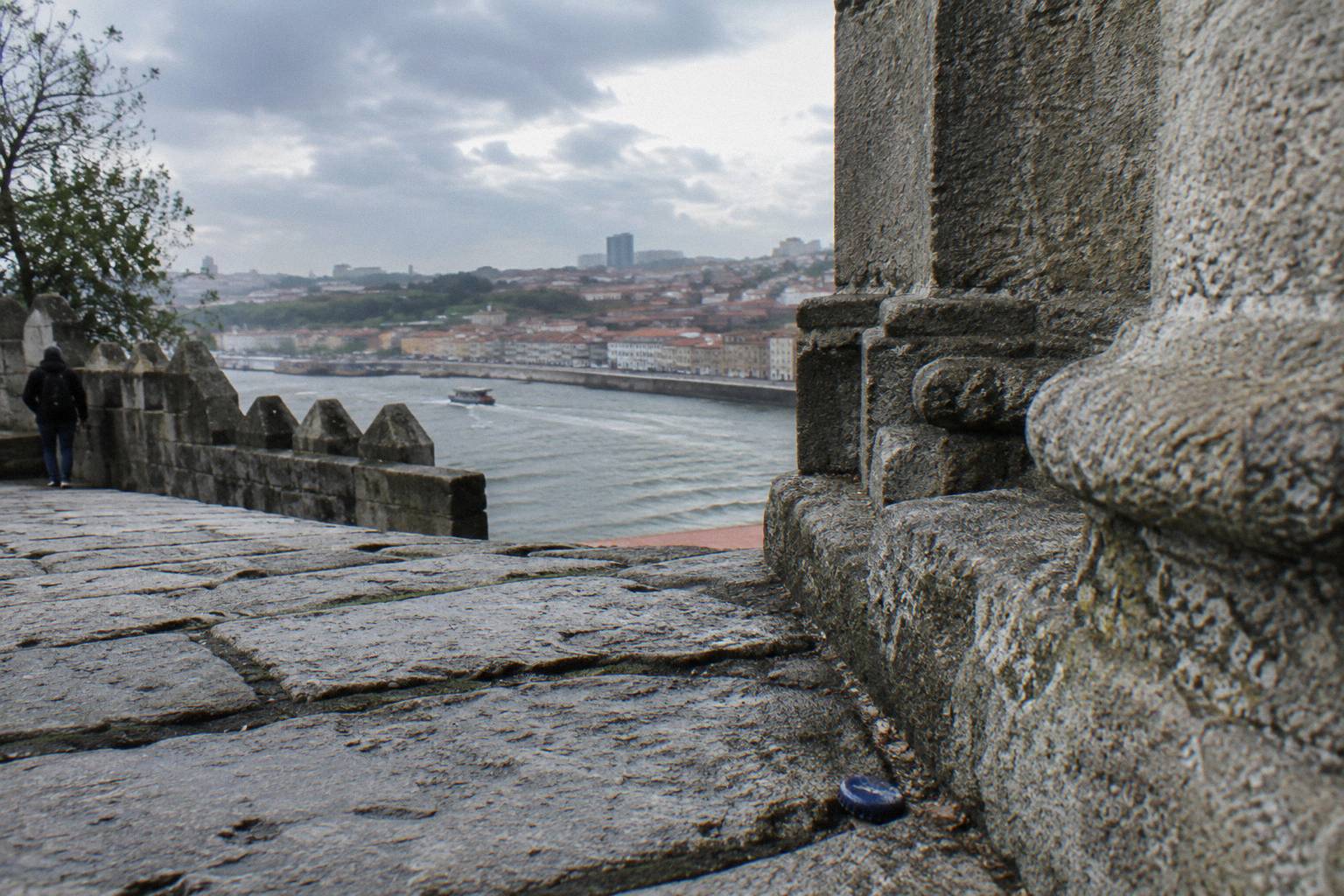
The caveat deserves its own sentence, because it changes what people pack and when they walk. Nothing in the data quantifies Porto's hills, and this site will not invent a figure, but the structure of the city is a matter of public record: a river gorge with the historic centre on the high north bank. Walks that meet at Praça da Trindade or the top of Avenida dos Aliados start high; walks that meet at Largo Amor de Perdição start closer to the mid-slope. The what to wear on a Porto walking tour guide goes deeper on shoes and weather.
The free walking tours slot into this geography rather than fighting it. Free Tour Porto Essential, run by 1·2·Tours, meets at Calçada de Vandoma, by the old city wall, runs 2 hours 15 minutes in English and Spanish, and is rated 4.8 out of 5 across 6,888 GuruWalk reviews. It is free to join, pay what you want, reserved on GuruWalk, and its meeting point sits right at the edge of the old town's walkable core.
A walk like that answers the walkability question in miniature: you spend just over two hours on your feet inside the historic centre and the tour exists because that centre is coherent on foot. The same operator pairing runs a second walk from the same spot, the Dark Porto mysteries and legends tour, also 2 hours 15 minutes in English and Spanish, rated 4.79 out of 5 across 2,061 GuruWalk reviews, which covers the same walkable ground at a different angle.
One more piece belongs in the short answer. Walkable also means the free sights are dense enough that you never walk far without one. Within the streets a walker passes for nothing: the São Bento azulejo hall, the Capela das Almas facade on Rua de Santa Catarina, the Muralha Fernandina's surviving stretches as open public streets and steps, and the street art on Rua de Miguel Bombarda and Trindade. The density is the walkability.
What Should You Know Before You Go?
Before you go, remember three things: Porto's streets, quays, gardens and terraces are free while several famous interiors charge admission, the walking tours are pay-what-you-want through GuruWalk so interiors are your only fixed costs, and closing days matter more than opening hours, since Mercado do Bolhão shuts on Sundays and café hours differ from street hours.
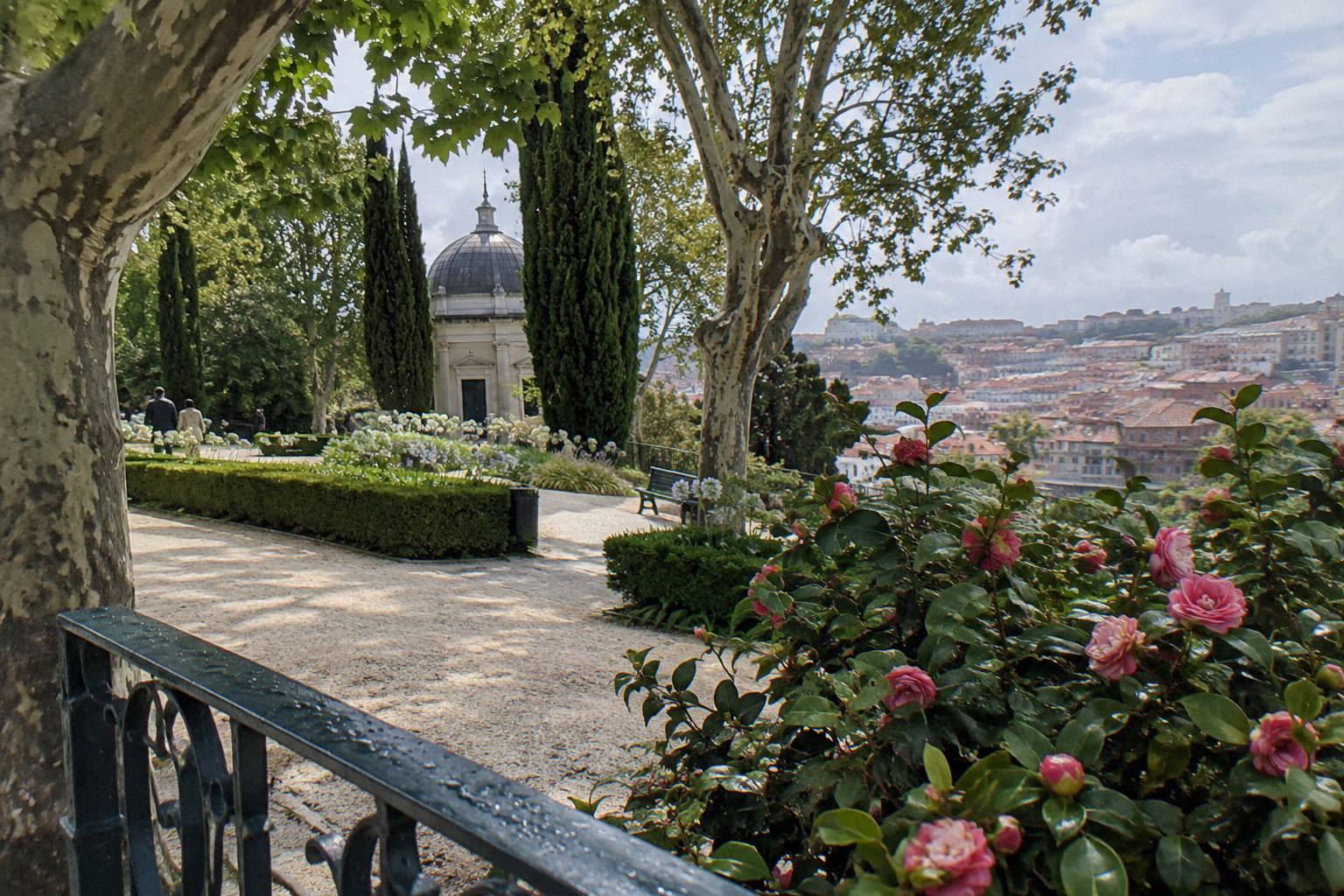
The free-versus-paid split is easiest to hold in your head as a rule about doors. Outside is free; inside is often not. The Clérigos Tower and its museum are ticketed, the tower at EUR 5 and the tower-and-museum pack, while the street and square around them are free. The Serra do Pilar viewpoint terrace and gardens are free, while the monastery's exhibition costs EUR 2 and the dome EUR 4. Livraria Lello takes a Ticket-Voucher from every visitor, even to buy books, with the voucher value deducted only if you buy a Livraria Lello Editions title; the bookshop is sold on its own official ticketing host, and lookalike reseller domains charge a markup. The Museu Nacional Soares dos Reis is free, up to 52 entries a year, only for Portuguese nationals or residents showing a Cartão de Cidadão and NIF; visitors pay EUR 10. Serralves' first-Sunday free entry is likewise residents-only, on showing a Portuguese Citizen Card or Resident Card at the box office.
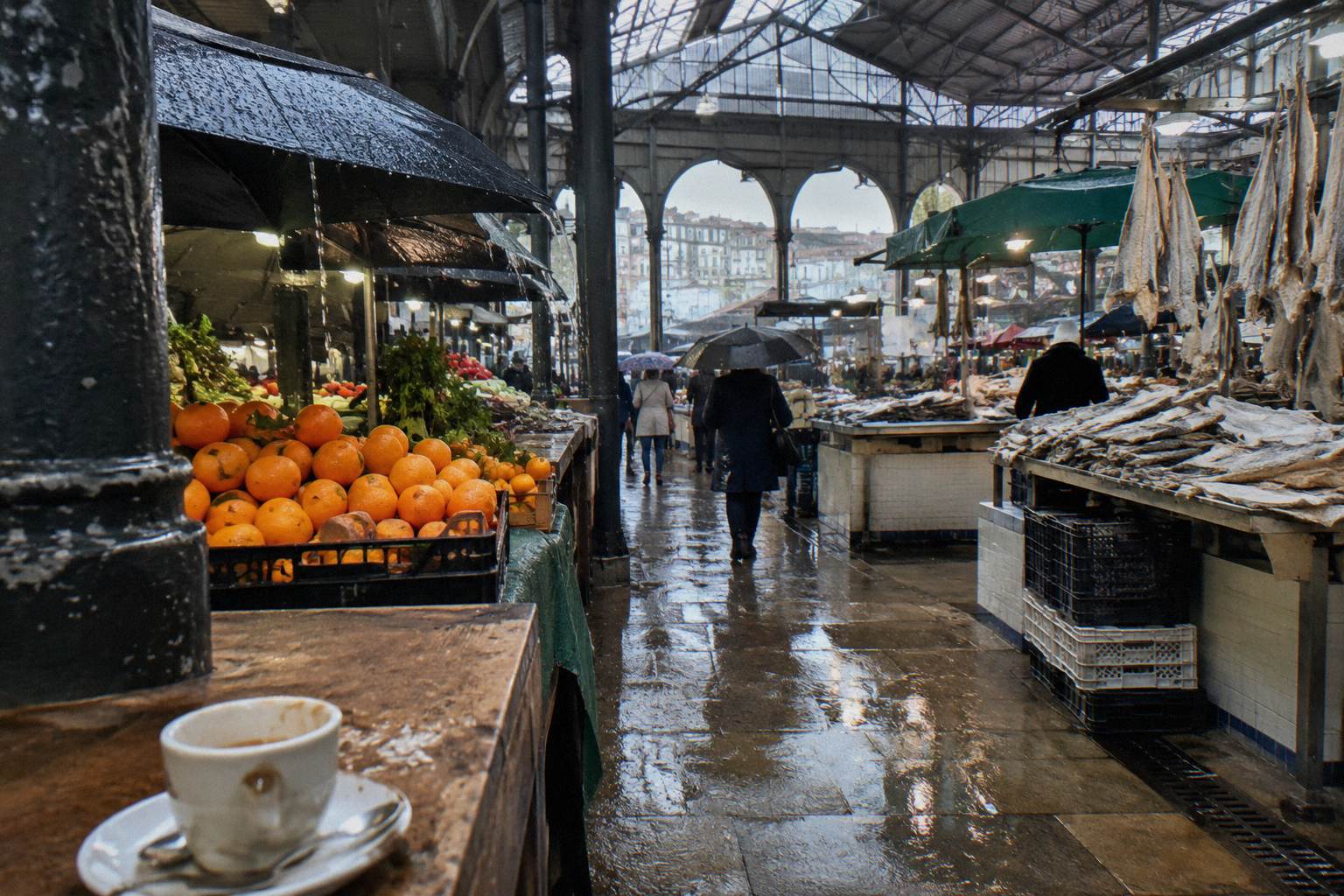
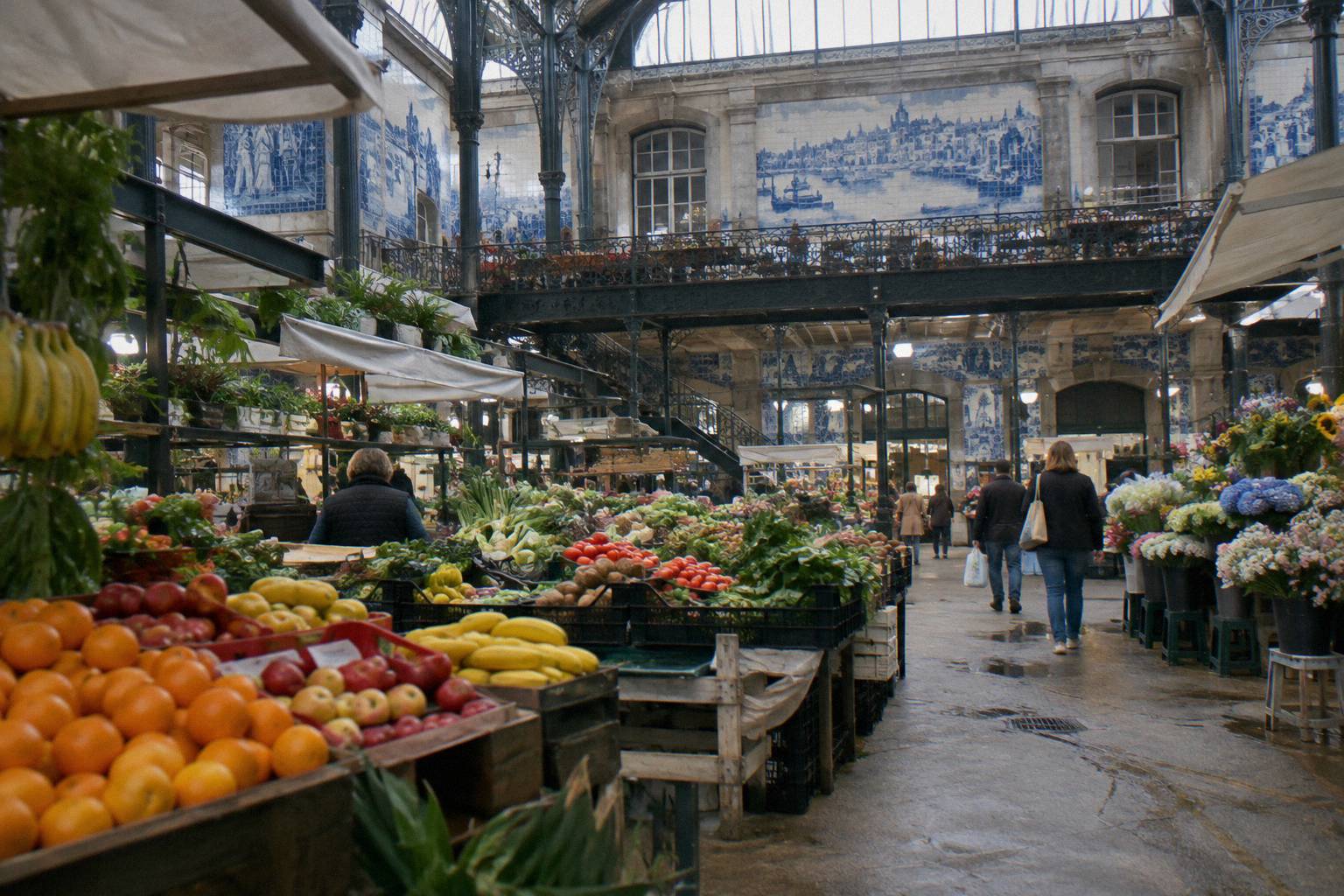
Opening rhythms are the second piece of preparation. Mercado do Bolhão is free to enter, open Monday to Friday 08:00-19:00 and Saturday 08:00-18:00, and closed Sundays; its restaurants run later. The Palácio de Cristal gardens run on their seasonal schedule, April to September 08:00-21:00, October to March 08:00-19:00. Jardim das Virtudes holds 08:00-20:00 daily. Parque da Cidade is open access, October to March 08:00-22:00 and April to September 08:00-24:00. Cemitério de Agramonte is open Monday to Sunday 08:30-17:00, later on the first two days of November. None of that needs memorising, but a walker who plans a Sunday around Bolhão or a winter evening around a garden gate will be caught out.
Café Majestic belongs on this list of cautions. It is a working café on Rua de Santa Catarina with no entry fee, but it is not a free sight in the way a viewpoint is: you order to sit. Its own site gives Monday to Saturday 09:00-23:00, and queues are reported. Treat it as a stop on the walking route with a decision attached, not a free attraction.
Then there is the question of the walks themselves, which is where Free Things To Do In Porto starts and ends. The single biggest walk, Free Tour Fundamental, run by Revolutours, meets at Largo Amor de Perdição, runs 2 hours 30 minutes in English and Spanish, and is rated 4.94 out of 5 across 26,054 GuruWalk reviews, the deepest review pool of any walk in the city. It is free to join, pay what you want, reserved on GuruWalk.
A walk of that scale is a natural spine for a walkable day: you arrive at a named point in the old town, spend the middle of the day on foot, and finish with the free riverside and terrace spaces already described. The same guide operator also runs the Ribeira-focused free tour from the same meeting point, 2 hours in English and Spanish, rated 4.87 out of 5 across 2,060 GuruWalk reviews, and the Vila Nova de Gaia free tour, which meets at the Vímara Peres statue on Calçada de Vandoma for 2 hours, rated 4.85 out of 5 across 1,309 GuruWalk reviews.
Booking is the last preparation point. The do you need to book a free walking tour in Porto post covers the mechanics, but the short of it is that reservations happen on GuruWalk and the walk itself stays free, pay what you want. Beyond that, no schedule claims are safe to make here: this site does not state departure times or frequency for any walk, because the GuruWalk pages carry the live calendars.
Which Free Walking Tours Cover This?
All of the walkable city is covered by the 17 English-language free walks on GuruWalk, split across three kinds of ground: the old town highlights, the Ribeira and Gaia riverside, and themed walks on stories and food. Every walk meets at a named point a walker can reach on foot, runs 2 to 3 hours, and is free to join, pay what you want. The table below gives the ones that map most directly onto a walkability-first day.
The old town walks are the biggest group, and they are the ones that answer this article's question most directly, because their meeting points and durations describe the walkable core from the inside. The Ribeira and Gaia walks cover the riverside half: the quay, the bridge crossing and the Gaia bank. The themed walks cover the market and the city's stories, including the Bolhão food walk, which is free to join but whose GuruWalk page flags possible extra costs such as food, so it is never described as entirely free.
| Walk | Meets at | Duration | Languages | Rating on GuruWalk |
|---|---|---|---|---|
| Free Tour Fundamental | Largo Amor de Perdição | 2 hours 30 minutes | English and Spanish | 4.94 out of 5, 26,054 reviews |
| Free Tour Porto Essential | Calçada de Vandoma, by the old city wall | 2 hours 15 minutes | English and Spanish | 4.8 out of 5, 6,888 reviews |
| Free Tour of the Old Town (Ribeira) | Largo Amor de Perdição | 2 hours | English and Spanish | 4.87 out of 5, 2,060 reviews |
| Free tour of Vila Nova de Gaia | Calçada de Vandoma, Vímara Peres statue | 2 hours | English and Spanish | 4.85 out of 5, 1,309 reviews |
| Free Tour Dark Porto | Calçada de Vandoma, by the old city wall | 2 hours 15 minutes | English and Spanish | 4.79 out of 5, 2,061 reviews |
| Porto Bites and Banter in Bolhão Market | Rua Formosa, by Mercado do Bolhão | 2 hours | English | 4.98 out of 5, 92 reviews |
Reading that table as a walkability map: every meeting point is a place, not a vehicle depot, and the durations cluster tightly around two to three hours, which is the length of a comfortable city walk with stops. The Gaia walks deserve a special note for this article's question, because they are the ones that make the river crossing part of the tour rather than an obstacle: the Porto to Gaia free tour by InsighTours meets at Trindade Church, Praça da Trindade, runs 2 hours in six languages including English, and is rated 4.65 out of 5 across 183 GuruWalk reviews. Take's Porto Ribeira and Old Town tour meets at Terreiro da Sé, beside the Cathedral, for 2 hours 30 minutes, rated 4.74 out of 5 across 430 GuruWalk reviews.
The themed side of the roster rounds out the picture. Women Who Shaped Porto, by Andreia, meets at the Museu Nacional Soares dos Reis and runs 2 hours 45 minutes in English and Spanish, rated 5 out of 5 across 43 GuruWalk reviews. The Significant Stroll, by Pedro, meets at the Lion Fountain for 2 hours 30 minutes in English, Spanish and French, rated 4.98 out of 5 across 44 GuruWalk reviews. The Irish Guy in Porto tour meets at a red telephone box in Largo Mompilher, 2 hours 30 minutes in English, rated 4.99 out of 5 across 288 GuruWalk reviews. None of these walks' routes are described beyond what their own pages state; what is known for certain is the platform, the guide, the meeting point, the duration and the language, and that is exactly how to choose one.
São Bento's hall is worth naming here because it shows how a free walking route and free sights interlock: it is a working railway station whose azulejo hall is a public concourse, so a walker passes through a sight on the way to the next one, no queue, no ticket. The free attractions guide at the Bolhão market's own page plays the same role for the market end of the route, confirming entry is free and Sundays closed.
For walkers comparing the free option with paid alternatives, the free versus paid walking tours comparison guide lays out the differences. On walkability itself, nothing changes: both kinds of tour use the same streets. What the free walks change is the cost structure of the day, since the walking itself carries no price and the only money on the itinerary is whatever the walker decides, plus any interior tickets chosen separately.
Mistakes That Trip People Up At Porto Walkability
The recurring mistakes are all versions of one error: treating the walkable city and the free city as the same thing. Walkers assume the Clérigos Tower is free because its square is, assume Lello can be entered with a book purchase in hand, or assume a Sunday museum rule applies to tourists when it is residents-only. Each paid part has its own price and each free part its own condition, and the two never inherit from each other.
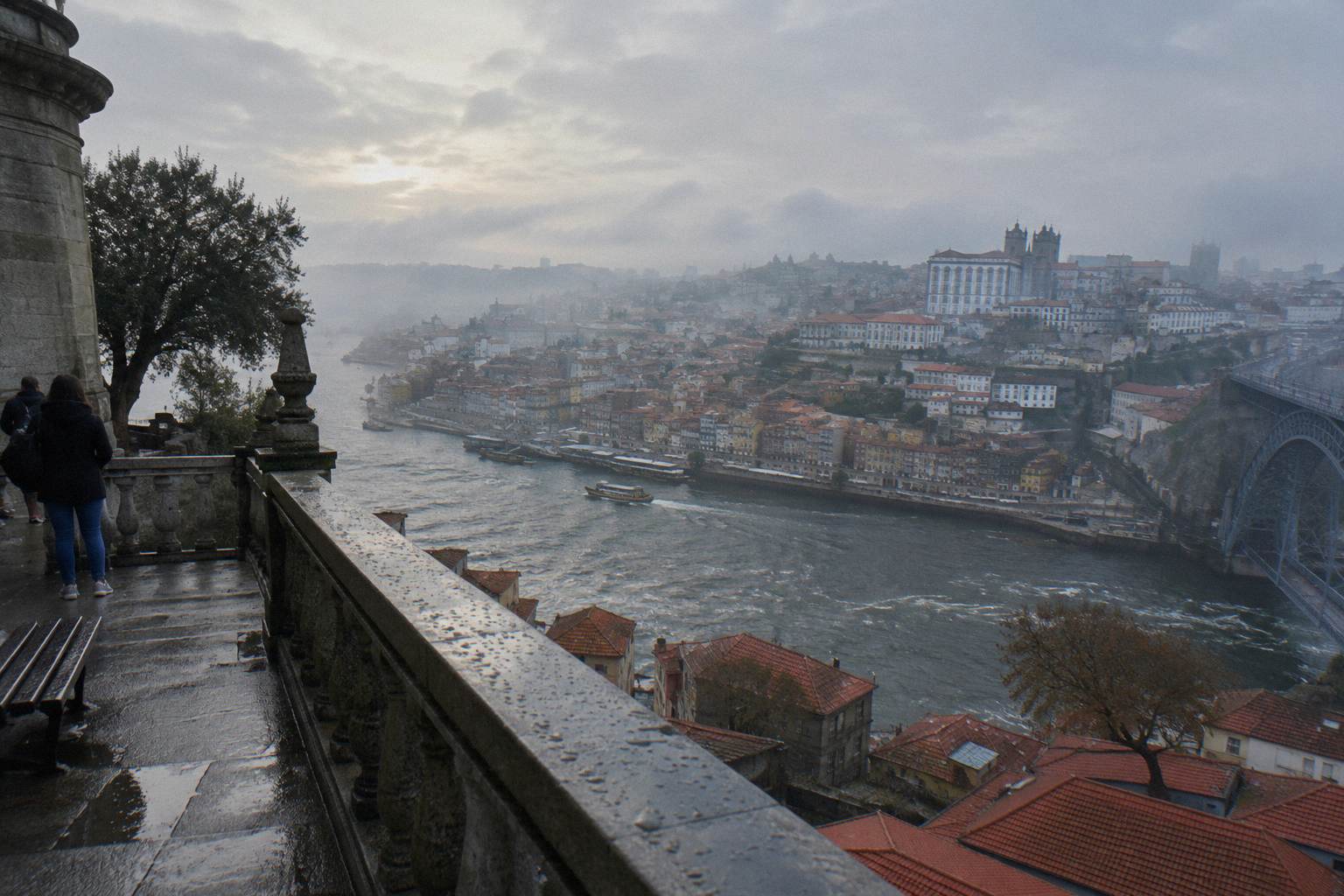
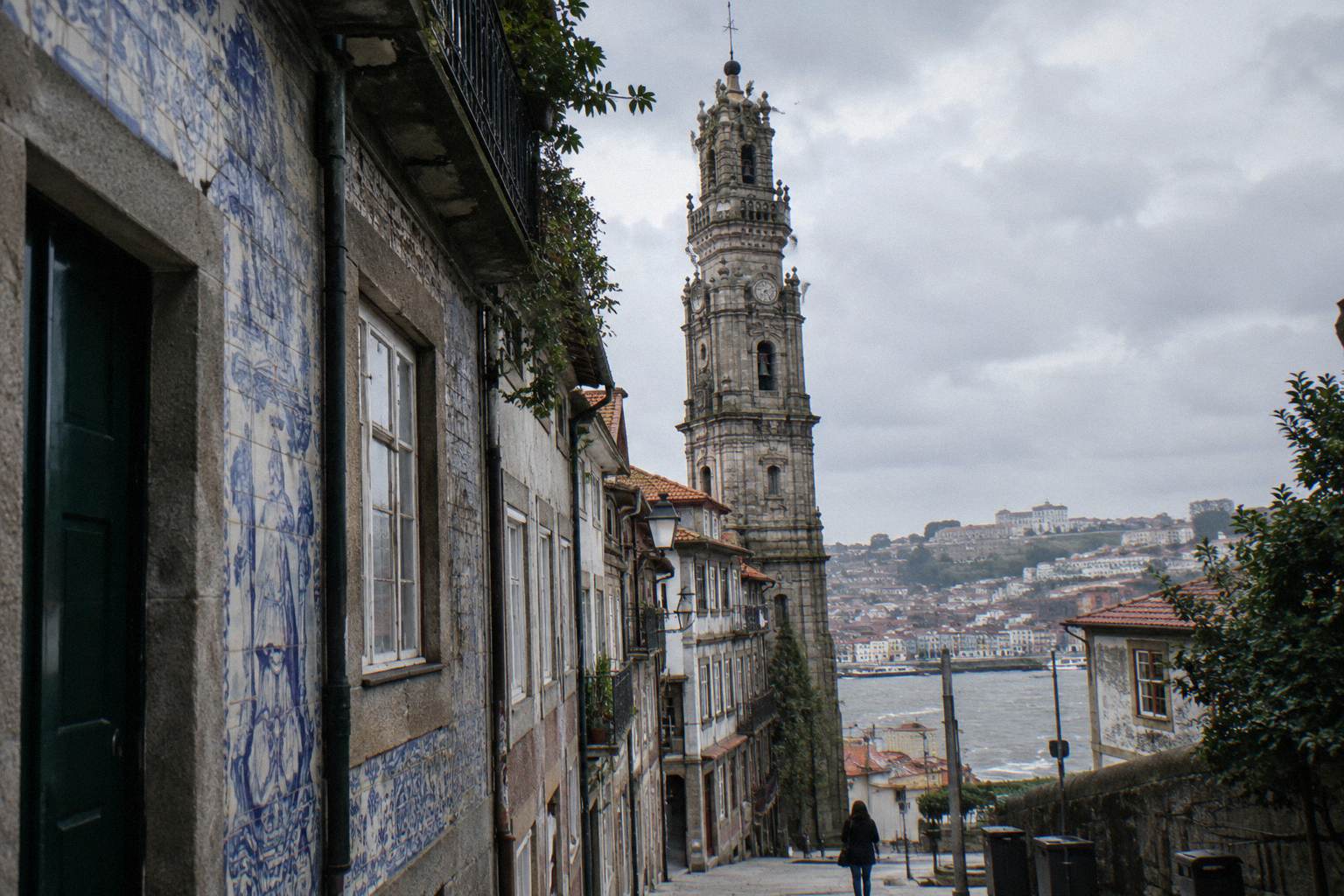
The first mistake is merging the free outside with the paid inside. A terrace never inherits the monastery's status, and a tower never inherits its square's. The Serra do Pilar terrace is free; the monastery exhibition at EUR 2 and the dome at EUR 4 are not. The Clérigos street and square are free; the tower and the tower-and-museum pack are not. Palácio da Bolsa offers a guided tour only, at EUR 14, so there is no free foyer to fall back on. Casa da Música's guided tour is EUR 12, and the building's foyer access is not stated as free, so no claim either way belongs in a plan.
The second mistake is the Lello voucher. Every visitor pays the Ticket-Voucher, even to buy books, and the voucher value is deducted only against Livraria Lello Editions titles. The only free Lello item is selected events in its cultural auditorium that the official site lists as free entry. Buying the voucher anywhere other than the bookshop's own official ticketing host risks a reseller markup, and several lookofficial-looking domains exist precisely to collect it.
The third is residents-only free entry read as tourist free entry. Soares dos Reis' free entry, up to 52 visits a year, requires a Cartão de Cidadão and NIF. Serralves' first-Sunday free requires a Portuguese Citizen Card or Resident Card at the box office. The city museums' free Sunday is single-sourced and reported. A walker planning a Sunday museum circuit on those assumptions is planning on the thinnest of evidence.
The fourth is forgetting the order condition at Café Majestic and the closing day at Bolhão. Majestic has no entry fee but you order to sit, and queues are reported; it is open Monday to Saturday 09:00-23:00. Bolhão is closed Sundays, which catches anyone whose one market day is a Sunday. And the Bolhão food walk, Porto Bites and Banter, is free to join but GuruWalk's page for it flags possible extra costs such as food, so it needs its own budgeting headspace, with no amount assumed.
The fifth is schedule invention. No walk here is stated to run all year, on any timetable, or at any frequency beyond what its GuruWalk page shows live. The safe pattern is to reserve on GuruWalk for the day that suits, treat the walk as free, pay what you want, and let the page carry the calendar. Walkers who build hour-by-hour plans around assumed departure times are the ones left at the Lion Fountain.
Common Questions
Is Porto A Walkable City? Seeing It On A Free Walking Tour?
Yes. The old town, the Ribeira quay, both decks of the Ponte Luís I, the Serra do Pilar terrace and the Palácio de Cristal gardens are all open public space reached on foot. The 17 English-language free walks on GuruWalk cover this ground, each 2 to 3 hours, free to join, pay what you want.
Do You Need Transport To See Porto's Main Sights?
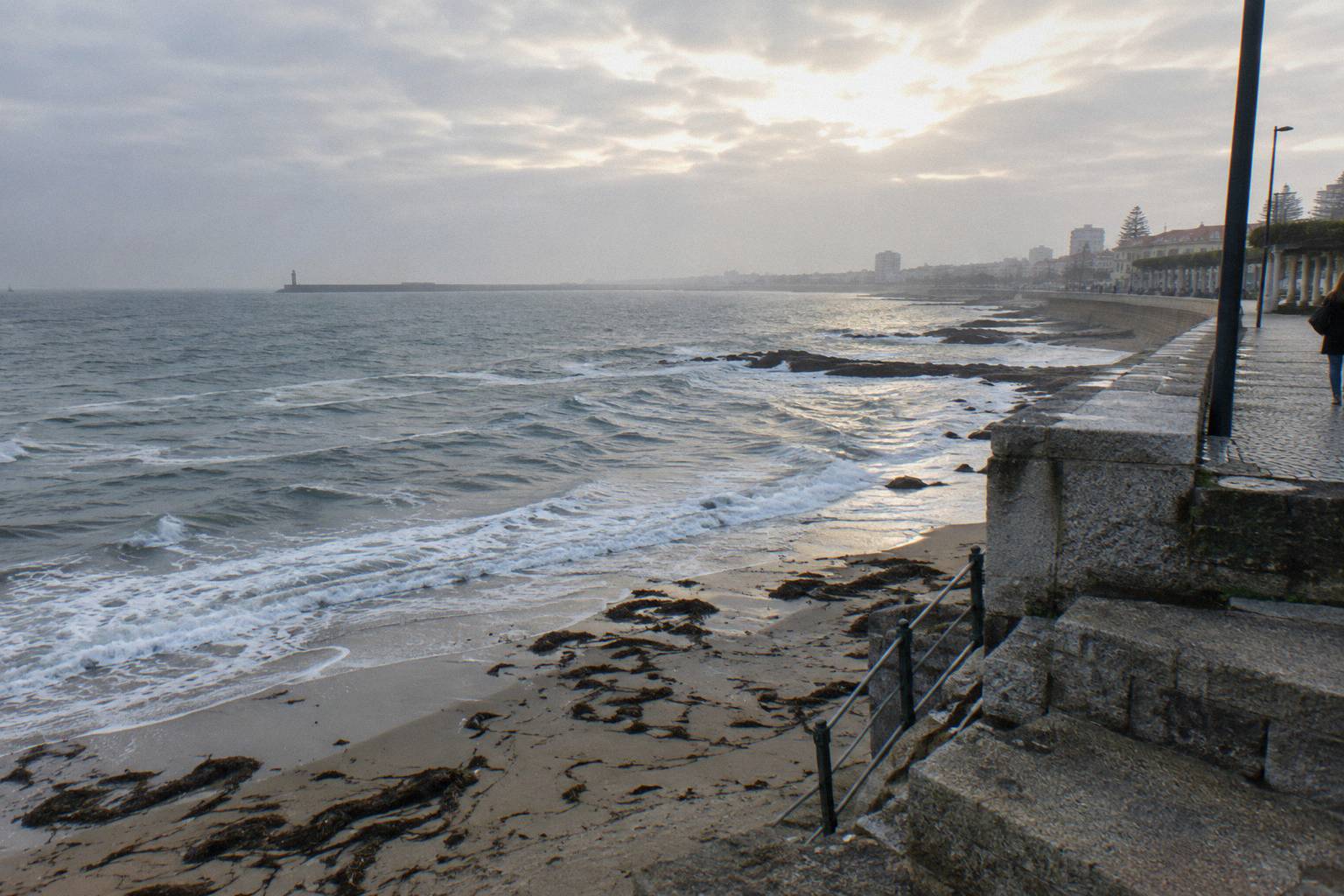
Not for the core. The walkable chain runs from Avenida dos Aliados through the old town's pedestrian streets to the Ribeira, across the bridge on foot at no cost, and up to the Jardim do Morro and the Serra do Pilar terrace, all free open space. Outlying free spaces such as Foz do Douro and Parque da Cidade sit further out, and this site makes no transport claims about reaching them.
Are The Free Walking Tours In Porto Really Free?
Every one of the 17 English-language walks is free to join, pay what you want, reserved on GuruWalk. No amount is published on the GuruWalk pages, and the amount is the walker's choice. One walk, the Bolhão market food walk, has GuruWalk's page flagging possible extra costs such as food.
Which Parts Of Porto Cost Money Even Though The Streets Are Free?
The interiors. The Livraria Lello Ticket-Voucher is EUR 15.95 for every visitor, the Clérigos tower is EUR 5 or EUR 10 with the museum, Soares dos Reis is EUR 10 for visitors, Palácio da Bolsa is a EUR 14 guided tour only, and Casa da Música's guided tour is EUR 12. The streets, quays, terraces and gardens outside them are free.
How Long Does A Free Walking Tour In Porto Take?
Across the English-language roster, durations run from 2 hours to 3 hours. The Ribeira and Gaia walks sit at the 2-hour mark, most old town walks at 2 hours 30 minutes, the Lello-to-the-Cathedral walk at 2 hours 45 minutes, and the All About Porto walk at 3 hours.
Where Do The Free Walking Tours Meet?
At named points in the walkable core: Largo Amor de Perdição, Calçada de Vandoma by the old city wall, the Lion Fountain at Praça de Gomes Teixeira, Porto City Hall at the top of Avenida dos Aliados, Trindade Church, Terreiro da Sé, Praça da Liberdade, Largo Mompilher, Rua Formosa by Mercado do Bolhão, and the Museu Nacional Soares dos Reis.