São Bento Station Azulejos: A Free Stop On Any Porto Walk
São Bento station is a working railway station whose main hall is lined with azulejo panels, and the whole concourse is free to walk into.
In Short
Yes, the São Bento station azulejo hall is completely free to see. It is a public concourse of a working railway station, not a ticketed attraction, so you can walk in any day the station is open. No ticket, no queue desk, no fee. It pairs naturally with the free walking tours of the old town, several of which meet within a few streets.
Part of the Free Things To Do In Porto guides series, this page covers one free stop in detail: the azulejo hall of São Bento station.
Quick Facts
| Fact | Detail |
|---|---|
| The azulejo hall | Free, it is a public concourse of a working railway station |
| Ticket needed | None |
| Nearest free sights | Rua das Flores, the Clérigos streets and square, the Ribeira |
| Nearby paid contrast | Clérigos Tower and museum are ticketed, the streets around them are free |
| Old Town walking tours | 17 English-language free walks on GuruWalk ship on this site |
| Typical walk duration | 2 hours to 3 hours |
| Free meeting points nearby | Largo Amor de Perdição, Praça de Almeida Garrett at the station itself is not a listed meeting point |
The station sits at the top of the old town, and its hall is one of the few grand interiors in Porto that asks nothing of your wallet. Most of the city's famous interiors do: Livraria Lello charges every visitor a Ticket-Voucher, the Clérigos Tower and museum pack costs EUR 10, and the Palácio de Bolsa can only be seen on a guided tour at EUR 14. São Bento is the exception, and this guide explains what that free access actually covers, what the panels are, when the hall is at its calmest, and how the free walking tours on this site connect to it. Every walk mentioned here is free to join, pay what you want, reserved on GuruWalk.
Is It Free To See The Tiles?
Yes, completely free, and there is no conditional catch. The azulejo hall of São Bento is the public concourse of a working railway station, so walking in costs nothing and needs no ticket, the way any station concourse works. There is no fee desk, no timed entry and no separate attraction gate. This puts it in a small group of Porto sights that are genuinely free without conditions, unlike the conditionally free places elsewhere in the city.
That last point matters more than it sounds. A lot of "free" claims about Porto turn out to carry a condition in the small print. The Museu Nacional Soares dos Reis is free only for Portuguese nationals or residents showing a Cartão de Cidadão and NIF; visitors pay EUR 10. Serralves' first-Sunday free entry is for holders of a Portuguese Citizen Card or Resident Card at the box office only. Livraria Lello's voucher is simply a ticket by another name, EUR 15.95, deducted only if you buy a Livraria Lello Editions book. São Bento has none of that structure. There is nothing to qualify for because there is nothing being sold.
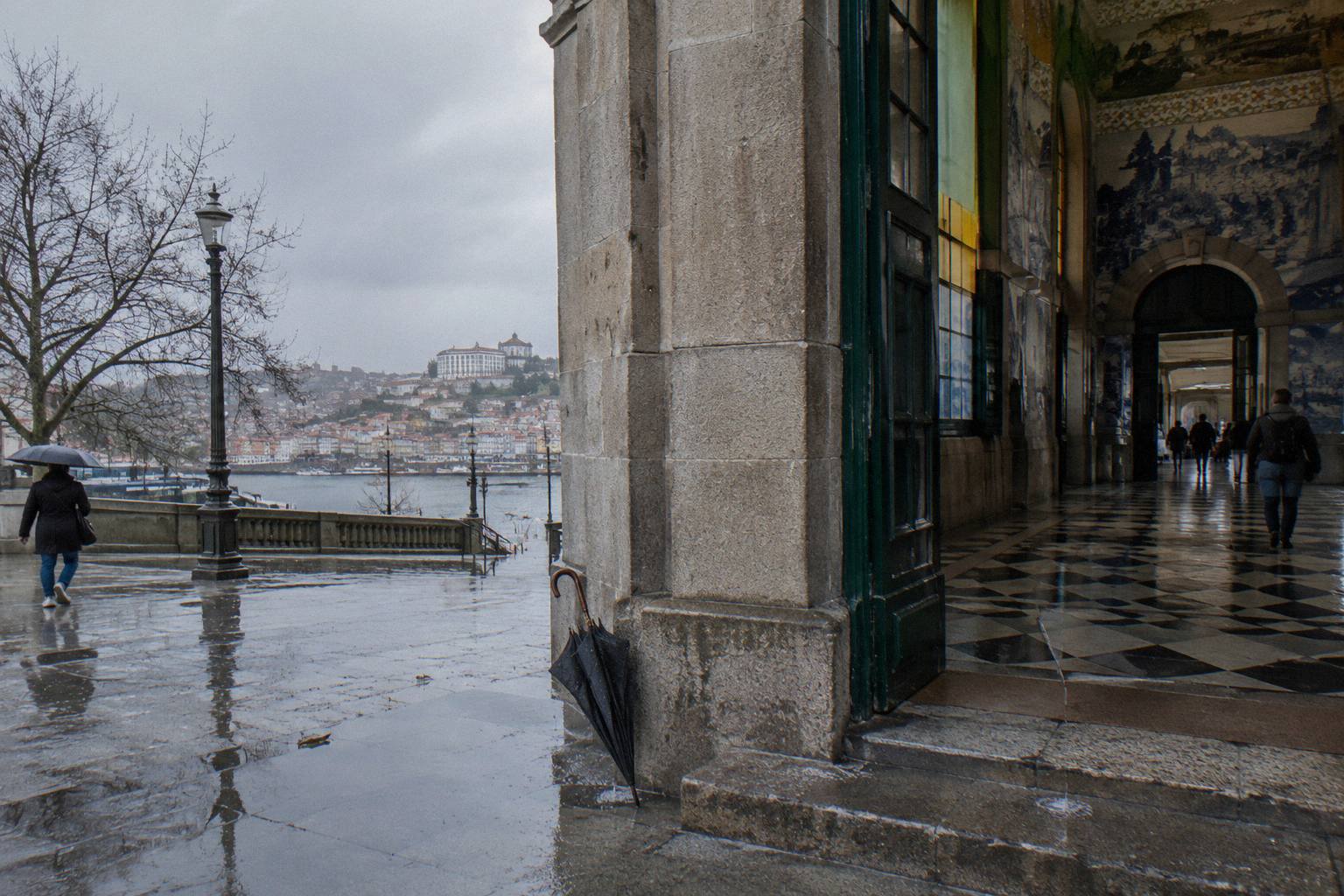
Because it is a station rather than a museum, the free access runs on the station's own rhythm rather than attraction opening hours. The hall is a working concourse with trains departing from it, so the practical limit on your visit is simply that the station is open and functioning. That also shapes the experience in ways a museum never would: luggage rolls across the floor, departure boards flicker, and commuters cut straight through the hall without a glance at the walls. The tiles are the decoration of a transport hub, which is exactly why nobody can charge for them.
The contrast table below shows how rare that is among Porto's famous interiors. Free outside, paid inside is the city's dominant pattern, and São Bento is the interior that breaks it.
| Sight | Free part | Paid part |
|---|---|---|
| São Bento station | The azulejo main hall, a public concourse | None |
| Livraria Lello | Nothing for general visitors | Ticket-Voucher EUR 15.95 for every visitor |
| Clérigos Tower | The streets and square outside | Tower EUR 5, tower and museum pack EUR 10 |
| Serra do Pilar | The viewpoint terrace and gardens | Monastery exhibition EUR 2, dome EUR 4 |
| Palácio de Bolsa | Nothing inside for general visitors | Guided tour EUR 14, tour only |
| Café Majestic | No entry fee | You order to sit, it is a working café |
One thing worth being straight about: free to enter is not the same as a quiet, unhurried viewing room. The hall is a functioning station, and the tiles share the space with everything a functioning station does. If you want the walls to yourself, the question is not whether you can get in but when to come, which is covered further down in its own section.
For anyone building a day around free sights, the station is also a hub for several of them. Rua das Flores, the pedestrian street, is free open public space. The Capela das Almas on Rua de Santa Catarina shows its azulejo facade of 16,000 tiles from the street at no cost, though its interior opening hours are not verified. The Centro Português de Fotografia, in the former prison and Relação court building, states "Entrada Gratuita" on its official page at cpf.pt. São Bento's hall belongs on that same list, with the bonus that it needs no walking between neighbourhoods to reach from the old town's core.
What Do The Panels Show?
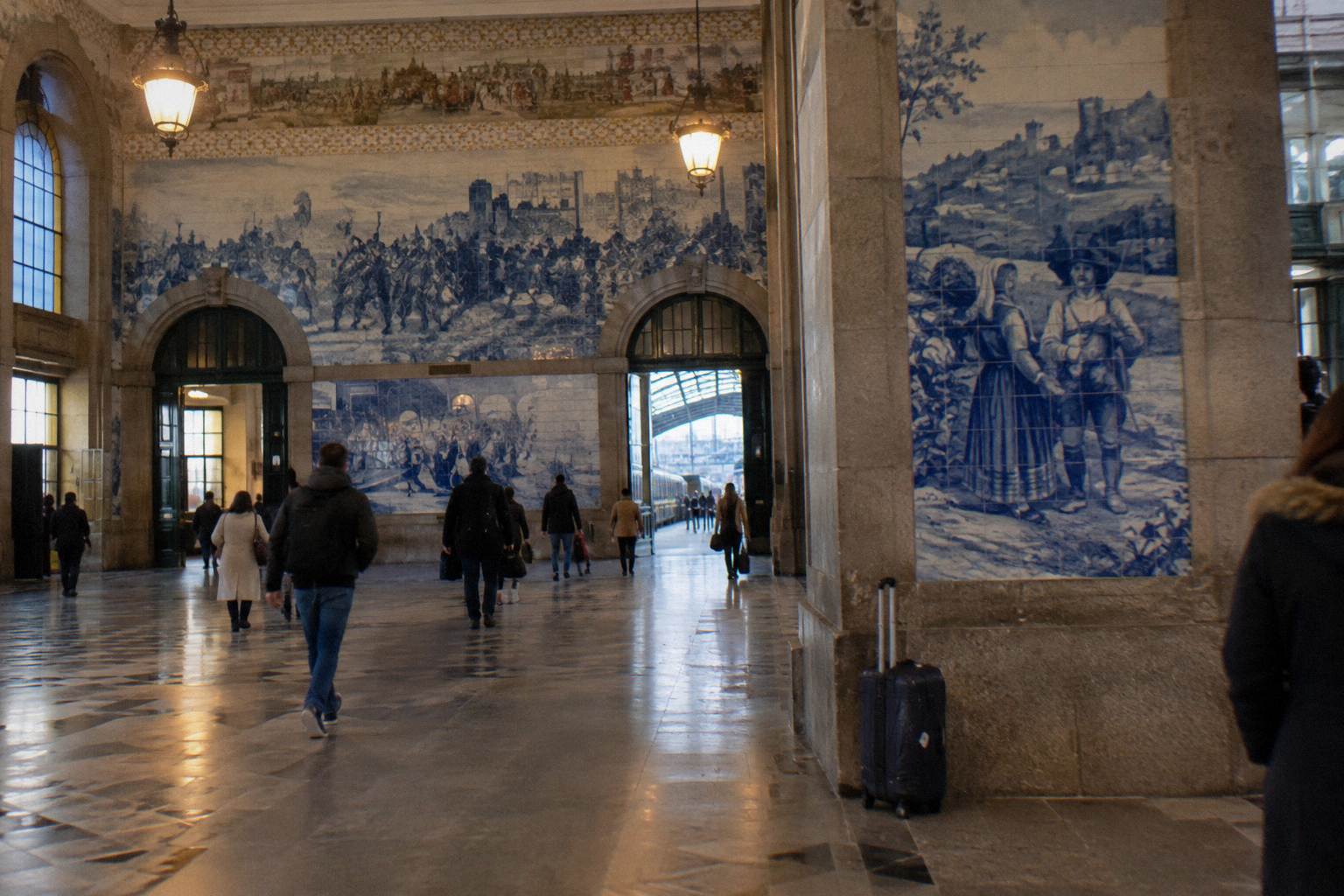
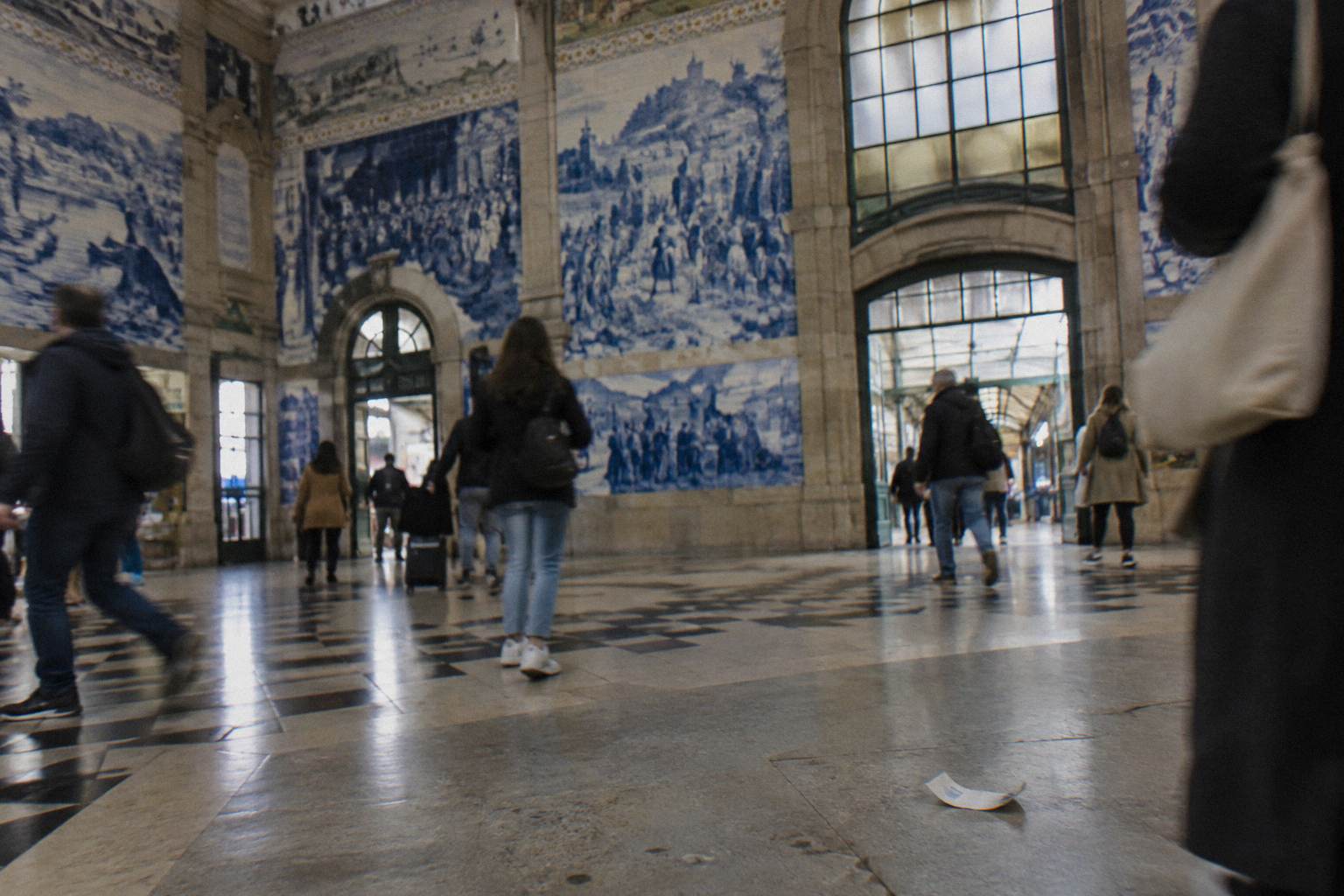
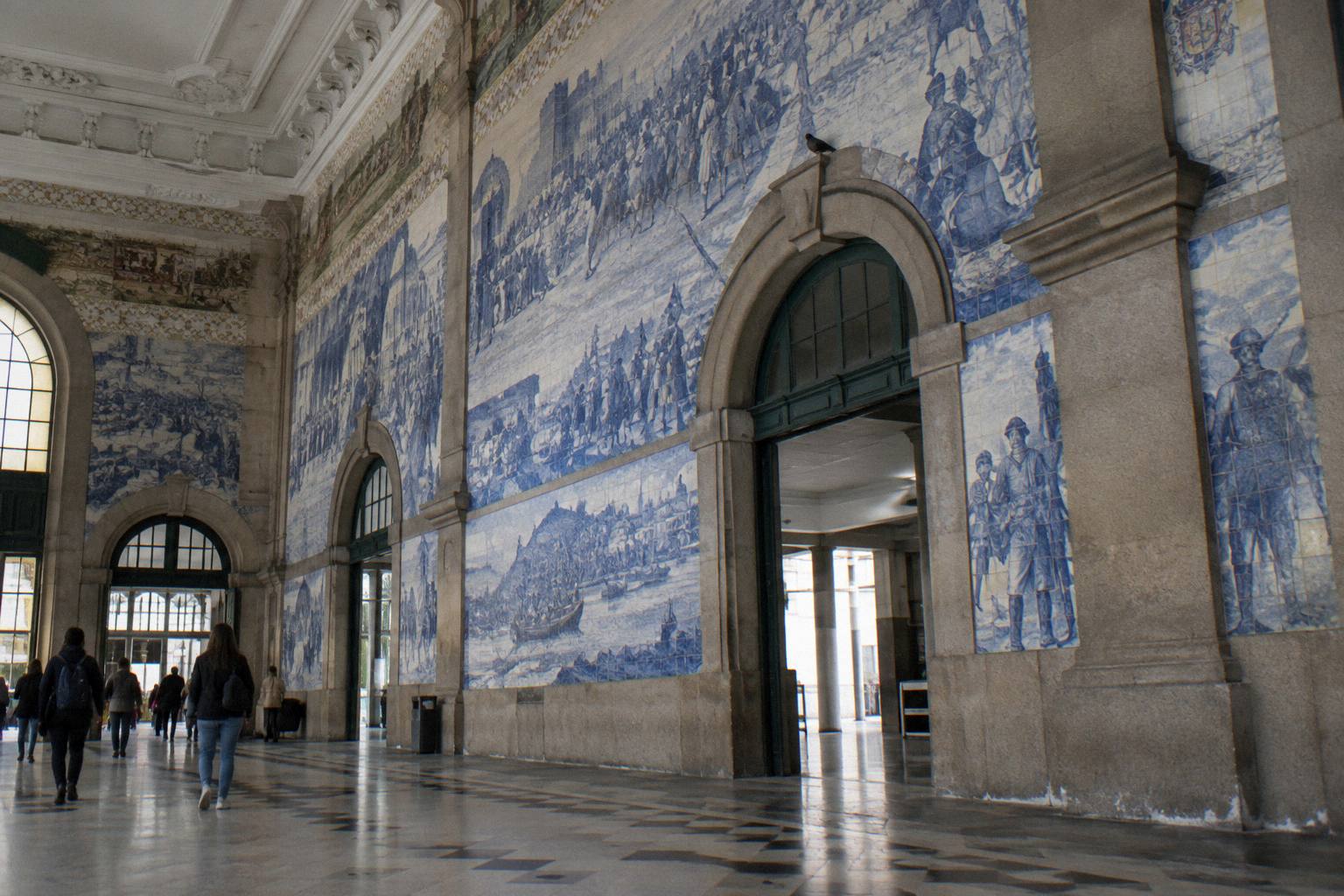
The main hall of São Bento is lined with azulejo panels that cover the walls above the concourse, figurative scenes rendered in tile rather than paint. They are the reason the station is treated as a sight and not just a transport hub. The panels are the decoration of a working station hall, so they can be viewed from anywhere on the concourse floor, with no barrier, rope or viewing gallery between you and the walls.
The honest answer to "what do they show" is best given standing in the hall itself, because the panels are designed to be read at a walk, the way commuters read them daily. They are large figurative compositions, narrative scenes spread across the wall surfaces, rather than the geometric tile patterns you see on ordinary building facades around the city. That narrative character is what separates the station's tiles from street-level azulejo elsewhere in Porto, where the tilework is usually decorative rather than storytelling.
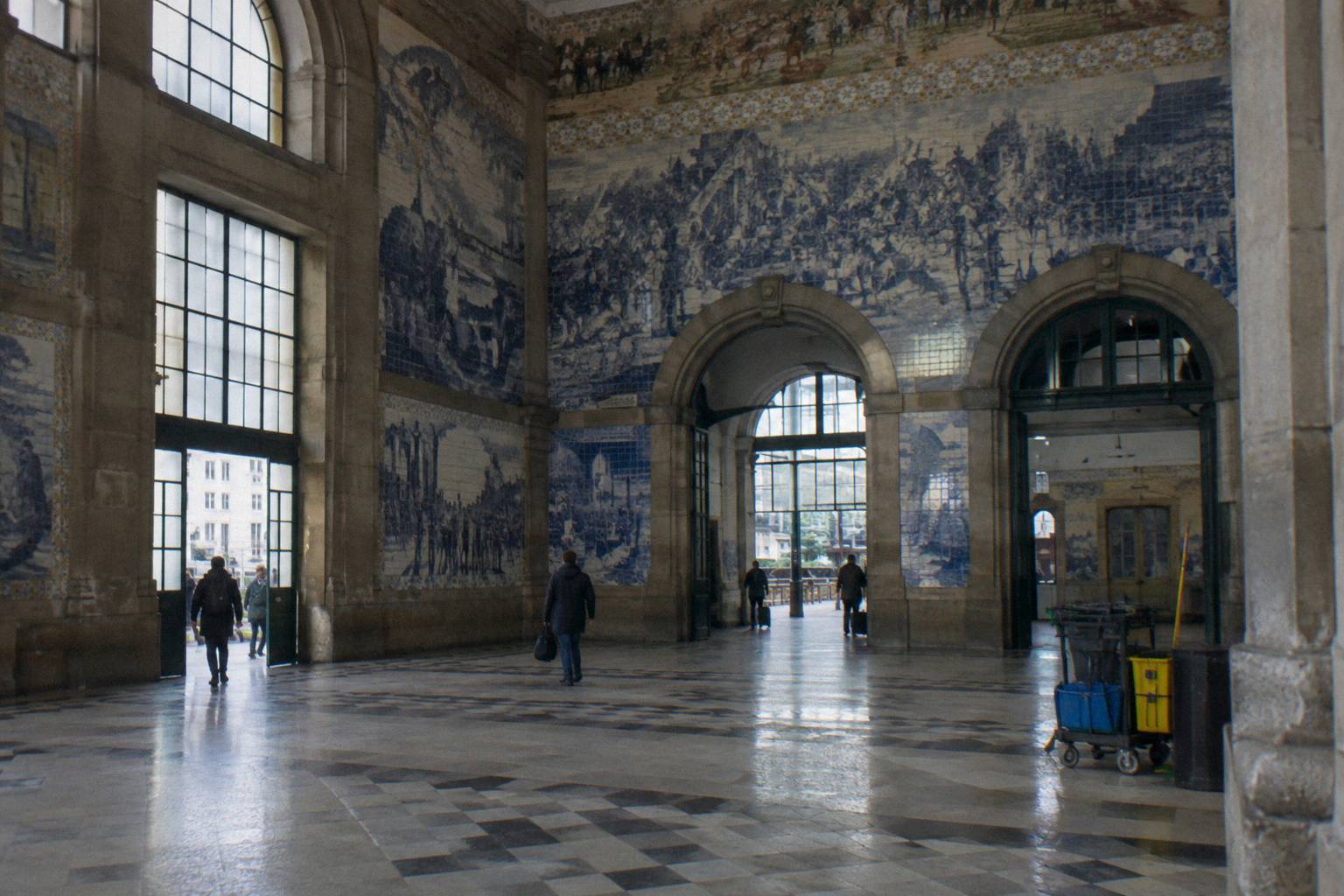
It helps to place the hall within the city's wider azulejo landscape, because Porto offers several free ways to see tilework and they are not all the same thing. The Capela das Almas has its facade of 16,000 azulejos on Rua de Santa Catarina, visible from the street at no cost, an exterior rather than an interior. The street art routes of Rua de Miguel Bombarda and Trindade carry murals on public walls, free by nature. São Bento gives you the interior experience, tiles at grand scale inside a covered space, without a ticket, which no other spot on the free list matches.
| Free azulejo or mural sight in Porto | Where | What you see |
|---|---|---|
| São Bento station hall | Central station | Figurative azulejo panels lining a covered concourse |
| Capela das Almas facade | Rua de Santa Catarina | A facade of 16,000 azulejos, seen from the street |
| Rua de Miguel Bombarda and Trindade | Galleries district | Murals and street art on public walls |
| Ordinary tiled facades | Citywide | Decorative tilework on building exteriors, public streets |
If you want the panels explained rather than simply seen, a guide is the free route to that. The 17 English-language free walks on GuruWalk that this site ships are run by independent local guides, and every one is free to join, pay what you want. A walk's own GuruWalk page is the place to check what it covers, since walks are introduced here only by their platform, guide, meeting point, duration and languages. One strong fit for the station's ground is "Free Tour Porto Essential" by 1·2·Tours, rated 4.8 out of 5 across 6,888 GuruWalk reviews, running 2 hours 15 minutes in English and Spanish and meeting at Calçada de Vandoma, by the old city wall.
That walk meets a few streets up from the station at Calçada de Vandoma. The Irish Guy in Porto Free Tour, rated 4.99 out of 5 across 288 GuruWalk reviews, meets at the red telephone box at Largo Mompilher, likewise close to the station's side of the centre. Meeting points matter here because the station is not itself a listed meeting point for any walk on the roster: the walks gather at squares and landmarks around it, and the hall is the sight you fold in before or after.
The panels also reward a slower second pass, and this is where the free structure of the city helps. Having paid nothing to enter, you can leave and come back within the same day, catching the hall under morning and evening light through the entrance, without any sense of wasting a ticket. Few interiors in Porto permit that, because few are free. Lello's voucher is one entry's worth of money; the station is as many as you like.
When Is It Quietest?
The honest answer is that no verified quiet hours exist for São Bento's hall, and this site does not publish crowd or busy-hour claims it cannot source. What can be said is structural: the hall is a working station concourse, so it is busiest when stations are busy, around train departures and arrivals, and calmest when they are not. Early morning and mid-afternoon on weekdays are the times most consistent with how any working station behaves.
Crowd advice is one of the most invented things in travel writing. Sites will tell you a place is "packed by 10am" or "dead after 4pm" without a source, and this site's rule is simple: if a claim about queues, crowds or busy hours is not in the verified facts, it does not get printed. What the facts do establish is the hall's nature. It is a public concourse of a functioning railway station, which means its rhythm follows trains, not attraction schedules. There is no opening ceremony, no last entry, no ticketed time slot that would concentrate visitors. The rest of the planning pages sit on Free Things To Do In Porto.
What you can plan around with confidence are the things that are actually published. Mercado do Bolhão, a short walk away on Rua Formosa, is free to enter and closed on Sundays, open Monday to Friday 08:00 to 19:00 and Saturday 08:00 to 18:00. The Jardim das Virtudes and Passeio das Virtudes, free open terraced garden and walkway, run 08:00 to 20:00 daily. The Jardins do Palácio de Cristal state "Acesso Livre" on the municipal page at ambiente.cm-porto.pt: April to September 08:00 to 21:00, October to March 08:00 to 19:00. If you are chaining free sights in one morning, those fixed hours, not guessed crowd patterns, are what should order your day.
| Free sight near or across the city | Hours or days that are actually stated |
|---|---|
| São Bento azulejo hall | Open as a working station concourse, no attraction hours published |
| Mercado do Bolhão | Mon to Fri 08:00 to 19:00, Sat 08:00 to 18:00, closed Sundays |
| Jardim das Virtudes | 08:00 to 20:00 daily |
| Jardins do Palácio de Cristal | Apr to Sep 08:00 to 21:00, Oct to Mar 08:00 to 19:00 |
| Parque da Cidade | Oct to Mar 08:00 to 22:00, Apr to Sep 08:00 to 24:00 |
The walking tours have their own timing logic, and their durations are published facts you can plan around. The longest old town walk on the roster, All About Porto by PortoWalkers, runs 3 hours; several run 2 hours or 2 hours 30 minutes. If your day pairs a morning walk with an afternoon at the station, the walk's duration, not a crowd guess, is the number to build on. How long a free walking tour in Porto runs is covered in detail in how long a free walking tour in Porto lasts.
Timing also interacts with what you wear and carry, more than most visitors expect. Porto's hills and rain shape a walking day, and the station's position at the top of the old town means most routes to or from it involve slopes. The guide on shoes, hills and rain on a Porto walking tour goes into that in full.
One last structural point: because the hall charges nothing, "quietest" is a comfort question, not a money question. At a ticketed sight, timing wrong means paying peak prices for a crowded slot. Here, timing wrong means sharing the concourse with more travellers and commuters, and the remedy is simply to come back later the same day. That flexibility is part of what free actually buys you.
How Does It Fit On A Walking Tour?
São Bento sits inside the old town's walkable core, close to several meeting points the free GuruWalk walks use, though no walk lists the station as its meeting point. The hall works best as the free interior stop you add either side of a walk, before it as an arrival landmark or after it as the payoff at the top of the old town, and all 17 English-language free walks are free to join, pay what you want.
The geography is what makes this easy. The station stands at the head of the old town, and the roster's meeting points ring it: Largo Amor de Perdição for the Fundamentals walk and the Ribeira walk, Calçada de Vandoma by the old city wall for the Essential and Dark Porto walks, the Lion Fountain at Praça de Gomes Teixeira for several others, Terreiro da Sé beside the Cathedral for the Ribeira and Old Town walk. None of these is the station itself, but all of them sit in the same walkable old town, so the hall slots into the same on-foot hour as your walk's start point.
The walk this site pairs most closely with the old town core is the hero of the roster: "Free Tour Fundamental. The #1 in Porto." by Revolutours, rated 4.94 out of 5 across 26,054 GuruWalk reviews, running 2 hours 30 minutes in English and Spanish and meeting at Largo Amor de Perdição. You can read more about it on the Fundamentals free walking tour page, and the wider choice is laid out in free walking tours in Porto and how tip-based tours work. If the station hall is your anchor sight, an old town walk that meets a few streets away is the natural pairing.
A second strong pairing from the same ground is "Best of Porto: Free Tour with Local Guides in Comfy Group" by Step by Step, rated 4.86 out of 5 across 4,799 GuruWalk reviews, 2 hours 30 minutes in English, meeting at the Lion Fountain, Praça de Gomes Teixeira. The old town walking tour routes guide maps how these meeting points connect on foot, which is the practical question once you decide to add the station to a walk day.
The themed walks give a third way in. The station's tiles are an art object as much as a transport one, and the Stories, Food And Themes walks on the roster, the Dark Porto mysteries walk and the Women Who Shaped Porto walk among them, approach the city from angles a highlights walk does not. The Women Who Shaped Porto walk by Andreia, rated 5 out of 5 across 43 GuruWalk reviews, runs 2 hours 45 minutes in English and Spanish and meets at the Museu Nacional Soares dos Reis. The Dark Porto walk by 1·2·Tours, rated 4.79 out of 5 across 2,061 GuruWalk reviews, meets at Calçada de Vandoma by the old city wall. Which side of the city you want the station to sit beside, highlights or themes, is the real choice.
| Free walk on GuruWalk | Guide | Rating out of 5 and reviews | Duration | Meets at |
|---|---|---|---|---|
| Free Tour Fundamental. The #1 in Porto. | Revolutours | 4.94, 26,054 reviews | 2 hours 30 minutes | Largo Amor de Perdição |
| Free Tour Porto Essential | 1·2·Tours | 4.8, 6,888 reviews | 2 hours 15 minutes | Calçada de Vandoma, by the old city wall |
| Best of Porto: Free Tour with Local Guides | Step by Step | 4.86, 4,799 reviews | 2 hours 30 minutes | Lion Fountain, Praça de Gomes Teixeira |
| Free tour of Vila Nova de Gaia | Revolutours | 4.85, 1,309 reviews | 2 hours | Calçada de Vandoma, Vímara Peres statue |
| Free Tour Dark Porto | 1·2·Tours | 4.79, 2,061 reviews | 2 hours 15 minutes | Calçada de Vandoma, by the old city wall |
After the station, the free route downhill is one of the best in the city. Rua das Flores is a free pedestrian street running down from the station's side of the centre toward the river. The Ribeira itself is a free open riverside quarter, its streets and quay open to all. Ponte Luís I can be crossed on foot on both decks at no cost, and across the bridge the Serra do Pilar viewpoint terrace and the Jardim do Morro are free open public space, though the monastery exhibition at EUR 2 and dome at EUR 4 behind the terrace are paid. The free-versus-paid splits of that route are unpacked in the Ribeira riverside walk guide, and the bridge's own crossings in walking across the Dom Luís I bridge.
If you would rather walk the station's neighbourhood yourself first, the question of self-guided versus free guided walking tours in Porto is worth settling before you commit a morning. The station hall costs nothing either way, which is exactly why it belongs on both kinds of day.
Mistakes That Trip People Up At São Bento Station
The most common mistake is assuming the free-versus-paid pattern around the station is consistent, when it is not: the hall is free, but nearly every grand interior within walking distance is ticketed, and some "free" claims nearby carry conditions that exclude tourists. The second is treating the station as a walk's guaranteed stop: no walk on the roster lists a route, so nothing about the station's inclusion can be promised. Both are easy to avoid with the facts.
The first mistake plays out like this. A visitor sees the free hall, assumes the Clérigos Tower up the hill must work the same way, and arrives to find the tower and museum pack at EUR 10 and the tower alone at EUR 5. The streets and square around the tower are free, but a tower never inherits its square's status, and a terrace never inherits the monastery's. The same trap repeats across the city: Serra do Pilar's terrace is free while the exhibition and dome behind it are paid; Livraria Lello's EUR 15.95 voucher applies to every visitor, even to buy books, with the value deducted only on a Livraria Lello Editions purchase. Free outside, paid inside is the rule; São Bento's hall is the exception, not the pattern.
The second mistake is subtler. Walk titles on GuruWalk name landmarks, and a walk titled from Lello to the Cathedral naturally suggests a route through the old town's headline sights, but a title is a title, not a published route. No Porto walk has a verified route beyond its meeting point, neighbourhood, duration and languages. If seeing the station with a guide matters to you, the honest method is to read the walk's own GuruWalk page before reserving, not to infer stops from titles. The walks are free to join and pay what you want, so the cost of a wrong guess is low, but the disappointment is real.
The third mistake is trusting "free day" folklore. The Sunday free entry reported for the city museum venues is single-sourced, so it is written here only as reported, never as a promise. The residents-only free rules at Soares dos Reis and Serralves exclude almost every reader of this page, since they require a Portuguese Cartão de Cidadão, NIF, Citizen Card or Resident Card. And the Porto Card, which once bundled discounts, is reported by its operator's own page as having sales suspended since early July, so no current advice can rest on it. The station hall, needing no card, no residency and no purchase, is the one sight in this cluster with nothing to get wrong.
A fourth, smaller mistake: treating the hall as an all-day destination. It is a concourse, and its tiles repay twenty unhurried minutes far more than a crowded hour. The better plan is to make it one anchor of a free chain: hall, Rua das Flores, the Ribeira quay, the bridge decks, the Gaia side's free terrace and garden. Every link of that chain is free, published as such, and walkable, which is more than can be said for the ticketed interiors waiting in between.
Common Questions About São Bento Station
Is The Azulejo Hall At São Bento Station Really Free?
Yes. The hall is the public concourse of a working railway station, so there is no ticket, no entry desk and no fee of any kind. This is unconditional free access, unlike conditionally free sights in Porto such as the residents-only rules at Soares dos Reis or Serralves.
Do You Need To Book Anything To See The Tiles?
No. The station asks nothing of visitors beyond normal station conduct. Booking applies only if you choose a free walking tour around the old town, and those are reserved on GuruWalk, free to join and pay what you want.
Is São Bento A Meeting Point For The Free Walking Tours?
No walk on the roster lists the station itself as its meeting point. The walks meet at nearby spots such as Largo Amor de Perdição, Calçada de Vandoma and the Lion Fountain at Praça de Gomes Teixeira, all in the same walkable old town.
When Is The Best Time Of Day To Visit The Station Hall?
No verified quiet-hour data exists for the hall, so no busy-hour claims are made here. Structurally, it follows the rhythm of a working station: busiest around train movements, calmest when stations generally are, such as early morning on weekdays.
Are There Other Free Azulejo Sights In Porto?
Yes. The Capela das Almas shows a facade of 16,000 azulejos on Rua de Santa Catarina, visible from the street at no cost. The Centro Português de Fotografia also states free admission on its official page. São Bento's hall is the free interior among them.
Can A Free Walking Tour Include The Station?
No walk's route can be promised, since only meeting points, durations and languages are published. To know whether a walk passes the station, read its own GuruWalk page before reserving. Every walk is free to join, pay what you want, reserved on GuruWalk.